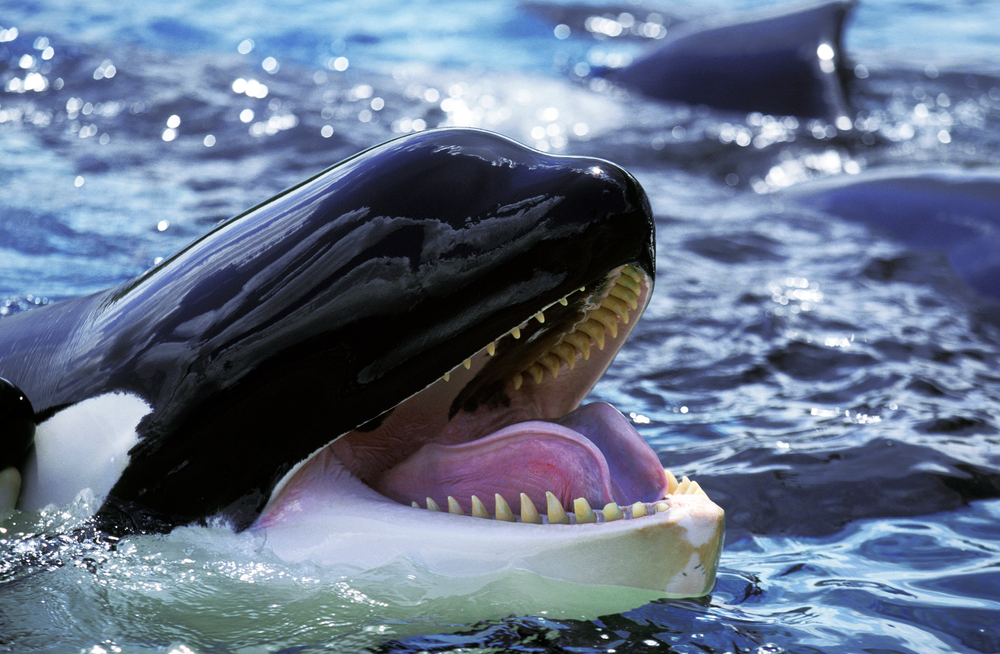

Since 2020, a small group of killer whales off the coasts of Spain and Portugal has been ramming sailboats, targeting their rudders with a precision and persistence that has left the sailing community baffled, alarmed, and increasingly reliant on real-time tracking apps to plan safe passage through what was once routine Atlantic cruising territory. The phenomenon of orca attacks on boats has generated global headlines, ignited fierce scientific debate, and produced a body of data that is still being actively analyzed. What began as a handful of unusual incidents in the Strait of Gibraltar has grown into one of the most documented and discussed cases of novel animal behavior in recent memory.
The facts, at this point, are substantial. The encounters between Iberian orcas and sailing vessels first came to widespread attention around 2020, and data quickly showed that almost no yachts were being targeted in shallow water. Since then, the scale of the phenomenon has surprised even those closest to it.
How Many Boats Have Been Damaged by Orcas Since 2020?
The numbers are striking. Encounters peaked in 2023 with 207 recorded incidents during the year, dropping to 136 in 2024, and just 67 through September 2025, according to data compiled by DIVE Magazine from the Cruising Association and Atlantic Orca Working Group. In total, there were approximately 665 interactions between orcas and vessels around the Iberian Peninsula between January 2020 and May 2025, according to a June 2025 report from the Cruising Association and the Atlantic Orca Working Group (GTOA).
The damage has been real and costly. The drop in interactions in 2024 and 2025 is likely due to guidelines issued by Spanish authorities advising sailors to stick to shallow waters of 20 meters or less in orca hotspots, or to avoid the areas completely where possible. But even with reduced frequency, the usual pattern remains consistent: orcas ram the rudder, often causing damage that leaves the sailboat adrift and incapacitated, and there have now been at least seven cases in which the vessel has sunk, including the French yacht Ti’fare off Peniche, Portugal, in October 2025.
The sinkings, while dramatic, have produced no human casualties. As National Geographic reported in 2025, there are no reports of injuries from these encounters, though the pod has sunk several vessels and disabled countless others. No person has ever been killed by a wild orca.
Why Are Orcas Attacking Boats off Spain and Portugal?
The behavior was first recorded in May 2020 in the Strait of Gibraltar, the narrow passage of water between southern Spain and Morocco. Since that month, Iberian killer whales have been interacting unusually with pleasure boats, posing significant maritime safety challenges, according to a peer-reviewed study published in October 2025 in the journal MDPI Conservation.
The question of motivation has generated two primary competing theories among marine researchers, though neither has yet been definitively proven. The first is play. A variety of theories have been floated, but many scientists think it is most likely a learned cultural behavior that is simply fun for the animals. “These are not attacks; it is almost certainly a game,” says Naomi Rose, senior scientist of marine mammal biology at the Animal Welfare Institute. “The goal is to break the rudder. It’s not to sink the boat. It’s not to hurt anybody. It’s not revenge.”
The second theory frames the behavior as a form of hunting practice. Researchers at the Bottlenose Dolphin Research Institute in Spain found that boat ramming is usually carried out by young orcas, and adults have been observed teaching the behavior to juveniles. Bruno Díaz López, the institute’s chief biologist, described it as “a training toy,” adding: “It’s a shame that we humans are in the middle of this game, but they are learning.”
The play hypothesis is supported partly by what the orcas do not do. Researchers point out that sinking boats is likely not the orcas’ goal, as most vessels survive the interactions, and one researcher noted that orcas could have sunk 600 boats if they truly wished to. Renaud de Stephanis, president of Conservación, Información y Estudio sobre Cetáceos (CIRCE), who has studied orca behavior for over 25 years, put it more vividly. Since the encounters first made headlines, some scientists have said the incidents are more likely a form of game, since the orcas lose interest once the rudder is broken. “They’re pushing, pushing, pushing, boom! It’s a game,” de Stephanis told DIVE Magazine. “Imagine a kid of six, seven years, with a weight of three tonnes. That’s it, nothing less, nothing more. If they wanted to wreck the boat, they would break it in 10 minutes’ time.”
There is also a third, minority view, centered on trauma. A 2023 paper published in Marine Mammal Science identified a possible ringleader, a mature female orca named White Gladis. The paper speculated that Gladis may have been involved in an accident with a boat and began targeting them as retribution, citing the fact that killer whales typically attack rudders specifically, the protruding blade often responsible for their injuries. This theory has not been confirmed, and most researchers now favor the play or cultural transmission explanation over the revenge hypothesis.
The Pod Behind the Incidents: Who Are the Iberian Orcas?
Understanding the behavior requires understanding just how unusual and biologically significant this specific group of animals is. Almost all of the ramming occurs in deep waters farther off the coast, where the pod can find its main food source, bluefin tuna. The Iberian orca subpopulation migrates from the Strait of Gibraltar northward during the summer, following the tuna as they move, then fans out from the north into deep water in autumn before returning to the Strait area through winter.
The Iberian orca is recognized as critically endangered by the IUCN, and a conservation plan for these whales has been approved in Spain. According to the IUCN Red List of Threatened Species, there are currently fewer than 35 individuals left in this population. That number matters enormously in the context of these boat interactions: the animals ramming sailboats belong to one of the most imperiled marine mammal subpopulations on the planet.
The orcas involved in damaging encounters have been identified through photographs as 15 individuals from an approximately 50-strong population. Not every animal in the subpopulation is involved. The behavior appears to be concentrated within a subset of the group, with juveniles most frequently observed initiating contact and adults sometimes watching or participating secondarily.
Researchers have also pointed out that cultural fads among orcas have historical precedent, noting a 1987 episode in which southern resident orcas from Puget Sound carried dead salmon around on their heads. Those behaviors eventually faded. Whether the Iberian rudder game will follow the same trajectory remains an open question.
How Sailors Have Responded, and What the Data Shows
A 2025 peer-reviewed study analyzed 107 Spanish news articles published between June 2022 and September 2024, examining how sailors and media framed the orca-vessel interactions. Sailors overwhelmingly framed the encounters as problematic, with 38% describing them as “attacks,” while safety was their dominant concern for 87% of respondents, though 85% also expressed worry about orca welfare.
That dual concern is reflected in official guidance, which has been carefully calibrated to protect both mariners and the orcas themselves. Authorities in Spain and Portugal have taken different positions on what to do during an encounter. Portuguese authorities advise skippers to “play dead” or reverse if conditions permit, while Spanish authorities advise motoring away as fast as possible toward shallower water.
Early analyses by the Atlantic Orca Working Group (GTOA) found marginally less damage among yachts that stopped compared with those that did not (51% versus 55% sustaining damage). A slightly more noticeable difference appeared in cases involving extensive damage: 24% of vessels that stopped sustained extensive damage, compared with 31% that continued moving. The numbers are close enough that neither approach offers a reliable guarantee of safety.
GTOA advises that acoustic deterrent pingers, devices designed to emit sounds that may discourage marine mammals, can cause hearing damage in orcas, and that against a background of constant noise, the animals would effectively have to “shout to communicate.” Orcas have also been observed reducing the length and depth of hunting dives near pingers. In both Spain and Portugal, the use of acoustic deterrent devices without a license is illegal.
The behavior of the orcas during interactions follows a remarkably consistent pattern. In interactions where orcas have made physical contact with vessels, the pod typically approaches from the stern without warning. Contact includes ramming, nudging, and biting, usually focused on the rudder, with orcas using their heads to push or their bodies to create lever movements, in some cases pivoting the boat almost 360 degrees. Inspection of damaged vessels has revealed that orcas raked their teeth against bows, keels, and rudders. More seriously damaged rudders were split in half, completely detached, or bent at their stocks. At least one orca has been observed tearing off a boat rudder with its teeth.
The Human Cost and the Conservation Paradox
The September and October 2025 incidents off Portugal brought the phenomenon back to global attention. On September 13, 2025, a tourist yacht carrying five people was repeatedly struck and subsequently sank near Fonte da Telha Beach off the coast of Portugal; all five were rescued after sending a distress call. A second boat was similarly targeted the same day off the Bay of Cascais. On October 10, 2025, orcas sank the French yacht Ti’fare 50 nautical miles off the coast of Peniche, Portugal. The crew, a family of five, launched a lifeboat and was picked up by a fishing boat. Two more yachts were attacked that same weekend, requiring Spanish marine rescue to tow them.
The situation presents a genuine conservation paradox. The orcas responsible for extensive property damage and considerable maritime risk belong to a subpopulation so small that losing even a handful of individuals could push the group toward functional extinction. Conservation organizations have strongly urged people not to react violently toward the orcas or seek to harm them in any way, noting that violent responses, apart from being cruel and potentially threatening to conservation, may have the opposite of their intended effect, potentially making orcas more interested in continuing interactions.
Cruising Association analysis suggested that the decline in interactions in May and June 2025 was linked to increased use of the shallow-water route along the south coast of the Iberian Peninsula, which had proven effective in significantly reducing risk. But the picture grew more complicated as the year progressed. A record number of attacks was recorded in the waters off Galicia in October 2025, suggesting that the Iberian orcas were neither growing bored of the behavior nor becoming less confident around vessels.
From July onward, interactions appear more geographically dispersed, with an associated wider spread of risk across more sea areas. This geographic expansion means that the shallow-water route, which has proven effective in the Gibraltar region during spring, offers less protection when the orcas follow tuna north along the Portuguese and Galician coasts in summer.
What Sailors Should Know Now
The practical picture for anyone planning to sail through orca territory off Spain and Portugal is one of managed risk rather than elimination of risk. There is no approach that guarantees a safe passage, and the Cruising Association notes that there are currently no reliable legal deterrent methods, with potential measures including staying close to shore in shallow water, reversing, and making noise onboard all remaining unproven.
The most consistently effective mitigation remains route planning. Heading into and out of the Mediterranean, sailors can significantly reduce risk by using the shallow-water route to and from Gibraltar throughout the year. In April and May, when orca tend to be concentrated in the Cadiz/Tangier/Gibraltar area, passages around the Iberian Peninsula to the west and north of this area carry much lower risk.
In 2025, the Cruising Association introduced a monthly orca interaction location table based on data from the GTOA’s monthly interaction maps, described as the most comprehensive record of orca interactions available. The resource is designed to help skippers identify when and where interactions are most likely to occur across different locations throughout the year.
For sailors already underway and approached by orcas, the safety protocol promoted by GTOA and the Portuguese government’s Instituto da Conservação da Natureza e das Florestas (ICNF) is to stop the boat, drop sails, let the rudder run free, and keep a low profile in order to minimize the orcas’ interest, or to reverse when conditions safely permit. Spanish authorities recommend the opposite: motoring away toward shallow water at best speed. These contrasting accounts reinforce the importance of reviewing the available evidence and understanding that no single approach has been shown to guarantee success.
What is clear from the data is that the orcas are not targeting people. Every rescue since 2020 has ended without human injury. What is also clear is that this behavior is not fading on its own timeline, that it is spreading geographically as the pod follows tuna migration, and that any sailor transiting the Iberian coast needs to treat orca encounters as a serious passage-planning variable, not a remote curiosity.
The animals causing all of this disruption are, by any biological measure, extraordinarily rare. They number fewer than 35 individuals. They are critically endangered. And they appear to be teaching their young, pod by pod, to spin sailboat rudders until they break. Whether that is play, practice, or something more complex that science has not yet characterized, the behavior is now a defining feature of Atlantic sailing, and it shows no clear sign of stopping.
Read More: Mexico Ends Marine Animal Entertainment Era
What Sailors Should Do Before Transiting the Iberian Coast
Anyone planning a passage through Spain, Portugal, or the Strait of Gibraltar in 2026 should take several concrete steps before departing. First, consult the GTOA’s real-time tracking app, GT Orcas, available on both Apple and Google Play, which maps current interaction locations. Second, review the Cruising Association’s monthly orca interaction table at theca.org.uk, which shows historical patterns of when and where incidents cluster by month and geographic zone.
Third, plan your route with depth in mind. The majority of interactions have occurred in water deeper than 40 meters, and data from the Cruising Association highlights the substantially increased risk of traveling in deeper water. The advice is to stay less than two miles offshore and navigate in less than 20 meters of water where conditions allow. Fourth, prepare your crew before departure with a clear plan of action in the event of an encounter, including who handles communications and how to execute the “stop and play dead” or “motor to shallow water” protocols depending on which authority’s guidance you choose to follow.
Finally, if you do experience an encounter, report it. Without skipper reports, critical information about changes in orca behavior and the efficacy of deterrent measures would simply be unavailable to both sailors and scientists. The data that has made navigation safer for hundreds of sailors since 2020 exists because those who came before them filed reports after their own encounters. That collective record is the closest thing to a reliable early-warning system that currently exists for one of the most unusual wildlife phenomena in modern maritime history.
The Outlook for Atlantic Sailors in 2026 and Beyond
The phenomenon off the Iberian Peninsula is now established enough that it warrants the same level of passage-planning attention as weather routing or fuel management. For any sailor transiting these waters, the most important shift in mindset is to treat orca territory not as an abstract risk but as a navigational feature with known seasonal and geographic patterns. The shallow-water route works because it reflects real data, not caution for its own sake, and the sailors who have used it most consistently have seen the clearest reduction in their exposure to incidents.
The scientific community’s evolving understanding of the behavior also carries a practical message for mariners: the orcas are neither hunting people nor responding to provocation, which means that calm, coordinated responses are almost always more effective than panic. Crews that have drilled their encounter protocols before departure report managing incidents with less damage to both vessel and morale. The time spent reviewing GTOA guidance and assigning clear crew roles before leaving port is genuinely protective in a way that no post-encounter improvisation can replicate.
For the broader sailing community, the Iberian orca situation is also a reminder that the ocean’s most intelligent inhabitants are capable of acquiring and transmitting new behaviors faster than maritime conventions can adapt to them. The encounter data will continue to evolve, the orcas will continue to follow their tuna north each summer, and the guidance from the Cruising Association and the GTOA will be updated as evidence accumulates. Checking the latest resources before each passage, rather than relying on advice that may be a season or two old, is the single most practical habit any Iberian-bound sailor can develop.
A.I. Disclaimer: This article was created with AI assistance and edited by a human for accuracy and clarity.