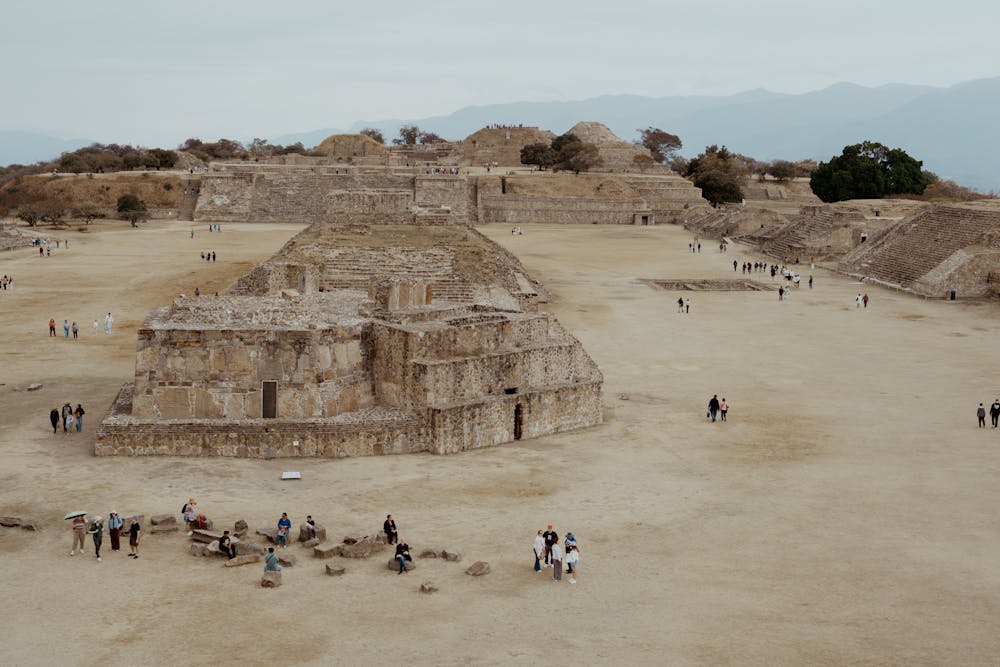

Something ancient and extraordinary was waiting beneath a field in southern Mexico, and it took an anonymous tip about looting to make sure it wasn’t lost forever.
In late 2025, archaeologists from Mexico’s National Institute of Anthropology and History (INAH) followed up on that tip in the municipality of San Pablo Huitzo, in Oaxaca’s Etla Valley. What they found has since stopped the archaeological world in its tracks. The Zapotec Tomb 10 discovery at San Pablo Huitzo is now being described by Mexico’s own president as the most important archaeological finding of the decade in the country. The painted walls, the stone sculptures, and the 1,400 years of silence this chamber managed to preserve make it one of the most complete windows into ancient Mesoamerican life that researchers have ever encountered.
This is the full story of what was found, why it matters, and what it tells us about the people who built it.
What Researchers Found Inside Zapotec Tomb 10
According to CNN (2026), INAH confirmed that the tomb was built by the Zapotec culture around A.D. 600 and sits in San Pablo Huitzo in the state of Oaxaca. The chamber measures 5.5 meters long, 2 meters wide, and 2 meters high. By any measure, it is substantial. And almost every surface of it has something to say.
The entrance alone is a statement. A large carved owl sits above the doorway to the antechamber, its beak curving downward to frame the painted face of a Zapotec lord. Live Science (2026) reports that in ancient Zapotec culture, the owl represented death and power, suggesting the sculpture holds in its mouth a portrait of the very ancestor to whom the tomb was dedicated. It’s an image that’s both striking and purposeful, a civilization announcing, in stone, who rests here and why they mattered.
Move past the entrance and the richness deepens. Flanking the doorway between the antechamber and the burial chamber proper are carved figures of a man and a woman, each wearing headdresses and holding ritual objects. According to INAH, these figures may represent ancestors buried in the tomb or, alternatively, guardians of the space. A horizontal beam above the doorway is engraved with what researchers call “calendrical names”, a reference to the ancient Zapotec calendar, which divided 260 days into 20 months and used animals and natural images to represent each day. Important people and deities were named for the symbol associated with their birth date. The inscriptions aren’t decorative flourishes. They are, essentially, records.
Inside the burial chamber, the murals are what researchers are calling extraordinary. CNN (2026) describes a procession of figures painted in ocher, white, green, red and blue, each carrying bags of copal, a tree resin burned as incense during Mesoamerican ceremonies. The same incense was used by the Zapotec, Maya, and Aztec alike. The figures are walking toward the tomb’s entrance, as if frozen at the moment of a funeral rite. Pottery and human remains were also recovered from the chamber.
Why the San Pablo Huitzo Excavation Is Significant to Zapotec History
The Zapotec civilization, known to history as the “Cloud People,” was established around 700 B.C. and flourished in what is now Oaxaca for over a millennium before the Spanish conquest in 1521. Live Science (2026) notes that hundreds of thousands of Zapotec speakers still live in Mexico today, making this discovery as much about a living heritage as an ancient one.
What makes Tomb 10 remarkable isn’t simply its age. It’s the condition. Murals and stone carvings from 1,400 years ago rarely survive intact. Most tombs from this period were looted before archaeologists could reach them. The Huitzo tomb joins other ancient Zapotec tombs in Oaxaca, many of which were stripped before proper study could begin. This one survived.
Mexico’s Culture Secretary Claudia Curiel de Icaza called the tomb an “exceptional discovery” for what it reveals about Zapotec social organization, funerary rituals, and belief systems preserved in its architecture and murals. President Claudia Sheinbaum put it plainly at her January 23, 2026 news conference: it’s Mexico’s top archaeological find, valued for the level of preservation and the depth of information it provides.
That assessment holds up when placed in the broader record of Zapotec tomb discoveries. The Art Newspaper (2026) reports that the first major tomb discovery at the Cerro de la Campana site dates to 1932, and that Tomb 10 is now the second-largest known Zapotec tomb, after Tomb 5, which was found in 1985 at the same ancient settlement. For context on what these burial chambers reveal about the societies that built them, our piece on secrets of Egypt’s Valley of the Monkeys covers similar themes of elite burial, ancestor veneration, and the race to preserve ancient sites before they disappear.
What UNAM and Brandeis University Researchers Discovered
The scholarly response has been significant. Fernando Berrojalbiz, a researcher at the Institute of Aesthetic Research at UNAM, told The Art Newspaper that the Etla Valley tradition includes tombs featuring lizards, serpents, and jaguars with monkey or bird heads in their jaws, iconography tied to identity and status. What sets Tomb 10 apart from its neighbors, according to Berrojalbiz, is a stepped vault formed by overlapping stone layers, an architectural feature unique among known regional tombs. This, he argues, demonstrates “the diversity and richness in Zapotec expressions,” a reminder that even within a single tradition, individual builders found ways to distinguish themselves.
Javier Urcid, an anthropology professor at Brandeis University, adds crucial historical weight. Urcid noted that at Monte Albán alone, more than 200 tombs of varying size and decoration reflect the social, political, and economic differences among the ancient Zapotecs. Tombs were not built for a single burial and sealed. They were constructed beneath residences and reused over generations, with additional burials added over time and offerings occasionally changed or updated. They functioned, in a real sense, as family archives, inscribed genealogies that verified membership in lineages and kept the dead politically present among the living.
UNAM’s Edith Ortiz, a researcher at the Institute of Anthropological Research, points to what careful analysis could still yield: alongside political and social insights, study of the human remains can reveal the diet and health history of the individuals buried there. She also raised what may be the most pressing issue facing the site’s future: ensuring that federal and state authorities commit to protecting it through a long-term project that doesn’t get derailed by changes in political administration.
The Race to Preserve It
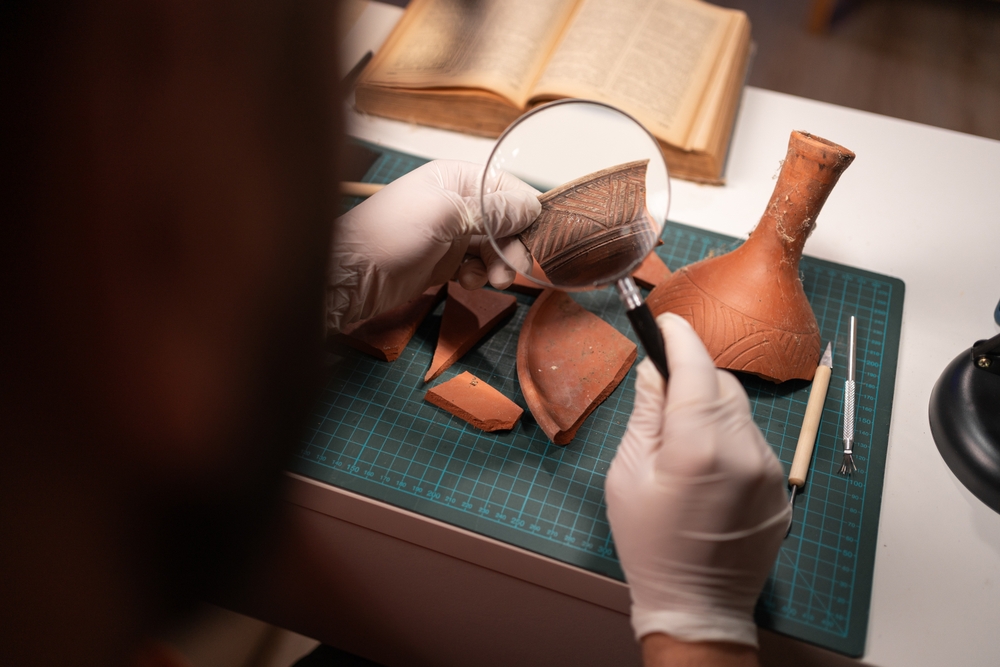
The murals are beautiful. They are also fragile. According to INAH (2026), the painted walls are in a fragile state due to the impact of tree roots, insects, and rapid changes in environmental conditions, the kind of deterioration that can accelerate dramatically once a sealed space is opened to outside air. A multidisciplinary team is now working to stabilize the microclimate inside the tomb and consolidate the pigments and plaster in place.
The plan, as stated by Culture Secretary Curiel, is to complete stabilization work and open Tomb 10 to the public by the end of 2026. The nearby Cerro de la Campana site, where the previously largest known tomb, Tomb 5, was found in 1985, remains closed to the public due to conservation concerns. A replica of Tomb 5 is currently on display at the Museo Comunitario Cerro de la Campana in Santiago Suchilquitongo, and a similar approach may be considered for parts of Tomb 10 depending on the fragility of access.
The team is also conducting ceramic, iconographic, and epigraphic (inscription-related) analyses in parallel with preservation work, so the science advances even as the structure is being secured. That kind of simultaneous effort is increasingly standard in major archaeological projects, where the window for documentation can close faster than anyone expects.
What This Means for Anyone Paying Attention
The Zapotec Tomb 10 discovery at San Pablo Huitzo, Oaxaca, is the kind of find that doesn’t come along often. A 1,400-year-old burial chamber, built around A.D. 600, that survived intact into 2025, not because it was hidden in a remote mountain, but because someone made an anonymous phone call about looting. That’s the fragility of this kind of heritage. One bad actor and this chamber is gone. One good citizen and it changes what we know about Zapotec civilization.
For the researchers involved, the work ahead is long. The murals need stabilizing. The bones need studying. The calendrical inscriptions need full analysis. The social and political structures the tomb encodes are still being decoded. For the public, the hope is a site open by year’s end, a chance to stand at the entrance of that chamber, look up at the owl and the face in its beak, and understand something real about the people who built it. That’s not a small thing. That’s what archaeology, at its best, actually does.
A.I. Disclaimer: This article was created with AI assistance and edited by a human for accuracy and clarity.