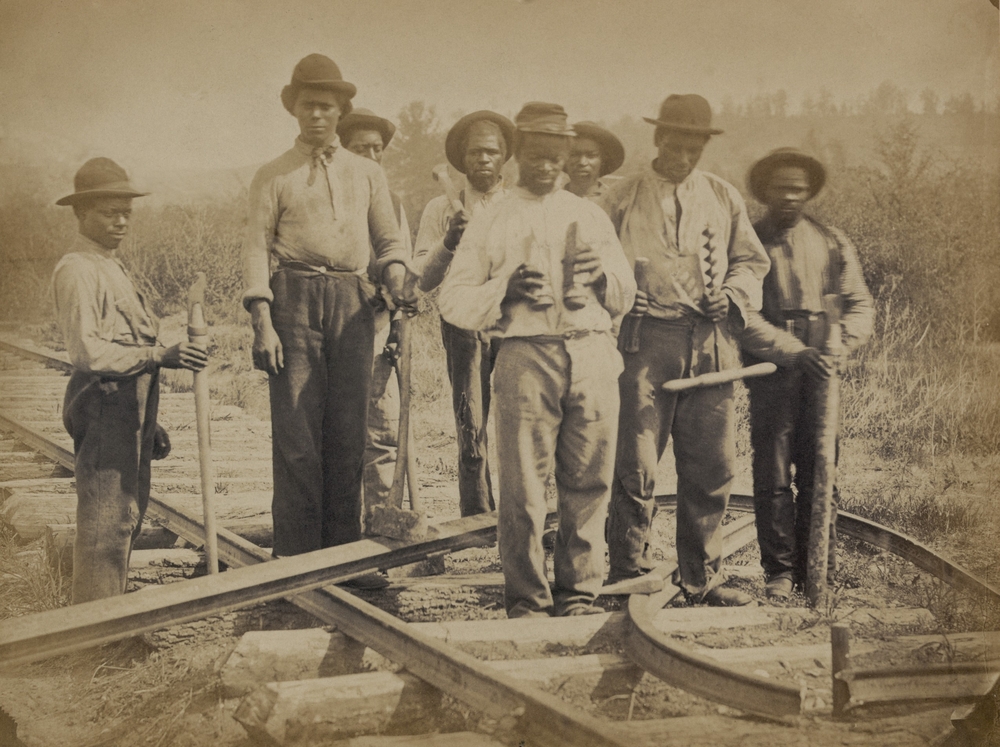

The history of slavery in America is one of the most documented, studied, and also most misunderstood subjects in the American story. Most of us absorbed some version of it in school, maybe reinforced it through films, and rarely questioned what we thought we knew. The problem is that a surprising number of the most commonly held beliefs about American slavery don’t hold up under historical scrutiny. What follows is a detailed look at 10 of the most persistent slavery misconceptions, each one contradicted by the historical record.
1. Slavery in America Started in 1619
The misconception: American slavery began when the first Africans arrived at Jamestown, Virginia in 1619, making 1619 the definitive starting point.
What historians say: 1619 is a useful reference point, but it is not when slavery on American soil began. Most historians use 1619 as a starting point; 20 Africans referred to as “servants” arrived in Jamestown, Virginia, on a Dutch ship, but they were not the first Africans on American soil.
In fact, in 1565, the Spanish brought enslaved Africans to present-day St. Augustine, Florida, the first European settlement in what is now the continental U.S., and even before that, 93 years before the Jamestown arrival, Spanish explorers brought 100 slaves with them to a doomed settlement in what is now South Carolina or Georgia. Within weeks of their arrival, those enslaved Africans revolted, and then they vanished.
The Anglo-centric framing of American history is part of the problem. U.S. school curricula tend to ignore much of what happened in the Atlantic prior to the Jamestown settlement and also the colonial projects of other countries that became part of America, such as Dutch New York, Swedish Delaware, and French-Spanish Louisiana and Florida. “There is both an Anglo-centrism and east coast bias to much of traditional American history,” says historian Mark Summers of Jamestown Rediscovery.
Takeaway: 1619 marks the beginning of slavery in the English colonies, not slavery on the American continent. The fuller picture begins at least 54 years earlier.
2. Slavery Was Only a Southern Problem
The misconception: Slavery existed in the South and wasn’t really a Northern institution.
What historians say: This is perhaps the most culturally entrenched of the common myths about slavery. Between 1619 and the late 1700s, labor in the British colonies transitioned from mainly white European indentured servants to enslaved Black people, with enslaved persons put to work everywhere from fields to factories, on ships, and in homes.
Northern states practiced slavery well into the 19th century. Pennsylvania, often held up as a progressive model, is a clear example. In 1790, there were 3,737 enslaved people registered in Pennsylvania; by 1800, there were 1,706; by 1810, there were 795; and in 1840, there remained 64 enslaved people in the state. It wasn’t until the 1850 census that slavery had been completely abolished.
Pennsylvania did pass the Gradual Abolition Act in 1780, the first of its kind in the nation, but “gradual” was the operative word. The Gradual Abolition Act did not free slaves immediately. It specified that “every Negro and Mulatto child born within the State after the passing of the Act (1780) would be free upon reaching age twenty-eight.”
Although antislavery northerners began passing abolition laws beginning with the 1777 state constitution of Vermont, northern slavery did not recede quickly. By 1810, a generation after the Revolution, over one-fourth of all northern African Americans were still enslaved.
Takeaway: Slavery was a national institution, not just a Southern one. The North was slower to dismantle it than is often acknowledged, and it persisted there well past the dates most people assume.
3. The Majority of Enslaved Africans Came to America
The misconception: The United States was the primary destination for Africans transported during the transatlantic slave trade.
What historians say: The scale of the trade to the United States, while catastrophic, was a small fraction of the total. Only a little more than 300,000 captives, or 4, 6 percent of all Africans transported during the slave trade, came to what became the United States, debunking the myth that the majority of African captives came to the U.S.
To put this in an even starker context: around 80 percent of kidnapped Africans transported across the Middle Passage were forced to work on sugar plantations under incredibly dangerous conditions. Of the enslaved men, women, and children who survived the Middle Passage, approximately 90 percent arrived in the Caribbean or South America.
In fact, the overwhelming percentage of African slaves were shipped directly to the Caribbean and South America; Brazil received 4.86 million Africans alone.
So why did the U.S. enslaved population grow so substantially despite receiving a smaller share of the trade? Because the conditions for survival and reproduction in North America, though brutal, were less lethal than the sugar plantations of the Caribbean and Brazil. In the Caribbean and Brazil, enslaved Africans often experienced high mortality rates and unbalanced gender ratios, which limited natural population increases through reproduction. This kept market demand active for new shipments of enslaved Africans in these areas.
Takeaway: The United States received a small fraction of the total transatlantic slave trade. The institution’s dominant horror in terms of sheer numbers played out in South America and the Caribbean.
4. All Southerners Owned Slaves
The misconception: Enslavers made up the majority of white Southern society before the Civil War.
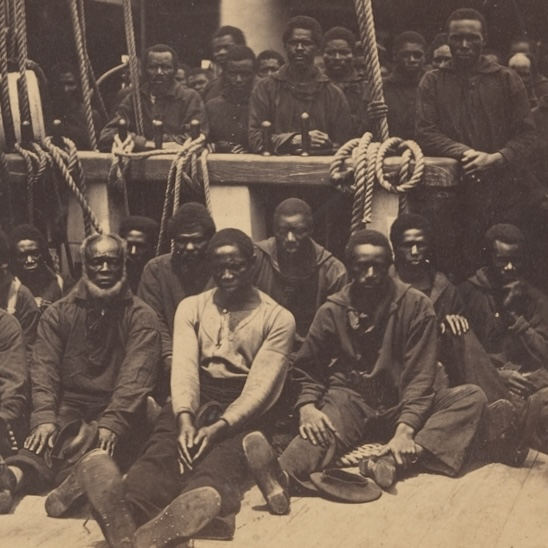
What historians say: Slave ownership in the antebellum South was far more concentrated than popular memory suggests. Roughly 25 percent of all Southerners owned slaves, debunking the myth that all Southerners were slaveholders.
Historians examining the 1860 secession convention in South Carolina offer a revealing window into just how concentrated wealth and slave ownership actually were. One hundred and fifty-three of the 169 delegates held slaves in 1860. Approximately 60 percent of the convention owned as many as 20 enslaved people or more. Seventy members held 50 slaves or more, and 27 delegates, or 16 percent of the convention, held 100 slaves or more.
This matters because the mythology of widespread Southern slave-ownership has long been used, consciously or not, to suggest that the institution had broad popular roots rather than being a system that primarily served a wealthy planter class. The historical record tells a more concentrated story.
Takeaway: Three out of four white Southerners did not own enslaved people. Slavery served and was defended by a relatively small elite, though many non-slaveholders supported the institution and benefited from it in other ways.
5. American Slavery Was Not Uniquely Significant
The misconception: Slavery existed everywhere throughout history, so American slavery was just one version of a universal institution.
What historians say: Slavery did exist in many forms across many civilizations, but the American system had features that made it historically distinctive. On the eve of the American Civil War, the United States was the most powerful slaveholding society on Earth, countering the myth that American slavery was not historically significant compared to slavery elsewhere.
Its legal architecture was also unique. Beginning in the 1650s, the Virginia legislature passed race-based laws codifying two key elements unique to American slavery: a Black servant was enslaved for life, and any child born of an enslaved woman was automatically enslaved, establishing the hereditary chattel system.
These laws developed in tandem with market capitalism, creating “chattel” slavery, the treatment of human beings as commodities, products to be bought, sold, given, and inherited.
Four qualities marked American slavery specifically: the growth of the enslaved population outside of the slave trade, the heritable status of the mother, the permanence of servitude, and the chattel principle. Taken together, these features made the American system not just one variant among many, but a particular and powerful machine for the perpetuation of bondage.
Takeaway: American slavery was not generic. Its hereditary, race-based, and legally codified structure made it among the most systematic forms of human bondage ever institutionalized.
6. House Slaves Had It Easy
The misconception: Enslaved people who worked inside plantation homes experienced a significantly better and easier life than those who labored in the fields.
What historians say: This is one of the most damaging slavery historical inaccuracies still in circulation, and historians have pushed back against it forcefully. While house slaves sometimes had access to better food and clothing, that surface comparison papers over a very different kind of exploitation.
House slaves performed essentially the same duties as all domestic workers throughout history, such as cooking, cleaning, serving meals, and caring for children; however, their slave status could expose them to more significant abuses, including physical punishments and use for personal gratification.
These bondsmen lived within close proximity of their owners and were under constant scrutiny, not to mention serving at their masters’ beck and call twenty-four hours per day.
Women working inside plantation homes, many of whom were assigned domestic labor, were especially vulnerable. Slavery was maintained through constant cruelty, fear, and severe punishment, including threats of harm and extreme punishment. Being close to the enslaver’s household did not provide safety. In many recorded cases, it led to greater exposure to exploitation, intimidation, and emotional harm.
Takeaway: The “house slave versus field slave” framing is misleading. Both groups endured profound suffering. For women, especially, proximity to the slaveholder’s household carried its own category of danger.
7. The Civil War Wasn’t Really About Slavery
The misconception: The Confederate states seceded over “states’ rights”, with slavery being incidental or secondary to that cause.
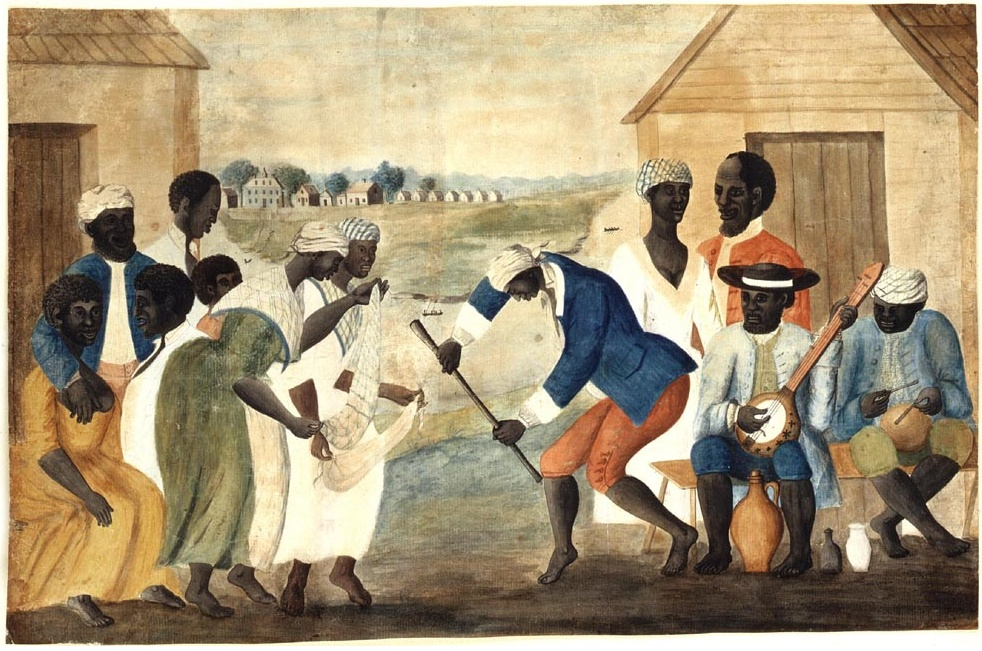
What historians say: The Confederate states themselves answered this question in writing, and their answer was unambiguous. In the official December 1860 declaration of secession, South Carolina’s delegates explicitly cited hostility toward the institution of slavery as the cause, contradicting the later “states’ rights” narrative about the Civil War.
The document is direct. The declaration laid out the primary reasoning behind South Carolina’s decision to secede from the U.S., which was described as “increasing hostility on the part of the non-slaveholding States to the Institution of Slavery.”
The “states’ rights” reframing came later. A 2011 Pew Research Center poll found that Americans were significantly divided on the issue, with 48 percent saying the war was “mainly about states’ rights” and 38 percent saying the war was “mainly about slavery.” This disconnect between public perception and the historical record, one that the Confederate states themselves left in writing, is one of the most consequential slavery misconceptions Americans still carry.
Takeaway: The states that seceded said explicitly, in their own documents, that they did so to protect slavery. The “states’ rights” framing was a post-war reinterpretation that contradicts the primary sources.
8. Black Soldiers Fought in Large Numbers for the Confederacy
The misconception: Tens of thousands, or even hundreds of thousands, of Black soldiers voluntarily fought for the Confederate Army, suggesting that enslaved people identified with or supported the Confederate cause.
What historians say: This claim has been thoroughly rejected by historians who have examined the official military records. Until March 1865, Confederate Army policy specifically prohibited Black people from serving as soldiers, debunking the myth that large numbers of Black soldiers fought for the Confederacy.
Black men were not legally allowed to serve as combat soldiers in the Confederate Army; they were cooks, teamsters, and manual laborers. In the Official Records, no Confederate ever references having Black soldiers under his command or in his unit, although references to Black laborers are common.
The law permitting Black enlistment passed in March 1865, one month before Lee’s surrender, and produced almost no actual soldiers. These units did not see combat; Richmond fell without a battle to Union armies one week later in early April 1865. These two companies were the sole exception to the Confederacy’s policy of spurning Black soldiery, never saw combat, and came too late in the war to matter.
In contrast, roughly 190,000 to 200,000 Black men fought for the Union, and Black soldiers made up 10 percent of the Union Army and suffered more than 10,000 combat casualties.
Takeaway: No significant numbers of Black men fought as soldiers for the Confederacy. Those who served the Confederate war effort did so overwhelmingly as forced labor. The myth is unsupported by the military record.
9. The Irish Were Treated Just Like Enslaved Africans
The misconception: Irish indentured servants in colonial America experienced conditions equivalent to or worse than those of enslaved Africans, making the two groups comparable, and suggesting that white suffering during this period has been overlooked.
What historians say: Historians have described this as one of the most misleading and politically motivated of the common myths about slavery. Irish people were never subjected to hereditary chattel slavery in the colonies; the large majority of Irish indentured servants came to North America voluntarily, and their status was fundamentally different from that of enslaved Africans whose bondage was permanent and hereditary.
The legal distinctions are stark. Historians note that, unlike slaves, many indentured servants willingly entered into contracts, served for a finite period, did not pass their unfree status on to their children, and were still considered fully human. Both systematically and legally, enslaved Africans were subjected to a lifelong, inheritable condition of slavery that indentured Irish people never were.
Chattel slavery was perpetual; a slave was only free once they were no longer alive. It was hereditary; the children of slaves were the property of their owner. The status of a chattel slave was designated by race, with no escaping one’s bloodline. An indentured servant could appeal to a court of law if they were mistreated; a slave had no recourse for justice.
Takeaway: Irish indentured servants faced genuine hardship, but they were not enslaved in any legally comparable sense. Equating the two erases meaningful distinctions between a temporary contract and a permanent, hereditary system of racial bondage.
10. All Slave Owners Were White
The misconception: Enslaved people were exclusively owned by white Americans.
What historians say: While the overwhelming majority of slave owners were white, this was not universally the case. A small number of free Black Americans also owned enslaved people, a historical reality that requires careful context to understand.
In 1830, 3,775 freed former slaves owned about 12,100 slaves, according to historian Carter G. Woodson. William Ellison is one of the most documented examples. William Ellison Jr., born in April 1790, was an African-American cotton gin maker, blacksmith, and slave owner in South Carolina, and a former slave who achieved considerable success as a slave owner before the American Civil War. He eventually became a major planter and one of the wealthiest property owners in the state.
During his free time, Ellison worked for wages, and by 1816, he had acquired the funds to purchase his freedom. Once free, April relocated to the town of Stateburg in Sumter County. By 1850, Ellison had 37 slaves, while his sons owned another 16. He was one of about 180 Black slave masters in South Carolina at the time, most of whom were former slaves themselves.
Historians have noted that South Carolina’s laws made it exceptionally difficult for free Black people to manumit, or legally free, their relatives, meaning that some Black slave owners initially purchased family members as the only available path to keeping them from being sold to white enslavers. Others, including Ellison, operated plantations in which enslaved labor was central to their business model.
Takeaway: The existence of Black slave owners is part of the historical record, but it must be read in context. They represented a tiny fraction of all slave owners, often operated within a system that gave them few other legal options for protecting family members, and their existence in no way diminishes the fundamental racial nature of American chattel slavery.
What This Means for You
Correcting these slavery misconceptions isn’t a matter of revisionism. The historical record, including documents written by the Confederate states themselves, census data, legal archives, and the scholarship of historians across decades, already tells a more complex and more accurate story than the one most Americans absorbed in school. The myths on this list didn’t appear by accident. Some were constructed after the Civil War to soften the legacy of slavery. Others were reinforced by popular culture. A few simply reflect the limits of what gets taught.
What do historians say Americans get wrong about slavery? Taken together, the record suggests the biggest gap is scale, of geography (it was everywhere, not just the South), of duration (it began before the English colonies, not in 1619), and of legal architecture (its hereditary, race-based system was uniquely designed to perpetuate itself). Understanding these facts doesn’t require a political position. It requires reading what the people involved actually wrote and taking it seriously.
A.I. Disclaimer: This article was created with AI assistance and edited by a human for accuracy and clarity.