
There’s a particular kind of dread that settles in when you’re a plus-size traveler boarding a long-haul flight. You know the feeling. The narrow aisle, the armrests that dig in before you’ve even buckled up, the silent calculus of whether the person in front of you is about to recline their seat into your tray table. For millions of people who fly in larger bodies, economy class on an international route has long felt less like transportation and more like an endurance test. The seat was designed for someone, just not necessarily for you.
That conversation is shifting, and one airline announcement in early 2026 struck a particular nerve. When United Airlines unveiled its Relax Row, travel journalist Robin Raven, writing as a plus-size traveler, described being moved to tears reading the news mid-flight, because she was sitting in exactly the kind of seat the product is meant to replace. Her reaction says something worth paying attention to. This isn’t just a product launch. For a lot of people, it represents something more personal: the first time an airline has designed a lie-flat economy option that feels like it was built with them in mind.
What Is the United Airlines Relax Row Initiative?
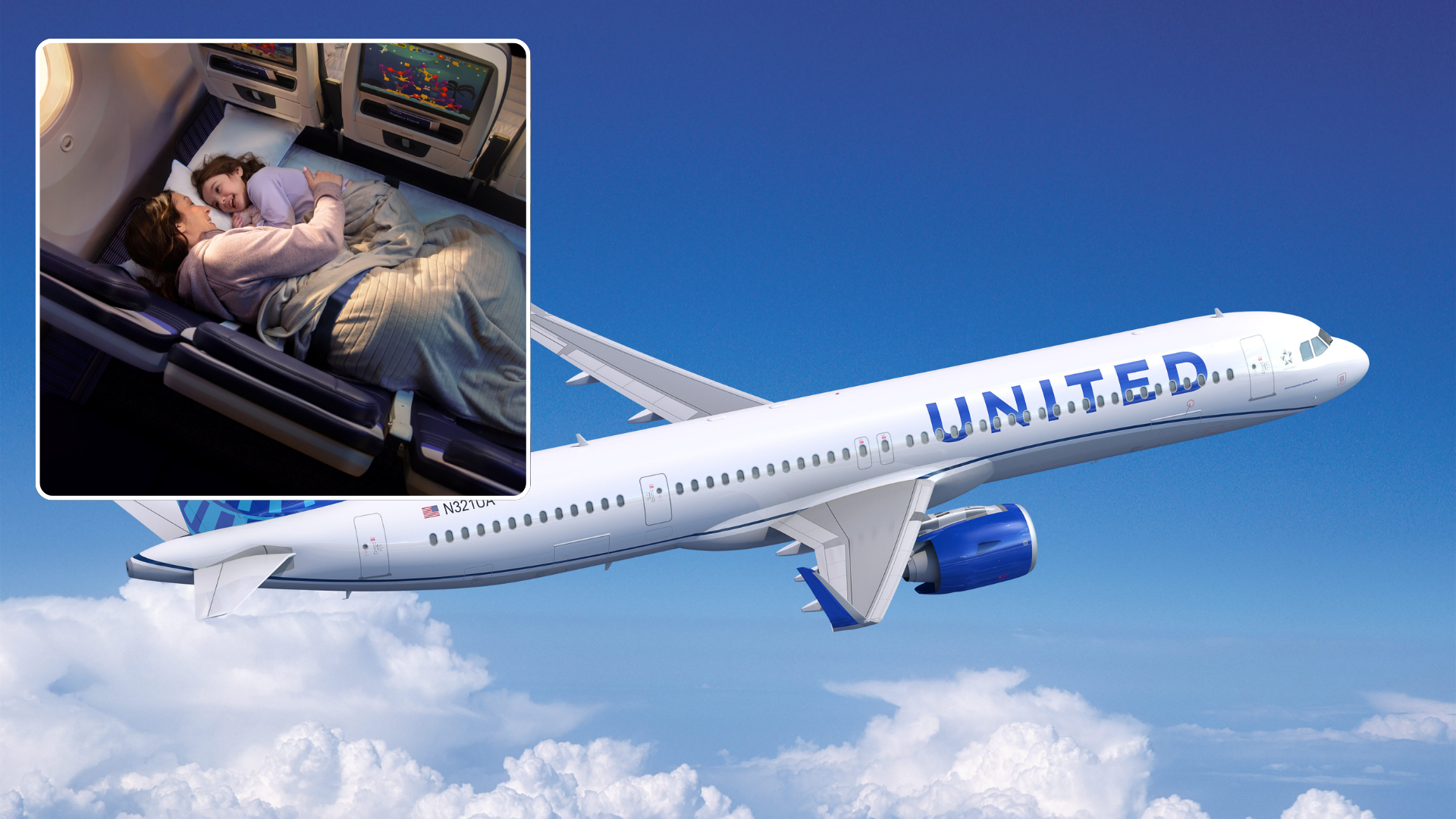
United Airlines announced the United Relax Row on March 24, 2026: a dedicated row of three United Economy seats that can transform into a lie-flat mattress-like space after takeoff, launching in 2027 on Boeing 787 and 777 widebody aircraft. The concept sits in a practical sweet spot that most travelers have long wanted, horizontal rest at economy prices, and the design details matter. Passengers in the United Relax Row receive a custom-fitted mattress pad, specially sized blankets, extra pillows, and a stuffed plush toy and Children’s Travel Kit for families.
For plus-size travelers, the significance of a lie-flat economy seat goes beyond comfort in the way most people use the word. As of 2026, the FAA has not mandated any minimum seat size, which means the airline industry has faced essentially no regulatory pressure to widen its seats. The result is that major airlines, including American, Delta, Southwest, and United, have all seen their seats shrink, losing between 2 and 5 inches of legroom and about 2 inches of seat width since the 1980s. Against that backdrop, a product that gives passengers an entire private row is a genuinely different proposition.
United plans to offer up to 12 United Relax Row sections per plane, with the product available on more than 200 widebody aircraft by 2030, and United holds North American exclusivity on the design. The fact that no other carrier in the region currently offers anything equivalent gives United a real window to define what comfortable economy looks like for American travelers, especially those who have historically had very few palatable options.
According to AFAR Magazine, United is the first U.S. airline to debut this seating style, though it is still awaiting regulatory approval as of March 2026. Pricing hasn’t been announced yet, but the structure is clear: one to three passengers can book a row, with the upcharge expected to vary based on party size, consistent with Air New Zealand’s Skycouch pricing model.
The Plus-Size Traveler Experience: Why This Matters Beyond Comfort
The numbers on airline seating widths are one part of the story. The lived experience of plus-size travelers is another, and the two rarely appear in the same conversation.
Plus-sized travelers have reported embarrassment, painful flights, and outright hostility. As one frustrated passenger told Time magazine: “Seat size needs to be more inclusive, we aren’t sardines, we are people who spent money to travel.” The standard response from most airlines has been a policy requiring the purchase of a second seat. United Airlines, for its part, currently requires passengers to buy a second seat, usually for the same fare as the first.
The Relax Row changes the framing of that conversation. Instead of a plus-size passenger buying an adjacent seat as an accommodation, any traveler can proactively book a private lie-flat economy row as a product. The distinction matters. One arrangement positions a larger body as a problem to be managed. The other positions extra space as a feature that anyone might want. Travel journalist Robin Raven captured precisely this emotional shift in her response to the announcement. She described the familiar boarding anxiety, quietly checking whether she’d fit, whether the tray table would reach, whether to ask for a seatbelt extender, and felt something different in reading about the Relax Row: the possibility of boarding without that checklist running through her head.
In 2024, two plus-sized travelers were removed from an Air New Zealand flight after struggling with the armrests. A flight attendant told them they should have booked extra seats. The airline later apologized, but the incident illustrated how uncomfortable and unpredictable enforcement can be at 30,000 feet. Products like the Relax Row, bookable in advance, with no ambiguity about what you’re getting, sidestep that situation entirely.
Air New Zealand Skycouch: The Original, and What It Offers Larger Passengers
United’s Relax Row didn’t emerge from nowhere. The blueprint was drawn more than a decade ago on the other side of the world. AFAR Magazine reports that Air New Zealand introduced the economy Skycouch in 2011 as a patented, first-of-its-kind seating option, and has since licensed the concept to other airlines including China Airlines and Brazil’s Azul, and now United Airlines.
The mechanics of the Air New Zealand Skycouch are worth understanding, because they reveal both the product’s appeal and its real-world limits for larger passengers. Skycouch seats are just like standard economy seats, except each has an adjustable leg rest that can be raised or lowered individually. Lift the leg rests halfway up for a perfect recline, or all the way up to create a lie-flat couch space. A Skycouch measures 1.55 meters (5 feet 1 inch) long and 74 centimeters (29 inches) wide, with extra bedding, a seat liner, and a Skycouch kit that includes an adult/child loop and cuddle belt so passengers can stretch out safely.
So does the Air New Zealand Skycouch work for plus-size passengers? The honest answer is: it depends on body type and travel style. Skycouches are generally best for people who are smaller and shorter, and for those who don’t mind snuggling up, which makes them great for couples traveling together (assuming neither person is particularly tall or wide) and for parents traveling with small children. Travelers who have used the Skycouch note that while you can’t stretch out completely flat, you can bend your legs and sleep on your side without difficulty, and the space is surprisingly wide for an airplane seat. Solo travelers consistently report the best experience, since all three seats are theirs alone.
Pricing for the Skycouch add-on varies by route and number of travelers. Generally, expect to pay around $1,100 to $2,000 per row, one way, though for two travelers, that cost breaks down to roughly $550 to $1,000 per person. The Skycouch is available across select Air New Zealand 777-300ER and 787-9 aircraft.
Air New Zealand Takes It Further: The Economy Skynest
Just as United is preparing to launch its Relax Row, Air New Zealand has been developing something else entirely. The Economy Skynest will be available to book from May 18, 2026, and will operate on the airline’s Boeing 787-9 Dreamliner aircraft starting in November, featuring six lie-flat pods in a bunk-style layout.
Aerotime Hub reports that Skynest pricing starts at NZ$495 (approximately US$248) per session, with two four-hour sessions available per flight initially. Each pod includes a full-length mattress, fresh bedding, a privacy curtain, ambient lighting, personal ventilation, and charging ports. Air New Zealand developed and tested the Skynest concept with more than 200 customers before finalizing the design, positioning it as an extension of its existing Skycouch economy comfort product.
For plus-size travelers, the Skynest’s pod-style format raises a practical question the Relax Row doesn’t: pod dimensions. A shared bunk-style layout with curtains is a meaningfully different product from an open row of seats that converts into a flat surface. The Relax Row’s open design, no enclosed pod, just a row that lies flat, may be more accessible and less claustrophobic for people with larger body types.
Which Other Airlines Offer Lie-Flat Economy Options?
Beyond United and Air New Zealand, a handful of global carriers have experimented with economy lie-flat options, though none with quite the same combination of advance bookability and full-row conversion.
Lufthansa has run its Sleeper’s Row concept on select long-haul routes. Lufthansa offers a Sleeper’s Row in economy class on flights 11 hours or more, allowing passengers to lie down across seats without upgrading to business or first class. Seats can be booked directly at check-in or at the gate and come with a thin mattress, a Business Class-quality blanket and pillow, though they are subject to availability. The catch, and it’s a significant one: you cannot book the Sleeper’s Row experience in advance. Travelers can only reserve it when checking in or shortly before departure at the gate, as seats are subject to availability. For a plus-size traveler who wants certainty before arriving at the airport, that unpredictability is a real drawback.
Etihad sells an “Economy Neighbour-Free” product that keeps up to three neighboring seats free, bookable in advance through their website or contact center. Pricing varies but typically ranges from $100 to $300 per segment, depending on route length. It’s a neighbor-free seat arrangement rather than a true lie-flat conversion, but it still delivers meaningful extra space at a lower price point than a full-row product.
JetBlue often earns praise for roomy economy seating, with some rows measuring up to 18.4 inches wide, noticeably more than many rivals. That extra inch may sound small, but for plus-sized travelers, it can mean the difference between dread and relief. JetBlue doesn’t offer a lie-flat economy row, but its standard cabin dimensions make it a frequent recommendation among travelers who prioritize width over recline.
What This Means for Plus-Size Flyers Right Now
The United Airlines Relax Row initiative, set for a 2027 launch on its widebody international fleet, is the most concrete signal yet that major U.S. carriers are rethinking who their economy cabin is actually designed for. The product doesn’t solve every problem; economy food service, narrow aisles, and small lavatories remain unchanged, but it does offer something genuinely new: the ability to book, in advance, a private lie-flat economy row that belongs to you for the length of the flight.
For passengers planning long-haul travel right now, the practical options are these. Air New Zealand’s Skycouch is the most established lie-flat economy product in the world, bookable in advance on the airline’s 787-9 and 777-300ER routes, and worth serious consideration for solo travelers or a parent with a young child. The Skynest, available from late 2026 on Air New Zealand’s 787-9 Dreamliners, adds a pod-style option at a lower per-session price, though the enclosed format may not suit everyone. Lufthansa’s Sleeper’s Row is available on ultra-long routes but can’t be reserved in advance, making it unreliable for anyone who needs certainty. And United’s Relax Row, while not available until 2027, is worth tracking early, particularly as pricing details emerge.
The broader shift here matters as much as any individual product. Airlines are discovering that many travelers, not just plus-size passengers, are willing to pay a meaningful premium for a private row and a flat surface. That commercial logic is pushing carriers toward designs that happen to be genuinely more inclusive. Which means that the plus-size traveler who boards a flight without a checklist of dread running through their head may not be far off. Not because airlines suddenly developed a conscience, but because comfortable seats turned out to be good business.
A.I. Disclaimer: This article was created with AI assistance and edited by a human for accuracy and clarity.