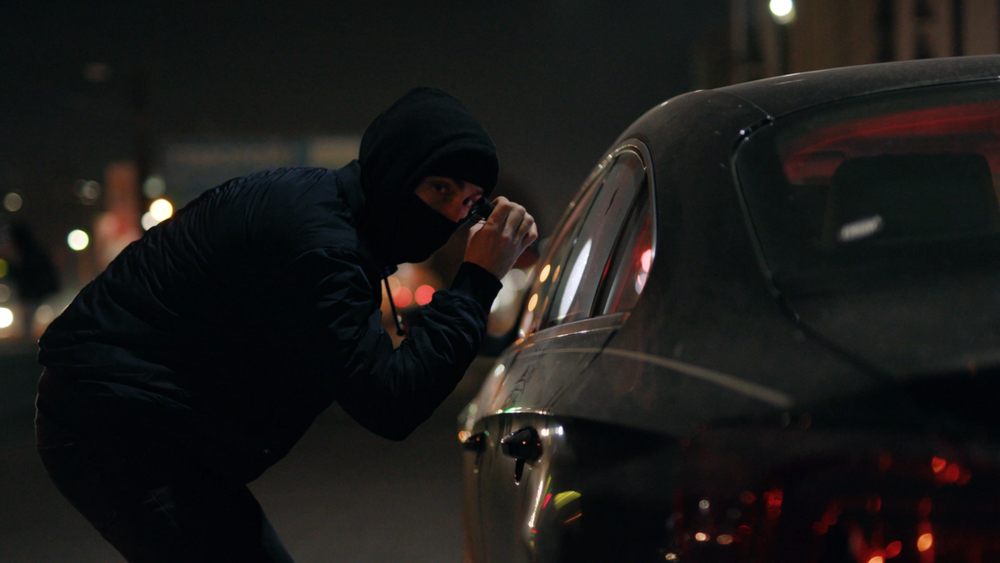

Most of us don’t think about vehicle theft until we walk outside and the parking spot is empty. At that point, the question of which cars thieves prefer stops being abstract. It becomes personal very fast, the police report, the rental car, the insurance call, the weeks of disruption. Vehicle theft is one of those crimes that people tend to underestimate right up until it happens to them.
The good news, and there is genuine good news here, is that the numbers have shifted meaningfully in the last year. Something changed in the data, and it’s not a blip. But the picture isn’t entirely rosy, and some vehicles are still attracting thieves at a remarkable rate. If you drive a common car or truck in America, what follows is worth knowing.
Understanding what thieves actually want, and why, is more useful than most people expect. The list of most-targeted vehicles isn’t random. There are clear patterns, and most of them come down to two things: security vulnerabilities and sheer resale value. Both are fixable, at least partly.
Vehicle Theft Statistics 2025: A Historic Drop
The latest data makes for genuinely encouraging reading. The National Insurance Crime Bureau reported that 659,880 vehicles were stolen nationwide in 2025, a 23% decrease from 2024 and the lowest annual total in several decades. To put that in context, The Truth About Cars noted that the 2025 decline follows a 17% drop in 2024, which had itself been the largest year-over-year decrease in vehicle thefts in 40 years. Back-to-back record drops, that represents real, sustained progress.
The improvement wasn’t evenly distributed across the country. Jalopnik reported that Washington State saw a 39% decline in vehicle thefts in 2025, the largest percentage drop of any state in the nation. On the other end of the scale, some metro areas remain deeply troubled. The Los Angeles, Long Beach, Anaheim metro area recorded more vehicle thefts than any other U.S. metro in 2025, with 53,911 stolen vehicles. California led all states with 136,988 incidents; Texas was second at 75,269, and Illinois third at 28,327.
Despite the national progress, a vehicle is still stolen every 48 seconds in the U.S., according to NICB President and CEO David J. Glawe. That’s a sobering counterpoint to the headline number, real improvement, but still a country where auto theft is far from solved.
What Cars Are Stolen the Most in the US?
The complete 2025 NICB top-10 most stolen vehicles list, as reported by Jalopnik, runs as follows: the Hyundai Elantra with 21,732 thefts, Honda Accord with 17,797, Hyundai Sonata with 17,687, Chevrolet Silverado 1500 with 16,764, Honda Civic with 12,725, Kia Optima with 11,521, Ford F-150 with 10,102, Toyota Camry with 9,833, Honda CR-V with 9,809, and Nissan Altima with 8,445.
What stands out immediately is how compact sedans dominate the list. Half the top ten are everyday, affordable cars rather than high-end vehicles. These aren’t the cars people imagine when they think of theft targets. But thieves operate on logic, not drama, and common vehicles give them exactly what they need: abundant parts, easy resale, and little attention on the road.
The two pickup trucks, the Silverado and F-150, tell a different story. These trucks remain highly targeted for their valuable parts and strong resale market, with trucks like the Silverado targeted partly because their components attract steady black market demand. The Silverado is also vulnerable to something called CAN bus injection, a method in which thieves connect devices to external wiring, such as headlights or front sensors, to trick the vehicle’s systems into disabling the engine immobilizer. An engine immobilizer, for those unfamiliar, is an electronic device that prevents a car from starting unless the correct key is present.
Ford has responded to its truck’s persistent targeting. Through its FordPass app, the company now offers a “Start Inhibit” feature that lets owners remotely prevent their truck from starting, even if someone has the key fob. If a theft attempt occurs, owners receive notifications through the app. The security package is free for the first year and costs $7.99 per month after that. It’s available on 2024 and newer F-150 models, which still leaves millions of older trucks without a comparable option.
Why Is the Hyundai Elantra the Most Stolen Car?
This is the question the data keeps raising, and the answer is specific. The Hyundai Elantra’s position at the top of the list for multiple consecutive years isn’t an accident. It traces directly to a security gap that Hyundai and Kia built into millions of vehicles sold in the United States.
A large batch of 2011, 2021 Hyundai and Kia vehicles equipped with mechanical key ignitions were built without factory immobilizers. If a thief broke the ignition cylinder, the vehicle could be started without any transponder chip, no specialized tools required. While Canadian and European regulations required immobilizers on all vehicles, U.S. regulations did not, and Hyundai and Kia did not include them as standard.
The result was a viral theft trend, with videos demonstrating how to steal these cars with nothing more than a USB cable spreading across social media under the name “Kia Boyz.” What had been a manageable theft rate became, almost overnight, a national problem. Car insurance claims for these brands surged. Some owners in heavily affected cities found their vehicles uninsurable.
The manufacturers’ response has had real impact. Vehicles that received the software patch experienced a 53% reduction in overall theft claims and a dramatic 64% decrease in total vehicle theft compared to those without the update, though the high baseline of theft continues. That’s meaningful progress. Hyundai and Kia vehicles together accounted for 14% of all vehicle thefts in 2025, down from 16% in 2024 and 21% in 2023, a third consecutive annual decline attributed to software updates and theft-prevention measures.
But the patch has a practical catch. Theft claim frequency for Hyundai and Kia vehicles remains elevated even for models with the new software, partly because the software-based immobilizer only activates if the driver remembers to lock the vehicle with the key fob rather than the door handle button. Hyundai notes that engine immobilizers are now standard on all vehicles produced as of November 2021, which means recent buyers are protected. Owners of older models should check with their local dealer about the free software upgrade, and if the update is installed, use the fob to lock every time.
The Honda Problem: Popularity as a Liability
Three Hondas appear in the 2025 top ten, the Accord at second, the Civic at fifth, and the CR-V at ninth. This isn’t a coincidence, and it’s not purely about any security flaw. It’s the price of being genuinely popular.
The Honda Accord is frequently targeted because its parts, particularly airbags and catalytic converters, are easily resold, landing it on the most-stolen list despite more than 8,500 thefts. With so many on the road, demand for everyday parts is consistently high. Thieves are essentially running a parts business, and common cars are the most efficient inventory.
The Civic’s situation is similar. Honda began including an immobilizer chip in Civic key fobs in 2003, which means older pre-2003 models remain particularly exposed. But newer Civics also continue to attract thieves because engines, transmissions, airbags, and interior trim from Hondas remain in steady demand for repairs, with parts easy to resell at local wreckers and online marketplaces. A thief doesn’t need to sell the whole car if the parts alone are profitable enough.
If you own a Honda and park in areas with elevated theft rates, a visible steering wheel lock remains one of the most cost-effective deterrents available. Thieves are, on the whole, rational about effort versus reward.
Car Theft Rates 2025: What the Geography Tells Us
The geographic spread of vehicle theft is uneven in ways that matter for practical decision-making. California’s dominance of the national numbers reflects both its population size and its persistent concentration of theft in a handful of metro areas. California accounts for roughly $560 million in estimated stolen vehicle value based on NICB data, representing about 44% of total losses among states analyzed.
The NICB most stolen vehicles report 2025 also shows a more complex national picture. Some of the largest improvements came from states, like Washington, that had been hit hardest by the Hyundai-Kia surge in prior years. As the software patches have spread, the most concentrated theft spikes have begun to subside. But consumers who previously installed the software update but nonetheless experienced a theft on or after April 29, 2025, may be eligible to file a claim for restitution, the result of a December 2025 multistate settlement with Hyundai and Kia, co-led by New Jersey and joined by 35 other states.
That settlement carries its own significance. As part of the agreement, the manufacturers must equip all future vehicles sold in the United States with standard engine immobilizer technology and provide up to $4.5 million in restitution to eligible consumers whose cars were damaged by thieves. It took lawsuits, public backlash, and a viral crime wave to get there, but the standard is finally changing.
What the Auto Theft Drop Means for You
The 23% decline in US vehicle theft in 2025 is genuinely significant, the kind of shift that reflects real systemic change, not just statistical noise. For most drivers, that means risk is lower than it was two or three years ago. The particular spike caused by the Hyundai-Kia vulnerability is clearly fading. That’s worth acknowledging.
What hasn’t changed is the underlying logic of how thieves choose their targets. Common vehicles with easy-to-resell parts and large numbers on the road will always attract more attention than rare or difficult-to-part-out models. If your car is on or near the NICB list, practical steps make a real difference: use the fob to lock your car every time, check with your dealer if you own an older Hyundai or Kia without a confirmed immobilizer update, and consider a visible deterrent like a steering wheel lock if you park in high-theft areas. For F-150 owners, activating Ford’s FordPass security package on eligible 2024+ models costs under $100 a year and provides remote engine disabling capability.
One vehicle is still stolen every 48 seconds in this country. The trend is moving in the right direction, but it is not over. Knowing which cars thieves want most, and why, is the first practical step toward making sure yours isn’t next.
What to Do If Your Car Is on the List
If you own one of the vehicles in the NICB top ten, the most useful thing you can do is treat that information as a prompt to act rather than a reason to worry. Start with what you know: confirm whether your Hyundai, Kia, or older Honda has received any available security updates by calling your local dealership with your VIN. The update is free for eligible Hyundai and Kia models, takes about an hour, and has measurably reduced theft rates for those who’ve had it done. If you’ve already had it installed, make a habit of locking with the key fob rather than the door handle button, since that’s the step that actually activates the software immobilizer.
For truck owners, the calculus is slightly different. The F-150 and Silverado are targeted less for opportunistic joyriding and more for parts and resale value, which means visible deterrents like steering wheel locks and audible alarms do less work here than they do for sedans. The more effective defenses are layered: a GPS tracker that lets you locate a stolen vehicle quickly, an aftermarket kill switch installed in a non-obvious location, and for newer F-150 owners, the FordPass Start Inhibit feature. None of these guarantees anything, but each one adds friction, and friction is what most thieves are trying to avoid.
The broader takeaway from 2025’s data is that the gap between the safest and most-stolen vehicles is not random. It’s the result of specific decisions, by manufacturers, by legislators, and by individual owners. Immobilizer standards are finally tightening at the federal level, partly because states and consumers pushed hard enough that the courts got involved. That’s a slow process. In the meantime, a steering wheel club costs less than a single insurance deductible, and checking whether your car has a free security update available costs nothing at all.⇩ Download for WordPressCopy TextCopy Markdown✎ Review & Fix
A.I. Disclaimer: This article was created with AI assistance and edited by a human for accuracy and clarity.