

American family wealth has a way of compounding across generations into numbers that barely feel real. The richest families in the United States aren’t just wealthy, they are wealthier than many countries, and the gap between them and ordinary Americans grows wider each year. According to data from the Federal Reserve, overall household wealth in the United States dropped by $1.6 trillion to reach $169.3 trillion in the first quarter of 2025, driven down by the impact of President Donald Trump’s tariffs on the stock market. But for families at the very top, market dips are a temporary inconvenience, not a threat to their position.
The top 0.1% of US households holds nearly 14% of the country’s wealth, as of the first quarter of 2024, while the top 10% of households hold 67% of total US wealth. Within that top tier sits a smaller group, the American billionaire families whose names appear on Bloomberg’s annual ranking of the world’s wealthiest dynasties and on Forbes’s US-focused lists.
The gap in net worth between the 25th and the 1st richest family is surprisingly broad, with the wealthiest family in America worth more than $267 billion and the 25th worth $16.2 billion. Put another way: the distance between America’s richest family and its 25th-richest is greater than the entire GDP of many developed nations. What these dynasties built, who controls them now, and exactly how much they’re worth might surprise you more than the numbers themselves.
1. The Walton Family, $513.4 Billion
No other family on earth comes close. The founding family of Walmart, the Waltons, tops the Bloomberg 2025 ranking with a net worth that exceeds half a trillion dollars for the first time. The Walton family owns 44% of Walmart and is ranked first with $513.4 billion in wealth.
The foundation of the Walton family’s wealth was laid by Sam Walton when he founded the first Walmart store in 1962, with an innovative approach to retail that focused on rural markets, low costs, and high volume. Today, Walmart is the largest retailer in the world, with more than 10,750 stores. In September 2024, Walton heirs Jim and Rob each surpassed $100 billion in net worth for the first time.
The third generation is now quietly taking the reins. The grandchildren were given voting rights over the family’s Walmart holdings recently, and some have taken over the family foundation’s board. The family also invests broadly through individual family offices, with Lukas Walton’s Builders Vision focused on climate technology and impact investing.
2. The Koch Family, $150.5 Billion
The Koch fortune traces back to Fred C. Koch, who developed a new and more efficient method of cracking crude oil into gasoline. The family business was started by Fred C. Koch, who developed a new cracking method for the refinement of heavy crude oil into gasoline. His son Charles took the Wichita-based enterprise and built it into something far larger. Koch Industries is the largest privately held company by revenue in the United States, according to Forbes. The Wichita, Kansas-based conglomerate operates in oil refining, pipelines, commodities trading, ranching, and paper pulp, and has annual revenues that have exceeded $125 billion.
The family’s internal history has been anything but peaceful. The four sons of Fred Koch fought bitter legal battles over control of the company throughout the 1980s and 1990s, with Charles and David ultimately prevailing. David Koch died in 2019, leaving Charles as the primary public face of the dynasty. Charles Koch has been co-owner, chairman, and chief executive officer of Koch Industries since 1967.
3. The Mars Family, $143.4 Billion
The Mars Family ranked 7th globally on the 2025 Bloomberg list at $143.4 billion. They built that fortune selling products almost everyone has eaten.
In 1911, company founder Frank C. Mars started making and selling buttercream candies from his home in Tacoma, Washington. In 1920, he relocated the business to Minneapolis, where it had success with the Milky Way candy bar, first produced in 1923. Today the company spans far more than chocolate. Mars, Inc. is a global corporation that manufactures products in confectionery, pet care, and nutritional solutions, headquartered in McLean, Virginia, and is one of the largest privately held companies in the United States, with annual revenue of about $55 billion as of 2025.
The family’s most significant recent move was a massive acquisition. In August 2024, Mars agreed to acquire Kellanova, a snack food company spun off from Kellogg’s. The $36 billion deal, which brought Pop-Tarts, Pringles, and Cheez-It crackers under the Mars umbrella, closed on December 8, 2025. Privacy has always defined this family. The Mars children were raised to avoid the press, and the company’s McLean headquarters sits behind a “Private Property” sign that does little to hint at the empire within.
4. The Cargill-MacMillan Family, ~$65 Billion
If you’ve eaten today, there’s a reasonable chance this family profited from it. Cargill is America’s largest private company, a Minnesota-based grain empire founded in 1865 and still 88% owned by the extended Cargill-MacMillan family.
William Cargill founded the Cargill company as an Iowa grain storage business in 1865, during the post-Civil War period, and was its CEO for almost 40 years. With 14 billionaires in the family in recent years, the Cargill family has more individual billionaires among its members than any other family in the world. No family member has run the company since CEO Whitney MacMillan retired in 1995; the family now owns while outside executives manage.
5. The Johnson Family (Fidelity), ~$44.8 Billion
The Johnson family has a net worth of $44.8 billion and six family members, with their source of wealth in money management, headquartered in Boston.
Edward C. Johnson II founded Fidelity Investments in 1946, and the company has been run across three Johnson generations since. Today, Abigail Johnson oversees a privately held company that has grown into one of the world’s largest money managers, with nearly $23 trillion in assets as of 2025. Her family and their affiliates own approximately 40% of Fidelity Investments. Abigail stepped into the CEO role in 2014 and made the bold decision to take Fidelity into cryptocurrency in 2018, one of the first major financial firms to do so.
6. The Pritzker Family, $41.6 Billion
The Pritzker family has a net worth of $41.6 billion and an estimated 50 family members, with their source of wealth in hotels and investments, headquartered in Chicago. Abram Nicholas Pritzker was the son of Ukrainian immigrants who settled in Chicago in the 1880s, and he grew his wealth by purchasing real estate and businesses, with the family known today for building the Hyatt Hotel chain.
Hyatt Hotels reported over $6.65 billion in annual revenue in 2024. The family has also made its mark in politics: Penny Pritzker, Donald’s daughter, is the former US Secretary of Commerce, and her brother J.B. Pritzker has served as the governor of Illinois since 2019.
7. The SC Johnson Family, $38.5 Billion
The SC Johnson family has a net worth of $38.5 billion and 68 family members, with their source of wealth in cleaning products, headquartered in Racine, Wisconsin.
This Wisconsin-based family has been making household products for five generations, ever since Samuel Curtis Johnson founded a parquet flooring and wax company in 1886. SC Johnson is a private consumer goods giant behind brands like Windex, Glade, Ziploc, Raid, and Pledge. The fifth-generation family business quietly reaches into virtually every American home.
8. The Cathy Family, $33.6 Billion
The Cathy family has a net worth of $33.6 billion and 35 family members, with their source of wealth in Chick-fil-A. Samuel Truett Cathy, a businessman, investor, and Southern Baptist, founded the family business in Hapeville, Georgia, in 1946.
Under the Cathys’ watch, Chick-fil-A has grown to over 3,000 locations and an estimated $6+ billion in annual revenue, all while famously staying closed on Sundays. Now in its third generation, grandson Andrew Cathy took over as CEO in 2021, succeeding his father, Dan Cathy. The company’s first international expansion, with a UK store opening, launched in 2025.
9. The Duncan Family, $30 Billion
The Duncan family has a net worth of $30 billion and four family members, with their source of wealth in pipelines, headquartered in Houston. The son of an oil worker, Dan Duncan founded Enterprise Products Partners in 1968.
Dan L. Duncan founded the gas and oil company Enterprise Products Partners in 1968 with just $10,000. After he died in 2010, the company remained under family control, and his four children inherited a nearly $10 billion estate. The company grew from that $10,000 seed into one of the largest pipeline operators in America.
10. The Cox Family, $26.8 Billion
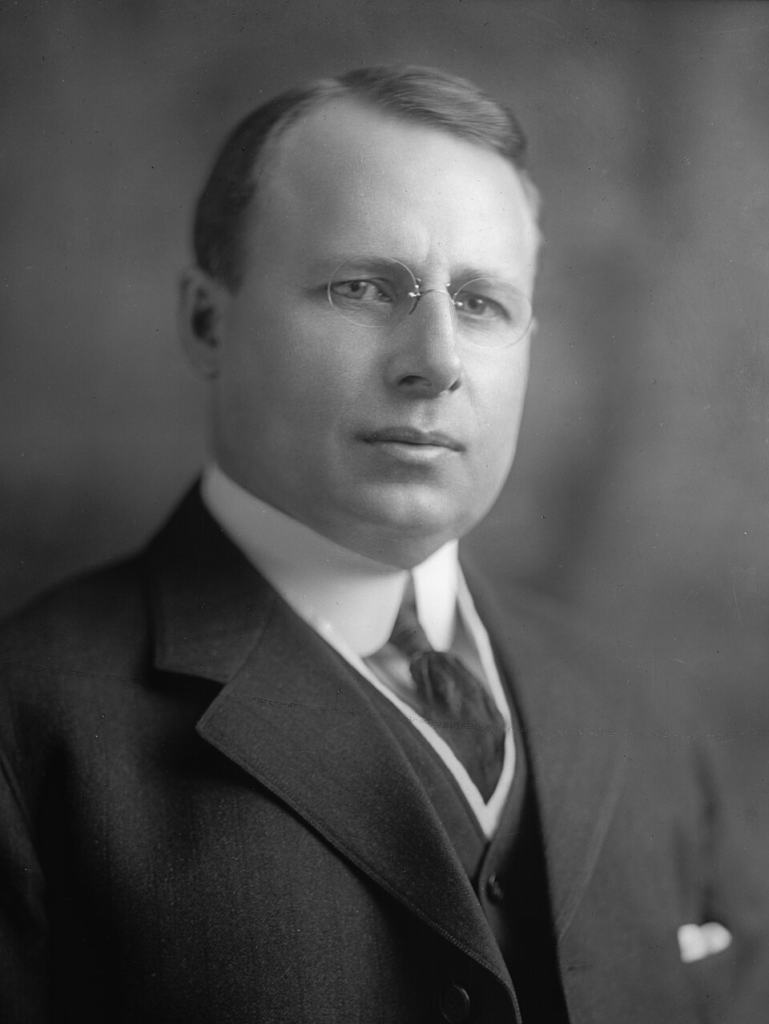
The Cox family has a net worth of $26.8 billion and 31 family members, with their source of wealth in media, headquartered in Atlanta. The Cox family started amassing its fortune in 1898 after James M. Cox purchased the Daytona Evening News. Today, Cox Enterprises includes telecommunications companies Cox Communications and Cox Automotive.
James Cox later served as governor of Ohio and ran for president in 1920 with Franklin D. Roosevelt as his vice presidential running mate. The company’s CEO today is Alex Taylor, the great-grandson of the founder, James Cox. Cox Enterprises generates about $20 billion in revenue per year.
11. The Newhouse Family, $24.1 Billion
The Newhouse family has a net worth of $24.1 billion and 23 family members, with their source of wealth in magazines and newspapers, headquartered in New York City. Samuel Irving Newhouse began what is now an international multimedia publisher with the purchase of the Staten Island Advance in 1922, creating Advance Publications.
Advance Publications owns Condé Nast Publications, whose media properties include Vogue, Vanity Fair, and GQ. The family has also been a long-term major shareholder in Reddit.
12. The Hearst Family, $22.4 Billion
The Hearst family has a net worth of $22.4 billion and 70 family members, with their source of wealth in Hearst Corp., headquartered in New York City. The Hearst family originally gained wealth and notoriety for its mining businesses in the 1880s. However, William Randolph Hearst Jr. made a name for himself by creating the first nationwide media company.
Hearst acquired other newspapers and expanded into radio and TV, creating the foundation for the media giant Hearst Corporation, which owns 76 newspapers, nearly 260 magazines, television stations, and stakes in cable TV channels that include A&E and ESPN. William Randolph Hearst was the inspiration behind Orson Welles’ Citizen Kane. His grandson, William R. Hearst III, is currently the chairman of the company’s board.
13. The Brown Family (Brown-Forman), $20.4 Billion
The Brown family has a net worth of $20.4 billion and an estimated 25 family members, with their source of wealth in liquor, headquartered in Louisville, Kentucky. George Garvin Brown founded Brown-Forman Corp. in 1870. Today, the company produces some of the most well-known alcohol brands in the world, including Jack Daniel’s and Korbel.
Brown-Forman is one of the few remaining publicly traded spirits companies still majority-controlled by its founding family. The company’s portfolio also includes brands like Woodford Reserve and Old Forester, and it distributes in more than 170 countries.
14. The Marshall Family, $18.5 Billion
The Marshall family has a net worth of $18.5 billion and an estimated three family members, with diversified wealth based in Dallas. In the 1960s, J. Howard Marshall II traded his oil company shares for a 15% stake in Koch Industries. Since then, fights over the family’s wealth have made national headlines.
The family became tabloid fodder when Anna Nicole Smith married the 89-year-old J. Howard Marshall II in 1994, setting off a legal battle over his estate that continued for years after both died.
15. The DuPont Family, $18.1 Billion
The DuPont family has a net worth of $18.1 billion and an estimated 3,500 family members, with their source of wealth in DuPont, headquartered in Wilmington, Delaware. DuPont originally started as a gunpowder mill during the American Revolution but has grown into one of the largest chemical corporations in the world.
In 2017, DuPont merged with competitor Dow Chemical but then split into three companies, DuPont, Dow, and Corteva, just two years later. According to Forbes, the du Pont family no longer runs the company but still owns shares of the business. With an estimated 3,500 family members spread across generations, theirs is one of the most diffuse fortunes in America.
16. The Butt Family (H-E-B), $17.8 Billion
The Butt family has a net worth of $17.8 billion and 18 family members, with their source of wealth in supermarkets, headquartered in San Antonio, Texas. In 1905, Florence Butt opened the C.C. Butt Grocery Store in Kerrville, Texas, with just $60.
That single store grew into H-E-B, now one of the largest grocery chain in Texas and one of the most beloved regional supermarkets in the country, with over 400 stores and roughly $40 billion in annual revenue. The Butt family remains privately held and fiercely independent, having turned down acquisition offers from national chains for decades. Charles Butt, the grandson of Florence, led the company as CEO for over 50 years before stepping back from day-to-day operations.
17. The Busch Family, $17.6 Billion
The Busch family has a net worth of $17.6 billion and an estimated 30 family members, with their source of wealth in beer and real estate, headquartered in St. Louis, Missouri. Adolphus Busch co-founded Anheuser-Busch in 1861, and the company became the dominant American brewing empire for over a century.
In 2008, Belgian-Brazilian brewing giant InBev acquired Anheuser-Busch for $52 billion, ending family operational control. The family retained substantial wealth, real estate holdings, and stakes in other ventures. The Busch name remains one of the most recognized in American beer history, and family members have pursued everything from wildlife conservation to motorsports with their inherited fortunes.
18. The Dorrance Family, $17 Billion
The Dorrance family has a net worth of $17 billion and an estimated 22 family members, with their source of wealth in Campbell Soup Company, headquartered in Camden, New Jersey. John T. Dorrance invented condensed soup in 1897, allowing Campbell’s to sell shelf-stable canned soup affordably to American households at scale.
The family has long been one of the largest shareholders in Campbell Soup Company. In 2024, Campbell’s rebranded as The Campbell’s Company to reflect its expansion beyond soup into snacks and meals. The Dorrance heirs remain major stakeholders even as the company’s product lines have diversified far beyond its famous red and white cans.
19. The Kohler Family, $16.2 Billion
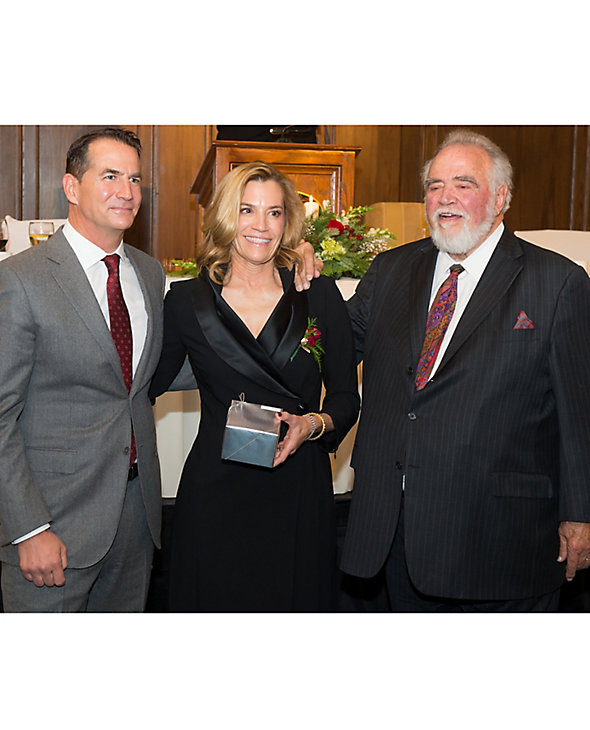
The Kohler family has a net worth of $16.2 billion and an estimated 60 family members, with their source of wealth in plumbing fixtures and hospitality, headquartered in Kohler, Wisconsin. John Michael Kohler founded the company in 1873, initially manufacturing cast-iron farm implements before pivoting to plumbing fixtures.
Today Kohler Co. is a global brand recognized for bathroom and kitchen products, generators, and luxury hospitality, including the American Club resort, one of only a handful of AAA Five Diamond resorts in the Midwest. The company remains entirely private and family-controlled, with David Kohler serving as chairman and CEO.
20. The Lauder Family, ~$19 Billion
The Lauder family built one of the most recognizable names in luxury beauty. Estée Lauder and her husband Joseph founded the company in 1946, and it has since grown into a global empire with dozens of prestige brands under its umbrella.
The family retains a controlling stake in the Estée Lauder Companies, which owns brands including Clinique, MAC, La Mer, and Bobbi Brown. Revenue exceeded $15 billion in recent fiscal years. William Lauder, Estée’s grandson, serves as executive chairman, and family members remain deeply involved at the board level.
21. The Stryker Family, ~$14 Billion
The Stryker family traces its fortune to Ronda Stryker, granddaughter of Dr. Homer Stryker, an orthopedic surgeon who invented several medical devices and founded Stryker Corporation in 1941 in Kalamazoo, Michigan.
Stryker Corporation has grown into one of the world’s leading medical technology companies, with products ranging from surgical equipment to hospital beds and joint replacement systems. The company reported revenues of over $22 billion in 2024. Ronda Stryker and her husband William Johnston are among the primary heirs, and both have been recognized for significant philanthropic giving in Michigan.
22. The Goldman Family, ~$13.2 Billion
The Goldman family fortune stems from Rhonda Goldman and her siblings, heirs to the Levi Strauss & Co. fortune. Peter Haas Sr., who married into the family, led Levi Strauss for decades and helped steer the jeans company through its mid-century expansion into a global brand.
The family took Levi Strauss private in 1985 and then public again in 2019 in one of the more closely watched IPOs of that year. They maintain a controlling stake through a dual-class share structure, keeping decision-making within the family even as the company trades on public markets.
23. The Rollins Family, ~$13.1 Billion
The Rollins family wealth traces back to O. Wayne Rollins, who in 1948 converted a small radio broadcasting company into the pest control giant Rollins, Inc., the parent company of Orkin.
Today Rollins, Inc. is the largest pest control company in the world, operating in 70 countries. The founding family retains a significant ownership stake, and Gary Rollins served as chairman until his death in 2022, with the next generation of family members stepping into leadership and board roles. Rollins, Inc. generates roughly $3.5 billion in annual revenue.
24. The Gallo Family, ~$12.4 Billion
The Gallo family is behind the largest family-owned winery in the world. Ernest and Julio Gallo founded E. & J. Gallo Winery in Modesto, California, in 1933, just after Prohibition ended, with borrowed money and a pamphlet from the local library about winemaking.
The brothers built their business with a relentless focus on distribution and scale, making Gallo wines accessible and affordable across the country. Today the company produces more than 100 brands and ships wine to 110 countries, with estimated annual revenues exceeding $5 billion. Third and fourth generation family members now run the business.
25. The Ziff Family, ~$12 Billion
The Ziff family made its fortune in publishing before pivoting to investment management. William Ziff Jr. transformed Ziff-Davis into one of the most profitable magazine publishers in America, with titles covering technology, gaming, and aviation enthusiast niches.
When the family sold its publishing assets in the 1990s, the proceeds were funneled into Ziff Brothers Investments, a highly secretive and reportedly highly successful family office based in New York. The firm rarely surfaces in public filings, and the family has remained deliberately low-profile, a sharp contrast to the flashy dynasties further up this list, and a reminder that some of America’s most significant fortunes operate almost entirely out of public view.
What These Dynasties Reveal About American Wealth
Looking across all 25 families, a few patterns emerge that are worth understanding. First, longevity matters more than a single stroke of genius. The Waltons, the Mars family, the Cargill-MacMillans, and nearly every other family on this list built their fortunes over multiple generations, reinvesting profits into private companies that never had to answer to quarterly earnings pressure. The most durable family fortunes in America tend to be built on things people always need, food, household products, fuel, insurance, not on speculative bets.
Second, privacy is a competitive advantage. The majority of the families on this list control their wealth through privately held companies, meaning they are not subject to the same disclosure rules as publicly traded corporations. This allows them to take a long view, absorb setbacks without public scrutiny, and pass assets between generations with minimal outside interference. Families like Mars, Cargill-MacMillan, Koch, and SC Johnson have sustained their wealth in large part because they have never been forced to sell equity to the public.
Third, the distance between these families and the rest of the country is not shrinking. The Federal Reserve’s own data shows that the top tier of American wealth continues to capture a disproportionate share of economic gains, and the families on this list have benefited from compounding returns that ordinary households simply do not have access to. For readers trying to understand where American economic power actually sits, these 25 names are a good place to start.
A.I. Disclaimer: This article was created with AI assistance and edited by a human for accuracy and clarity.