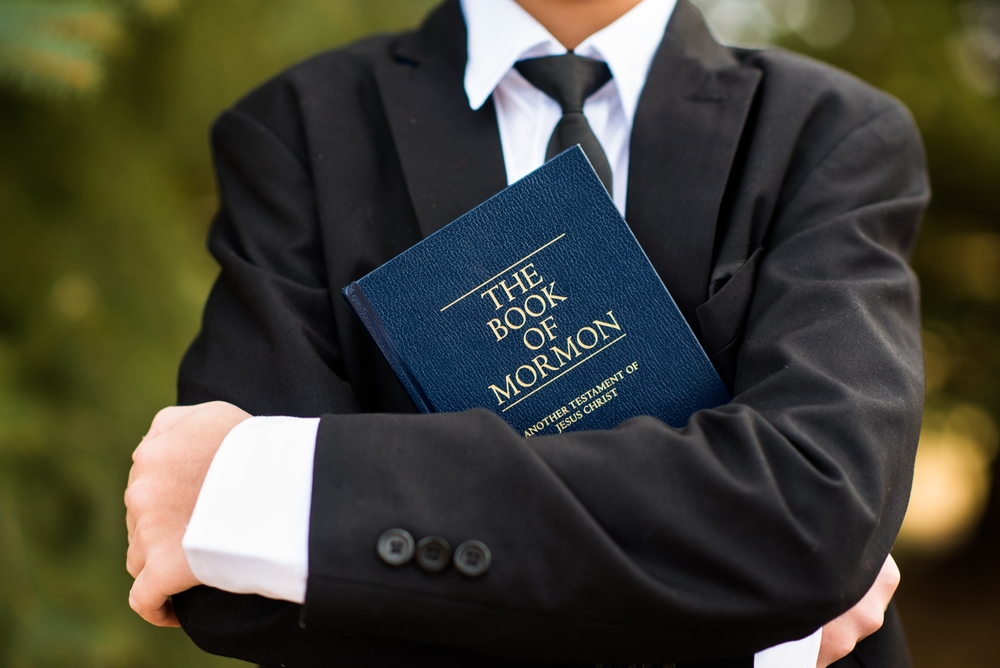

Most people think they know the basics about the Mormon Church. A few facts float around American culture – polygamy, missionaries in white shirts, no coffee – and most folks assume that’s the full picture. But the Church of Jesus Christ of Latter-day Saints, which goes by LDS for short and whose members are still widely called Mormons, is a religion with layers that most Americans have never looked beneath. Writer and blogger Courtney Heard made a point of doing exactly that, outlining ten overlooked facts about the Mormon Church that most Americans tend to miss entirely. Some of what she found confirms things critics have long suspected. Some of it complicates the easy narratives on both sides.
This isn’t a hit piece, and it isn’t a defense. It’s a look at what the Mormon Church actually is – its history, its money, its beliefs, its scale – because the facts themselves are remarkable enough without any spin. If you’re curious about LDS facts most people miss, or you’ve already gone down a few Google rabbit holes and want something better sourced than a Reddit thread, you’re in the right place.
Here’s what Courtney Heard’s research turns up, expanded and updated with the most current figures available as of 2026.
The Founder’s Wives: The Number Most People Don’t Know
When polygamy comes up in conversations about the Mormon Church, most Americans assume it was an unusual practice involving a handful of early members. The reality around the church’s founder is considerably more striking. Joseph Smith, who founded the Latter Day Saint movement, taught and practiced what he called “plural marriage” during his adulthood, marrying an estimated 30 to 40 wives throughout his lifetime.
The church itself eventually acknowledged this. In an essay posted to its website, the Church of Jesus Christ of Latter-day Saints said for the first time that Joseph Smith had as many as 40 wives. What made this acknowledgment significant wasn’t just the number. The details were new to many church members: the number of wives; the fact that Smith’s youngest wife was only fourteen at the time of their sealing; the fact that Smith married some women who were already married to other men; the fact that Smith kept many of his marriages hidden from Emma.
This is a piece of Mormon Church history that sits uncomfortably in official materials. Smith publicly denied practicing polygamy even while doing so. The LDS church officially gave up polygamy in 1890, when then-President Wilford Woodruff issued a “Manifesto” advising all members not to enter into “any marriage forbidden by the law of the land.” Since then, any member practicing or openly advocating polygamy is excommunicated. But the gap between what the founder actually practiced and what the church’s public image suggests is wider than most Americans realize.
Polygamy Is Gone, But the Confusion Persists
This brings up one of the things most Americans get wrong about Mormonism: the idea that polygamy is still happening inside the mainstream church. It isn’t. The shows and documentaries featuring polygamous families – think “Sister Wives” – are not depicting mainstream LDS members. While the early church did practice plural marriage for a period of time in the 19th century, it was officially discontinued over a century ago in 1890. Today, polygamy is strictly prohibited in the Church of Jesus Christ of Latter-day Saints, and any member practicing it would be excommunicated. Groups that do practice polygamy are not affiliated with the church.
The groups still practicing plural marriage today are fundamentalist splinter groups, completely separate from the LDS Church. Groups that continue plural marriage – such as the breakaway Fundamentalist Church of Jesus Christ of Latter-Day Saints – do so outside the 14 million-member Utah-based faith. That distinction matters, and yet the confusion persists in the average American’s mental picture of Mormonism.
The LDS Church Is Not an American Religion Anymore
Here’s a Mormon Church fact that genuinely surprises most people: the majority of LDS members don’t live in the United States. The church is commonly associated with Utah, Salt Lake City, and a very American brand of religious conservatism. The numbers don’t support that image anymore.
The worldwide membership of the church grew to 17,887,212 as of December 31, 2025. And the growth is coming from outside the US. Fueled by an unprecedented volume of convert baptisms, global membership surged last year. In total, the church added 385,490 converts to its membership rolls in 2025, eclipsing the previous record of 330,877 set in 1990.
Where is all this growth happening? There has never been such a wide geographical diversification of high rates of membership growth. All world regions had at least one country where membership increased by five percent in 2025. High growth is no longer regionally concentrated but is now distributed across all global regions. Africa, Latin America, and parts of Asia are driving much of the expansion. This is a genuinely global faith now, not a Utah religion with foreign missions.
There’s a wrinkle in the data, though. Shortly before the church released its glowing annual report about global growth, data showed a steady decline in Americans who self-identify as LDS/Mormon. In 2025, this dipped below the 1% mark for the first time, to 0.9% of the U.S. population. The church is growing everywhere except among Americans who were raised in it or near it.
What Most Americans Get Wrong About Mormon Beliefs
One of the most persistent misconceptions about Mormonism – and Courtney Heard addresses this directly in her work on LDS Church facts – is the question of whether Mormons are Christian. The answer depends on how you define the term, and both sides of the debate have a point.
Mormons believe God the Father, Jesus and the Holy Spirit are separate beings. Historic Christians heed the Bible as the sole word of God, while Latter-day Saints believe in the Bible and other scriptures, including the Book of Mormon. Still, Jesus Christ is the center of Mormon devotion, belief and practice. He is considered the Son of God and savior of all humanity.
So Mormons believe in Christ – that much is settled. But their theology diverges from mainstream Christianity in significant ways. The church teaches that God, Jesus, and the Holy Ghost are three distinct, separate beings – not a unified Trinity. It also teaches, in a concept called “exaltation,” that faithful members can eventually become gods themselves. Mormons view mortal life as a time of learning and testing, as well as an opportunity to develop the godlike traits that they will need if they hope to live as a god in the next life.
Then there’s the afterlife structure. In LDS doctrine there are three heavens: the Celestial Kingdom, Terrestrial Kingdom, and Telestial Kingdom. The Celestial is the highest, where God and those who followed his law reside. The Terrestrial is the middle, where people who followed the Law of Moses reside. The Telestial is the lowest, where those who followed carnal law reside. This is a fundamentally different afterlife cosmology from traditional heaven-and-hell Christianity.
The Coffee Rule Is Misunderstood
Ask anyone what they know about Mormons, and “they can’t drink coffee” usually comes up within seconds. That’s technically true but commonly misunderstood. The LDS church’s health code, known as the Word of Wisdom, was issued in 1833 by Mormon founder Joseph Smith. It condemns alcohol, tobacco and “hot drinks,” which church leaders have subsequently described only as “coffee and tea.” Many members have presumed it’s because they contain caffeine and thus eschewed any beverages – especially carbonated sodas – containing caffeine.
The prohibition is actually on coffee and tea specifically, not caffeine as a compound. Caffeinated soda has always been a gray area, and the church has clarified over the years that it’s the specific drinks – not the molecule – that are restricted. Members of the Church of Jesus Christ of Latter-day Saints do not drink tea, coffee, alcohol, or smoke tobacco, or take illegal drugs. This is called living the Word of Wisdom, and it’s tied to deeper ideas about the body as sacred. Most outsiders reduce it to “no caffeine,” which misses what the rule is actually about.
The Church’s Finances Are Staggering
This is one of the overlooked facts about the Mormon Church most Americans don’t know. The LDS Church is extraordinarily wealthy – not just “wealthy for a religious organization” wealthy, but wealthy by any standard you care to apply.
An independent analysis in 2024 estimated the church’s net worth at approximately $293 billion, of which $206 billion is held in its investment portfolio, intended as a reserve or “rainy-day” fund. The analysis estimated that those investments could directly pay for all expected church costs for the next 30 years, and that earned interest on current reserve funds could hypothetically fund church operations perpetually at current levels. It also estimated that church members contribute between $5.5 billion and $6.5 billion annually in tithing.
To put that in plain terms: the church is financially self-sustaining in perpetuity, even if every tithe-paying member stopped giving tomorrow. The church has not publicly disclosed its financial statements in the United States since 1959. The church does disclose its financials in the United Kingdom and Canada where it is required to do so by law.
At the same time, the church spends significantly on humanitarian work. The Church of Jesus Christ of Latter-day Saints provided $1.45 billion in humanitarian aid in 2024. The increase over 2023 giving included $55.8 million for maternal and infant and toddler care in Africa and Asia. The wealth is real. The giving is also real. Both things coexist.
Temples and Meetinghouses Are Not the Same Thing
Here’s a distinction that trips people up. Most people have seen pictures of the white, spire-topped LDS temples and assumed those are the buildings where Mormon services happen every Sunday. They’re not. Regular Sunday worship happens in ordinary meetinghouses – functional buildings, nothing dramatic. Temples are something else entirely.
Mormon temples are open only to members of the Church of Jesus Christ of Latter-day Saints who pass stringent tests of orthodox belief and practice. One ritual performed in the temples is called the “endowment,” during which initiates are taken on a symbolic journey. Participants watch as a sacred narrative unfolds that recounts the creation of the earth, the events in the Garden of Eden, and the interaction of Adam and Eve with heavenly messengers who teach them the gospel of Jesus Christ.
Another key ritual performed in temples is called sealing. Adults go there to make further promises of faithfulness to God, and can also be “sealed” to their families. Sealing means you’re bound together in a family unit forever, even after you die. Not only are you sealed to your spouse in the temple, but you’re also sealed to your parents and your children.
Non-members cannot enter temples, which is the source of a lot of the mystery and suspicion surrounding them. It’s also why the church’s massive temple-building campaign matters to its members in a way outsiders rarely appreciate. The statistical report noted that the church had 204 temples in operation at the end of 2025, up from 194 at the end of 2024.
Baptism for the Dead Is a Real Practice
This one genuinely surprises most people when they first hear it. The LDS Church practices what it calls “proxy baptism” or baptism for the dead – performing baptismal rites on behalf of deceased people who were never LDS. The idea is that the dead person’s spirit can then choose to accept or reject the faith in the afterlife.
Mormons believe that missionary work continues among the spirits waiting in prison, and those who accept the teachings of the Church in prison are eligible for the Celestial Kingdom. It is for this reason that Mormons perform temple rites on behalf of their dead ancestors.
This practice has occasionally made headlines – most notably when Jewish organizations raised objections after Holocaust victims were found in LDS baptismal records. The church has since agreed to restrictions on posthumously baptizing people of certain faiths without family consent. But the practice itself continues and is a significant part of what drives the church’s extraordinary commitment to genealogy. The church continues to connect the global human family through the free genealogical services of FamilySearch, which now has more than 20 billion searchable names and images in its archives.
The Black Priesthood Ban Lasted Until 1978
This is one of the LDS Church secrets – or rather, openly documented historical facts – that many Americans either don’t know or have only vaguely heard about. For nearly 130 years after its founding, the church denied Black men access to its priesthood. That’s not a fringe claim. In the LDS religion, any worthy male can be given the priesthood and is given specific duties. Black people were not allowed to have the priesthood until 1978. Females are not allowed to have the priesthood.
The 1978 reversal came under church president Spencer W. Kimball and is known as “Official Declaration 2.” The church now acknowledges that the basis for the original ban was not doctrinal but rooted in cultural and racial attitudes of the era. This acknowledgment came decades after the 1978 change, and it remains a complicated part of LDS history that the church continues to grapple with.
The issue of women and the priesthood is a separate, ongoing debate. Women hold significant organizational roles – the Relief Society, for instance, is one of the largest women’s organizations on earth. But ordination to the priesthood itself remains restricted to men, which puts the church at odds with many contemporary expectations around equality and leadership.
What Courtney Heard Says About the LDS Church – And What It Actually Means
So what does Courtney Heard say about the LDS Church, taken as a whole? Her argument isn’t that individual Mormons are bad people – she’s quite clear on the opposite. Her concern is the gap between the institution’s public face and its actual history, finances, and doctrinal record. It’s a gap she thinks most members haven’t fully examined, not because they’re incurious, but because the church’s materials don’t surface these facts prominently.
That concern is grounded in something real. The things Americans most commonly get wrong about Mormonism – that it still practices polygamy, that it’s primarily an American religion, that it’s just vaguely Christian – all point to the same underlying problem: the easy narrative, whether for or against, doesn’t hold up under scrutiny. The church is simultaneously one of the fastest-growing faiths on earth and quietly losing Americans. It’s extraordinarily wealthy and genuinely generous with humanitarian giving. Its founder’s personal history is far more complicated than the missionary pamphlets suggest, and the church itself has now acknowledged as much.
None of this is secret anymore. The church has published essays on polygamy, acknowledged the priesthood ban, and opened its genealogy records to the world. What remains is the work of actually reading those materials – which most people, members or not, haven’t done. The overlooked facts about the Mormon Church aren’t hidden. They just require more than a passing glance.
A.I. Disclaimer: This article was created with AI assistance and edited by a human for accuracy and clarity.