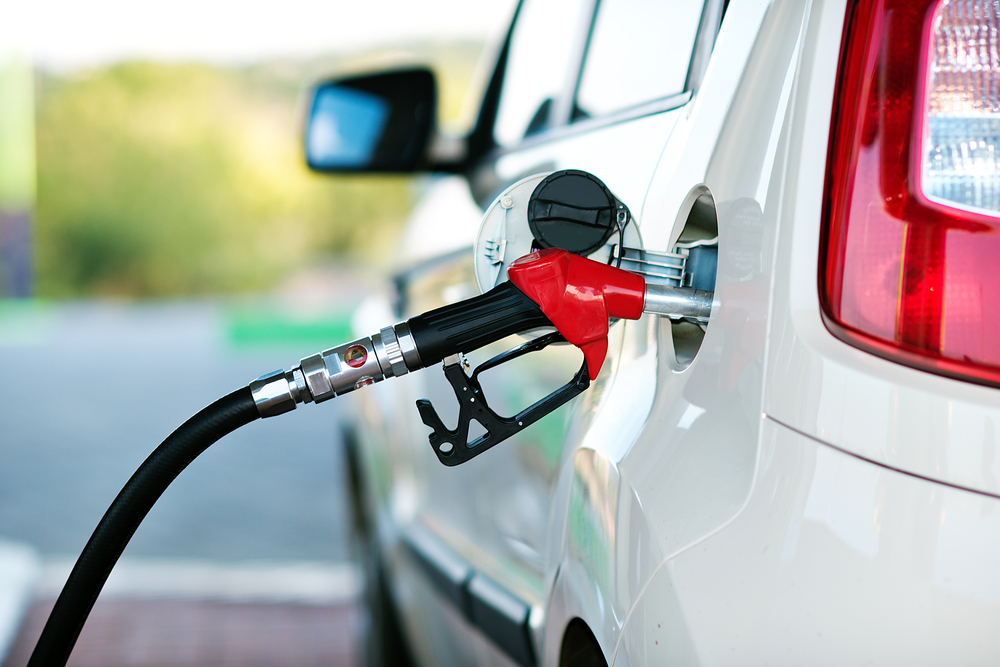

You pull into the gas station and watch the numbers spin on the pump faster than you’d like. A gallon of regular that cost you around $3.24 a year ago now reads north of four dollars, and you’re not imagining it – it’s happening all over the country. For a lot of people, the math has gotten genuinely painful: commuters, small business owners, truckers, parents shuttling kids across town, rideshare drivers running on thin margins. The extra hundred bucks a month at the pump isn’t abstract. It shows up in decisions about groceries, rent, and everything else.
That’s the backdrop for what two state governors did in recent weeks. Faced with surging fuel prices triggered by geopolitical chaos in the Middle East and its knock-on effect on global oil supply, Georgia and Indiana both moved to give drivers at least some breathing room. The methods were a little different, the timelines were different, and the amounts involved were very different. But the goal was the same: put money back in people’s pockets at the pump.
Whether that goal is actually being achieved, and how much cash is really making it to the average driver, is a more complicated story. Here’s everything you need to know about where things stand, what it means if you live in one of these states, and what might be coming elsewhere.
Georgia Was First – and the Numbers Are Big
Georgia’s 60-day suspension of its 33-cent-a-gallon gas tax took effect once Governor Brian Kemp signed it into law on March 20, making it the first state to act since fuel prices began spiking. That’s not the first time Kemp has reached for this lever. This marks the fourth time in recent years that state leaders have paused the gas tax, following similar suspensions in 2022 during the war in Ukraine, again in 2023 amid inflation, and in 2024 following Hurricane Helene.
The relief at the pump is straightforward on paper. Georgia’s excise tax on gasoline currently sits at 33.3 cents per gallon and 37.3 cents per gallon of diesel. That’s what drivers have been saving since the suspension kicked in – assuming those savings actually made it to the gas station sign, which we’ll get to. The plan could save drivers about 33 to 34 cents a gallon, which for most drivers could mean around $10 less every time they fill up.
The bigger picture is even more striking. Georgia House Speaker Jon Burns stated that the suspension “will save hardworking Georgians and the truckers who keep our state moving nearly $400 million over the next 60 days.” For a state-level tax measure, that is a substantial number. When added to previous tax rebates, rate reductions, and suspensions of the gas tax, Governor Kemp will have saved or returned over $11.8 billion to Georgia taxpayers with the help of the General Assembly.
It’s worth understanding why Kemp had the political will and the budget headroom to do this. Georgia is dipping into its surplus to cover the lost revenue – meaning the state had enough in reserves to absorb the hit rather than having to cut other things. That’s not a luxury every state has right now, and it explains a lot about why Georgia moved when others hesitated.
Indiana Followed With Its Own Gas Tax Suspension
Indiana Governor Mike Braun suspended the Hoosier State’s sales tax on gas for 30 days, as prices at the pump increased since the U.S.-Israeli conflict with Iran began. The move was slightly different from Georgia’s approach in an important way. Indiana’s gas tax comprises a standard excise tax and a gasoline use tax. The excise tax is set at 36 cents per gallon until June 30 and doesn’t change with Braun’s order, while the gasoline use tax is equivalent to 7 percent of the statewide average retail price. Braun’s executive order only suspended that second piece – the use tax. The move is expected to reduce prices by about 17 cents per gallon.
The Governor also made clear he wasn’t going to sit back and hope retailers passed the savings along. Braun said, “I’m calling on gasoline retailers to ensure these savings are showing up at the pumps.” He went a step further and brought in the state attorney general. During a press conference, Braun called on Indiana Attorney General Todd Rokita to crack down on any potential price gouging throughout the tax holiday. In response, the Indiana Attorney General stated that “Hoosiers deserve the full relief intended by this emergency measure and we will use every tool at our disposal to ensure that the removal of the tax translates into lower prices at the pump.”
According to Braun, the temporary tax holiday is expected to save Hoosiers an estimated $50 million statewide. That’s considerably smaller than Georgia’s $400 million figure, partly because the suspension is shorter, partly because only one layer of Indiana’s gas tax was suspended, and partly because Georgia has a larger population. But for Indiana drivers, $50 million is $50 million. Braun said it may take a few days for the suspension to fully kick in statewide, and once the 30 days are up, he will decide whether an extension of the tax holiday is needed.
How Much Are Drivers Actually Saving? The Real Numbers
Here’s where it gets a bit more honest, and a bit less tidy. The headline figures from the governors – $400 million for Georgia, $50 million for Indiana, roughly $450 million combined – reflect how much revenue the states are forgoing. That’s not the same thing as how much money is actually landing in drivers’ pockets at the pump. There’s a gap between those two numbers, and it matters.
Research from the Penn Wharton Budget Model at the University of Pennsylvania looked closely at what happened during the 2022 gas tax suspensions in three states. The analysis found that suspensions were mostly passed onto consumers in the form of lower gas prices – Maryland saw 72 percent of tax savings passed through, Georgia saw 58 to 65 percent, and Connecticut saw 71 to 87 percent. However, these price reductions were often not sustained during the entire holiday.
So what does that mean in practice? If Georgia’s suspension is worth 33 cents per gallon but only 60 percent reliably reaches the customer, drivers are realistically pocketing closer to 20 cents – not the full amount. That still adds up over two months of daily or weekly fill-ups, especially for people who drive a lot. But it’s a smaller number than the official savings figure suggests.
This time around, there’s an additional wrinkle. The effective closure of the Strait of Hormuz is causing an unprecedented supply constraint, leaving gas retailers uncertain how much they’ll have to pay for their next delivery of fuel. One Penn Wharton analyst noted, “We should expect to see retailers holding on to much more of a gas tax holiday than they have in the past.” Put simply, when supply is uncertain, station owners are more reluctant to cut prices even when their tax costs drop, because they don’t know what they’ll be paying for their next truckload of fuel.
There’s also the question of how much the suspension actually helps people on lower incomes. The Institute on Taxation and Economic Policy estimates the state of Georgia will lose about $399 million in revenue over its 60-day suspension, and that the bottom 60 percent of earners in Georgia will save only $13 a month. For someone making ends meet paycheck to paycheck, $13 is genuinely useful. But it’s not the $400 million headline figure, and it helps to know the difference.
The Real-World Impact on Georgia and Indiana Drivers
Away from the policy math, what do drivers actually experience? In Georgia, the picture has been mixed. A gallon of regular unleaded gas in Georgia jumped over a dollar to $3.79 since the war in Iran started, according to AAA. The suspension shaves 33 cents off that, bringing the effective price back down somewhat – but gas is still meaningfully more expensive than it was a year ago. Despite the suspension of the gas tax, it will still be more expensive than it was a year ago since the cost has gone up more than $1 per gallon.
For people who run their lives on fuel – rideshare drivers, delivery workers, contractors, farmers – any reduction is real. One Atlanta-area Uber driver described the impact of surging prices frankly: his weekly fuel spend had climbed from around $350 to $400 before the suspension, and he welcomed even a modest reduction. Moving companies in the region were reporting $300 per day in additional fuel costs. These aren’t abstract numbers on a spreadsheet.
In Indiana, the price picture was similarly sharp. As of the time Braun announced the suspension, gas prices in Indiana were more than $4.13 per gallon, just below the national average according to AAA. With the temporary tax suspension, Indiana gas prices were running about 20 cents lower than neighboring Kentucky. That’s a real gap that some drivers near the border had apparently started to exploit – crossing state lines to save at the pump.
What States Are Watching From the Sidelines
Georgia and Indiana aren’t operating in a vacuum. Gas tax holidays are being discussed in several other states, including Alabama, Arizona, Connecticut, Florida, Maryland, New York, Pennsylvania, and South Carolina. The fact that it’s a long list tells you something about the political pressure governors and legislators are under right now. But the fact that none of them have yet moved also tells you something about how complicated this decision actually is.
Budget concerns are preventing some states from moving forward, as Maryland Governor Wes Moore noted that a 30-day suspension would create a $100 million gap in the state’s transportation budget while officials work to address existing fiscal shortfalls. That’s the core tension: gas tax revenue goes directly to roads, bridges, and infrastructure. When it disappears, even for 30 days, something has to give somewhere. States may have to pull resources for roads from other areas, like school funding.
In Illinois, lawmakers introduced legislation in April 2026 proposing a six-month pause on the state’s sales tax on gas from July 1 through December 31. The measure would suspend the state’s 6.25% sales tax on gasoline for six months. Pennsylvania is considering multiple approaches. Pennsylvania lawmakers are actively considering a Senate-backed plan to suspend the state gasoline tax for 60 days. And at the federal level, Senator Mark Kelly of Arizona has introduced legislation to suspend the federal gas tax, which is 18.4 cents per gallon.
Read More: How to Save Money When Everything Costs More
Is This a Real Fix or Just a Political Move?
It depends entirely on who you ask, and honestly, both sides have a point. Supporters of the gas tax suspension argue that when working families are watching their fuel costs spike by $80 to $100 a month overnight, the job of government is to respond – not to explain why the economics are complicated. Georgia did it cleanly, with bipartisan support and a state surplus to back it up.
Critics have a fair counter-argument. Carl Davis, research director at the Institute on Taxation and Economic Policy, has called the gas tax suspension “an expensive gimmick,” stating, “If the goal is to get tax cuts into the hands of working-class, middle-class drivers, it’s mostly going to miss the mark.” His argument is essentially that higher-income drivers who fill up larger tanks and drive more miles capture a disproportionate share of the savings – not the people who most need the help.
There’s also the road funding problem, which doesn’t disappear just because a tax holiday is popular. The gas tax pays for road maintenance, bridge repair, and expansions of the transportation network – the things that make driving possible in the first place. Suspend the tax and that work doesn’t magically find funding elsewhere. It gets delayed, or it competes with other budget priorities. While Braun said he wasn’t concerned the estimated savings would affect road projects, experts pushed back on that assertion, noting, “The fewer taxes we have – the less we’re bringing in in terms of tax dollars – just means the less money we’ll have for those services.”
And then there’s the timing question that’s genuinely hard to resolve. The Energy Information Administration expects gas and diesel prices to remain higher than previously projected into 2027. If that’s right, a 30-day or 60-day suspension doesn’t address the underlying problem at all. It provides a bridge over a rough patch that isn’t ending anytime soon. When the suspension lifts, the pain comes back – and depending on where global oil markets are at that point, it could come back harder.
None of that means the suspensions are wrong. What it means is that they’re short-term tools being used on a long-term problem, and the people benefiting from them right now should know the difference. Prices at the pump will begin to reflect the suspension in the coming days and weeks as retailers receive new shipments of motor fuel – but the relief is finite, and there’s no guarantee of what comes next.
For Georgia and Indiana drivers right now, though, the suspension is real, the savings are real, and a few hundred dollars back in household budgets over 30 to 60 days is nothing to dismiss. Just don’t mistake a pause for a solution.
A.I. Disclaimer: This article was created with AI assistance and edited by a human for accuracy and clarity.