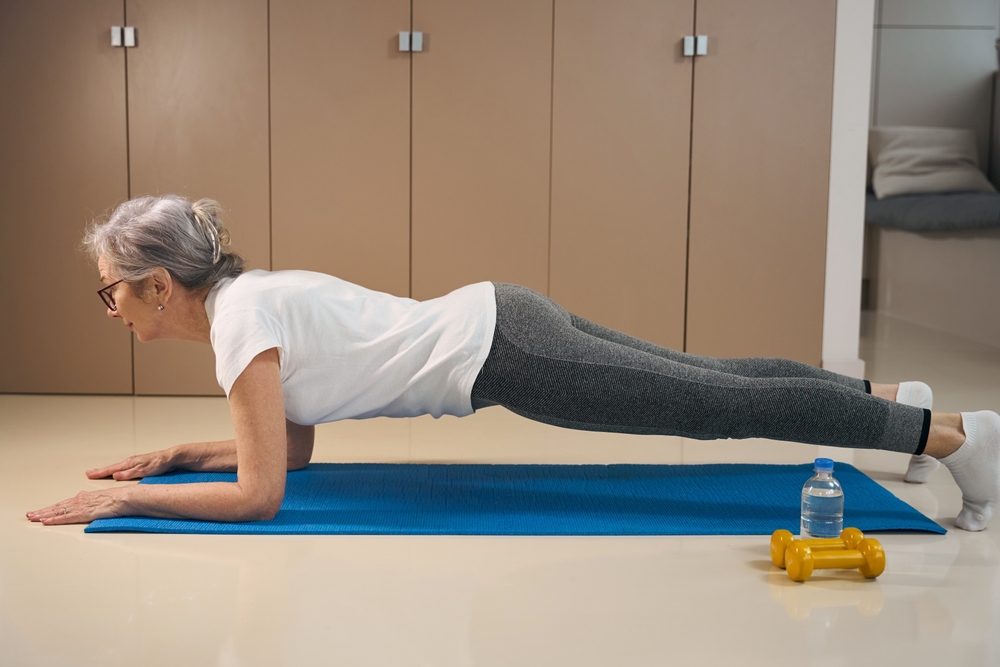

A lot of people think core strength is about getting flat abs or making your stomach look more toned. That is part of the fitness world’s sales pitch, but it misses the real point. Core strength matters because it affects how you move through daily life. It helps you stand taller, stay steady, protect your back, and carry yourself with more control. It plays a role when you get out of a chair, reach for something on a shelf, carry groceries, walk up stairs, or catch yourself before a slip turns into a fall. After 50, those things matter more than ever.
That is why the plank gets so much attention. It looks simple, but it tells you a lot. It does not need fancy equipment, a gym membership, or much space. You get down on the floor, hold your body in position, and find out very quickly whether your middle is doing its job. A solid plank asks your abs, lower back, shoulders, glutes, and even your legs to work together. You cannot fake it for long. Either your body holds the line, or it starts to sag, shake, or quit.
So what counts as strong after 50? The answer is not about chasing some superhuman standard. It is about knowing what your body is capable of and understanding where you stand. If you can hold a plank for a certain length of time with good form, you may be doing better than you think. In fact, you may already have a stronger core than most people in your age group.
Why The Plank Still Matters After 50
The older you get, the more important it becomes to train your body in ways that support real life. That means strength, balance, coordination, and control matter more than flashy workouts. A plank checks several of those boxes at once. It trains your midsection to stay stable while the rest of your body works around it. That sounds basic, but it is a big deal. A stable core helps reduce stress on your lower back, supports better posture, and makes everyday movement feel more efficient.
After 50, people often start noticing changes they did not think about in their thirties. Maybe the lower back feels tighter after standing too long. Maybe balance feels slightly less automatic. Maybe getting off the floor is not quite as easy as it used to be. These things do not mean you are old in some dramatic sense. They just mean the body responds to use, or lack of it. Muscles that are not challenged tend to weaken. The core is no exception.
The nice thing about the plank is that it is direct. You do not need to guess whether your middle is working. You feel it. And because it is a bodyweight move, it is accessible to a lot of people once they learn proper form. It is not the only measure of fitness, but it is a very useful one, especially for adults who care more about staying capable than looking impressive for two seconds in a mirror.
What “Core Strength” Actually Means
When most people hear the word core, they think of the front of the stomach. That is only part of the story. Your core includes the muscles around your trunk, your abdominals, lower back, sides, and deeper stabilizing muscles that help support your spine and pelvis. It is more like a support system than a single body part. When that system is strong, you move with more control. When it is weak, other parts of the body often pay the price.
This is why someone can look fit but still have poor core strength. You can have a slimmer clothes size, strong arms, or decent cardio, and still struggle to keep your trunk stable. On the other hand, someone who does not look especially athletic may have a very functional core because they train it properly and use it well. The plank tests this in a practical way. It is not asking whether you can crunch a hundred times. It is asking whether you can hold your body together under tension.
That matters because life is full of moments where your core needs to do exactly that. It has to stabilize you while you bend, lift, reach, twist, and react. It supports you when you carry a bag on one side, stand in a moving bus, or climb stairs while holding something awkward. True core strength is not about performance for a photo. It is about whether your body can support itself well through daily movement, and the plank gives you a surprisingly honest answer.
So, How Long Is “Stronger Than Most”?
This is the question people really want answered. If you can hold a plank this long after 50, what does that actually mean? A good general benchmark is this: if you can hold a proper forearm plank for 60 seconds with clean form, you are in solid shape. If you can hold it for 90 seconds, your core is likely stronger than most people your age. And if you can hold a full two minutes without your hips sagging, your shoulders collapsing, or your lower back taking over, that is very strong.
The key part here is proper form. A sloppy two-minute plank does not count the same way a clean one does. If your hips are way up in the air, that is not really a plank. If your lower back is dipping toward the floor, your body is compensating instead of holding strong. The quality of the hold matters more than the number on the clock. That said, once form is solid, time becomes useful because it reflects endurance and control.
Many adults over 50 struggle to hold a plank for even 20 to 30 seconds with decent alignment. That is not an insult. It is just reality. Sedentary routines, old injuries, desk jobs, poor posture, and weak glutes all make this harder. So if you can hold a full minute with good form, you are already ahead of many people. If you can go well beyond that, your core is not just decent. It is doing real work.
Why Form Matters More Than Ego
There is always someone online claiming they held a plank for five minutes, ten minutes, or some absurd number that sounds like a hostage situation. That may be true, but it is not especially useful for most people. What matters more is whether your form stays honest from start to finish. A shorter plank done properly will do more for your body than a long one done badly.
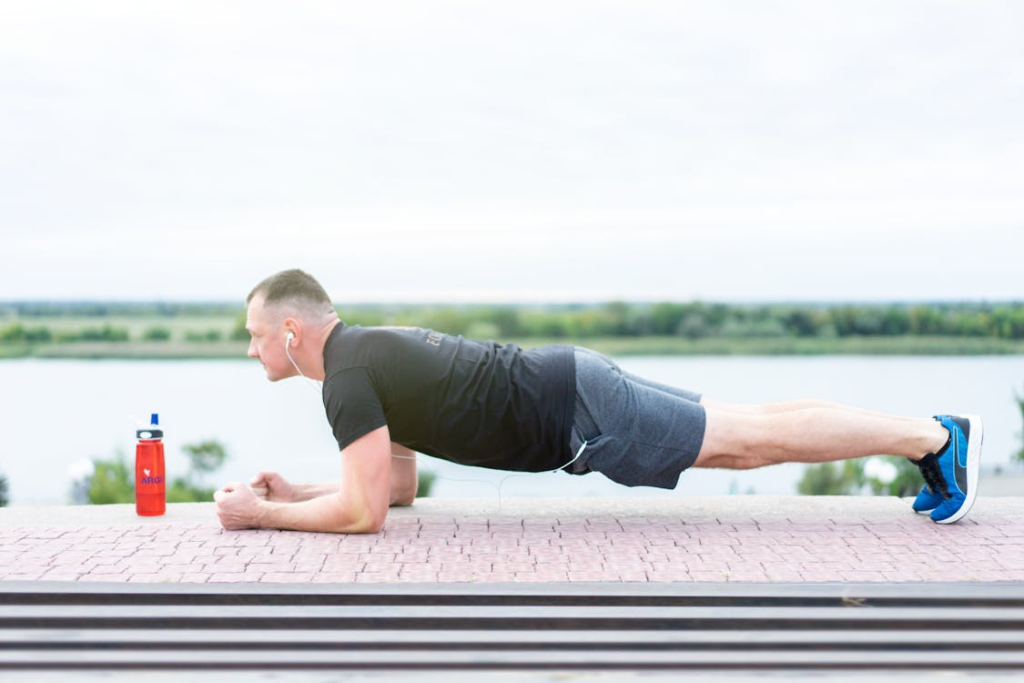
A good forearm plank starts with your elbows under your shoulders. Your body should form a straight line from head to heels. Your neck stays neutral, your stomach is engaged, and your glutes help support the position. You are not letting your belly hang, and you are not lifting your hips high to escape the challenge. You should feel the work through your midsection, not just pressure in your shoulders or low back.
This is where ego gets people in trouble. They chase time instead of quality. They want a bigger number, so they stay up long after their form has fallen apart. That can turn a good exercise into a messy one. It is much smarter to hold for 30 or 45 seconds with control, rest, and repeat. Over time, that builds a stronger body than forcing a shaky hold for the sake of bragging rights. If your goal is to stay strong after 50, you do not need to prove anything. You need to train in a way your body can actually benefit from.
What A Good Plank Says About Your Body
A strong plank tells you several useful things at once. First, it tells you your midsection can create and maintain tension. That matters because your body needs that ability during all kinds of movement. Second, it shows that your shoulders and upper body can support your position without immediately giving out. Third, it suggests your glutes and legs are helping stabilize the body instead of hanging out and letting your spine do all the work.
In other words, a good plank is not just an ab test. It is a whole-body control test. You are looking at how well different areas cooperate under load. That is why the exercise can feel so humbling. If one part of the chain is weak, the whole thing becomes harder. Tight hips, weak glutes, poor shoulder endurance, and a lazy midsection can all make the hold break down faster.
After 50, this kind of full-body coordination becomes more important, not less. Strong muscles are useful, but muscles that work together well are what really help you move better. A person with a strong plank often has a body that is doing a better job of stabilizing itself overall. That does not mean they are perfect or immune to injury. It just means the foundation is stronger. And when your foundation is stronger, everything else tends to work better on top of it.
Why So Many People Over 50 Struggle With It
If the plank is so useful, why do so many adults struggle with it? The answer is not laziness. It is usually a mix of modern habits and natural changes that come with age. Many people spend years sitting at desks, in cars, or on couches. That kind of routine can weaken the muscles that help support posture and stability. At the same time, the hips may tighten, the glutes may stop firing well, and the lower back may start doing too much.
There is also the fact that many adults do not train their core in a functional way. They may do occasional crunches or try random online workouts, but they do not build consistent strength through controlled holds and full-body tension. Then, when they try a plank, they are surprised by how hard it feels. The issue is not the plank. The issue is that it exposes weaknesses people have been carrying around for years without noticing.
Past injuries can also make a difference. Shoulder problems, wrist issues, low back discomfort, and general stiffness can all make the position feel harder or less comfortable. That is why comparison is not very useful. What matters is whether you can improve from where you are. If your current plank time is only 15 seconds, that is still a starting point. With practice, proper form, and patience, many people can build from there far more quickly than they expect.
The Difference Between A Strong Core And A Pain-Tolerant Person
Some people can hold miserable positions just because they are stubborn. That does not always mean they are strong in a smart way. There is a difference between a strong core and a person who simply ignores bad form, neck tension, and lower back strain for longer than average. The plank should feel challenging, but it should not feel like your body is folding into a fight with itself.
A truly strong core supports the position without forcing other areas to overcompensate. Your breathing should remain controlled. Your lower back should not feel pinched. Your shoulders should work, but not in a way that feels unstable or jammed up. You want a firm, connected effort, not a survival contest. That distinction matters more with age because recovery becomes more important. Training through messy pain is rarely the flex people think it is.
This is one reason shorter, cleaner sets often beat one long ugly hold. A person who can do three well-executed 40-second planks with short rest may be in better functional shape than someone who grinds through one shaky 90-second hold. Endurance matters, but how you build it matters too. The goal is not to become the person who suffers the longest. The goal is to become the person whose body supports itself better. That is a much more useful kind of strength, especially after 50.
How To Test Your Plank Honestly
If you want to know where you stand, test your plank when you are fresh, not after a hard workout. Set up on your forearms with your elbows under your shoulders. Extend your legs behind you and lift into position. Keep your body straight from head to heels. Squeeze your glutes, brace your midsection, and breathe. Then start timing.
The moment your hips sag, your lower back starts taking strain, or your shoulders collapse forward, the test is over. The same goes if you lift your hips high to make the move easier. A real test only counts the time you can maintain good form. You do not need a coach hovering over you, but it helps to record yourself once so you can see what your body is actually doing. A lot of people think they are in a straight line when they are not even close.
Try the test once every couple of weeks, not every day. Daily testing just turns into noise. Give your body time to adapt, then check again. If you move from 20 seconds to 35, that is progress. If you move from 45 to 60 with better form, that is real progress. Improvement matters more than impressing anyone. The plank is not there to make you feel bad. It is there to tell you the truth, and the truth is useful if you do something with it.
How To Get Better At Planks After 50
The best way to improve your plank is not to keep flopping into a max hold and hoping your body magically catches up. It is better to train just below your limit with good form. If your best plank is 30 seconds, try sets of 15 to 20 seconds. Rest, then repeat for three or four rounds. That lets you build strength without turning every session into a struggle.
It also helps to work on related muscles. Glute bridges, bird dogs, dead bugs, and side planks can all improve the stability that supports a better front plank. Walking more, lifting with better posture, and doing some light mobility work for your hips and shoulders can help too. Most people do better when they stop treating the plank like a random punishment and start treating it like one piece of a stronger overall body.
Consistency matters more than intensity here. Two or three short sessions a week can make a real difference over time. You do not need to spend half your life on the floor. You just need regular practice with decent effort. And do not rush the timeline. Bodies after 50 can still get stronger, but they respond best to steady, sensible work. The goal is progress you can keep, not a dramatic spike followed by soreness and frustration.
Signs Your Core Is Getting Stronger, Even Before The Timer Proves It
Sometimes progress shows up before the stopwatch catches it. You may notice that your back feels better when standing in the kitchen or walking for longer periods. You may feel more steady getting out of bed, climbing stairs, or carrying groceries. You may find that your posture feels easier to maintain instead of something you have to keep correcting every few seconds. These are real signs of a stronger core.
You might also notice that planks feel less chaotic. Early on, many people feel like every part of the body is yelling at once. The shoulders burn, the stomach gives out, the breathing gets weird, and the whole thing feels messy. As strength improves, the position starts feeling more connected. It is still hard, but it feels more controlled. That shift matters. It means your body is learning how to work as a unit.
This is why the timer should not be your only measure. The number matters, but so does how you feel during the hold and how your body carries itself outside the exercise. A stronger core usually leaves clues throughout the day. If you are moving with more control, feeling more stable, and holding better positions without strain, you are improving, even if your plank time is increasing slowly.
What To Do If A Standard Plank Feels Too Hard
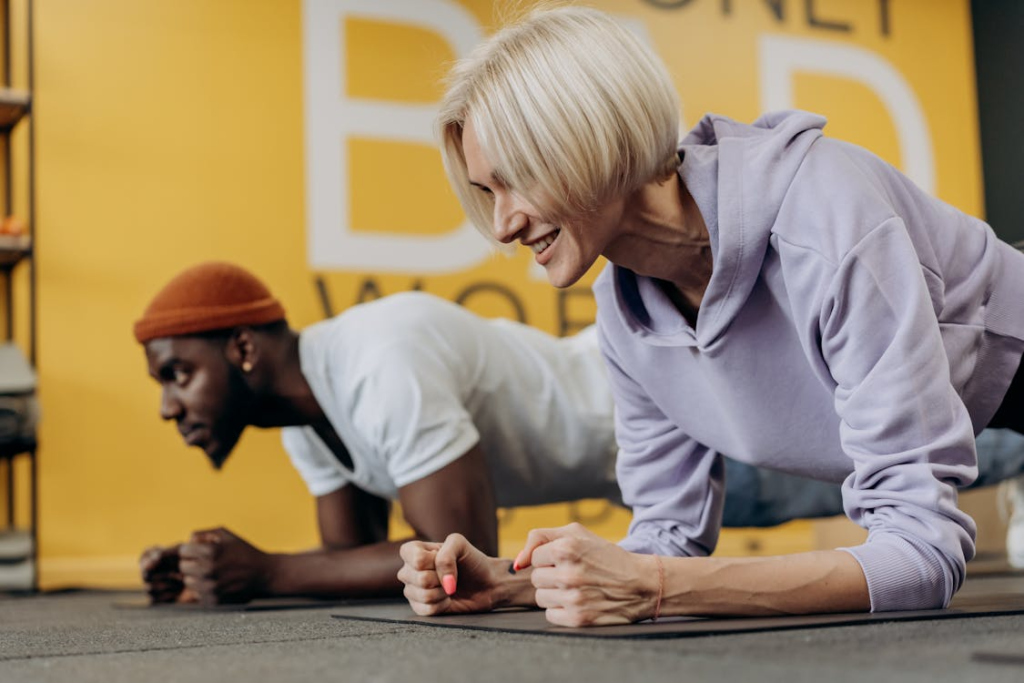
Not everyone should jump straight into a full forearm plank from the floor, and that is fine. There are ways to build toward it without pretending you are weaker than you are. An incline plank with your forearms or hands on a bench, sturdy couch, or countertop can be a great starting point. It reduces the load while still teaching your body how to brace and align properly.
You can also try a knee plank if that feels more manageable. The important thing is keeping the same basic structure, shoulders set well, core engaged, body aligned, and no collapsing through the lower back. These versions are not fake planks. They are progressions, and progressions are smart. They allow people to train the movement pattern without rushing into poor form.
Once those become easier, you can gradually lower the angle or move into a full plank from the floor. There is no prize for skipping steps. In fact, people who build patiently often end up with better long-term strength because they learn control first. After 50, smart progress tends to beat reckless effort every time. Meeting your body where it is does not mean settling. It means giving yourself a better shot at real improvement.
Stronger Than Most Does Not Mean Perfect
It is easy to read a title like this and assume there is some magic number that proves you are officially thriving. Life is not that neat. Holding a plank for 90 seconds or two minutes after 50 is impressive, but it does not mean every part of your fitness is flawless. It simply suggests that your core endurance and control are likely better than average. That is worth something.
At the same time, not hitting those numbers does not mean your body is failing. It may just mean your core needs more direct work, your form needs cleaning up, or your body has not practiced this specific demand very much yet. The point of a benchmark is not to shame people. It is to give them a useful reference point. If you are above it, good. If you are below it, now you know where to build.
Fitness after 50 should not be about chasing youth in some desperate way. It should be about staying capable, strong, and independent for as long as possible. The plank fits that goal well because it tests support, endurance, and body control, all things that matter in real life. So yes, if you can hold a clean plank for that stronger-than-most range, your core is doing well. And if you cannot yet, that is not the end of the story. It may just be the beginning.
Final Thoughts
The plank is simple, but it reveals a lot. It shows whether your trunk can support your body, whether your muscles can work together, and whether your form holds up under tension. After 50, that kind of strength is not just nice to have. It matters for how you move, how you feel, and how well your body handles daily life.
A clean 60-second plank is solid. Ninety seconds is very strong. Two minutes with honest form puts you in excellent territory for your age. Those are useful benchmarks, but they only matter if the hold is real. Good form always comes first. That is what turns the plank from a meaningless number into a sign of actual strength.
The bigger point is this: core strength can still be built at any age. You do not need a perfect body or a hardcore workout routine to improve it. You need consistent practice, decent technique, and a little patience. If you can already hold a plank well after 50, give yourself credit. You may be stronger than most. And if you are still working toward it, that matters too. The body responds when you train it with purpose, and that kind of progress is worth far more than looking impressive for a moment.
This article was created with the assistance of AI tools and reviewed by a human editor.