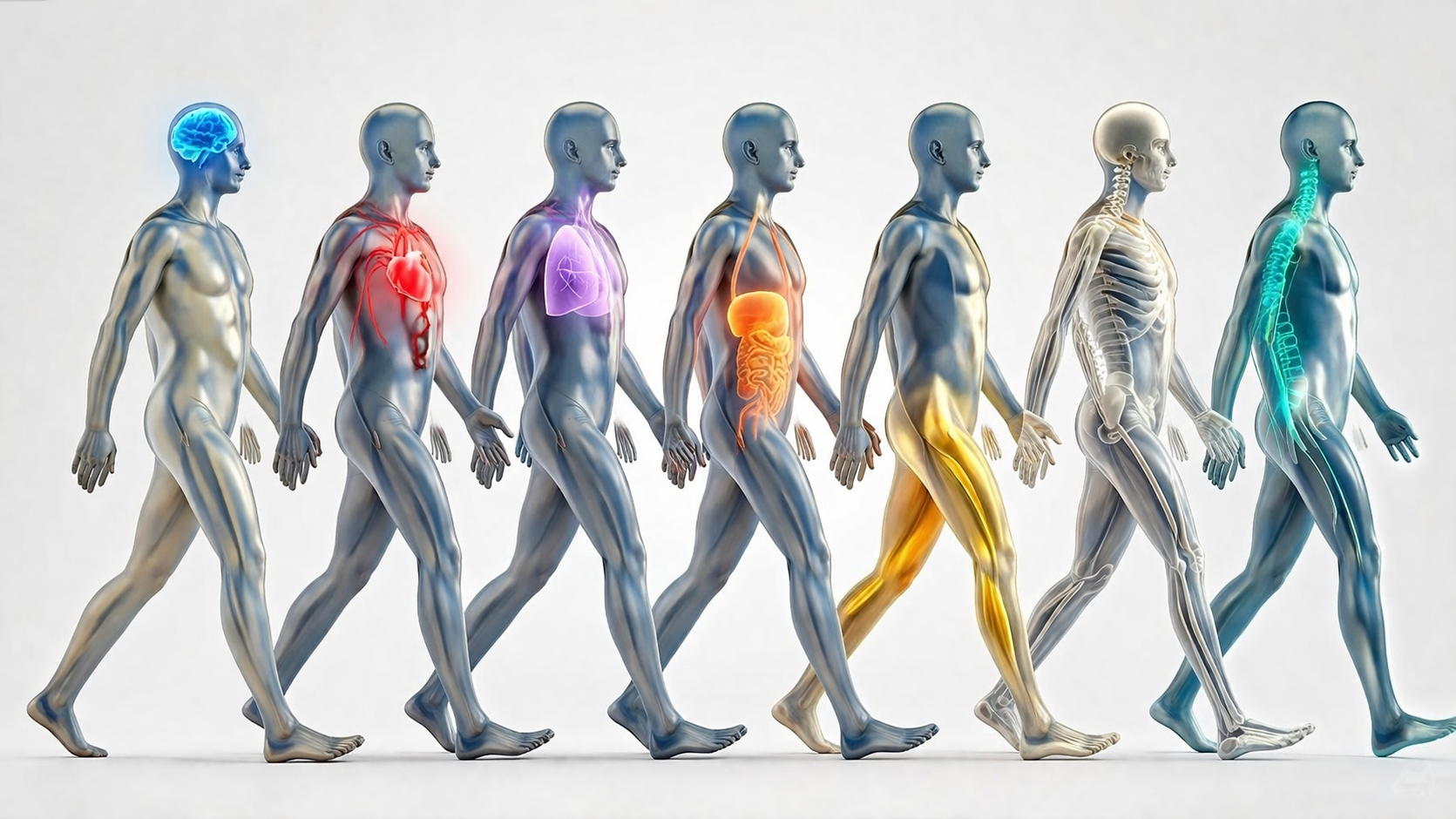

Walking every day sounds almost too simple to matter, which is probably why so many people underestimate it. It does not have the flash of an intense workout, and it does not always leave you drenched in sweat, so many people assume the payoff must be minor. In reality, daily walking can affect nearly every major system in your body, especially if you do it at a brisk pace and do it consistently. Public health guidance treats walking as a real form of moderate physical activity, and major health organizations link regular activity like walking with better heart health, lower blood pressure, stronger muscles and bones, improved sleep, better mood, weight management, and lower risk of long-term disease. Even short bouts count, and you do not need to become a marathon hiker to benefit. A daily walk can be one of the easiest ways to build movement into real life, which is part of why it works so well over time. The biggest changes usually do not come from one heroic session. They come from repetition. When walking becomes part of your routine, your body starts adapting in quiet but meaningful ways, from how your heart pumps blood to how your joints feel when you get out of bed.
1. Your Heart Starts Working More Efficiently
One of the first things that happens when you walk every day is that your cardiovascular system begins to get more efficient. Your heart is a muscle, and like other muscles, it responds to regular use. A daily walk, especially at a brisk pace, encourages your heart to pump blood more effectively and helps your circulation work with less strain. Over time, this can support healthier blood pressure and improve the way oxygen and nutrients move through your body. That matters because the heart is not working in isolation. Better circulation affects energy, recovery, brain function, and how well the rest of the body performs day to day. Walking is also one of the most accessible ways to meet weekly movement goals linked with heart health, which is why organizations like the CDC, NHS, and American Heart Association keep recommending it. People often assume they need punishing cardio to help their heart, but steady daily walking can make a real difference because it is sustainable. A hard routine you quit in two weeks will not do much. A daily walk you keep doing for months and years can change your physical baseline in a much more useful way. In simple terms, your heart gets better at its job, and that can affect far more than you feel in your chest.
2. Your Blood Pressure Can Start Moving in a Better Direction
If you walk every day, one of the most important changes can happen in your blood pressure. Regular moderate activity is widely recommended as part of blood pressure management because movement helps the heart and blood vessels function more effectively. Walking can also support a healthier body weight and lower stress load, both of which matter for blood pressure. The effect is not magical, and it is not instant, but consistency matters more than intensity for most people. A brisk daily walk can become part of the reason your body handles circulation with less effort over time. This is especially important because high blood pressure often does not feel dramatic until it has already been causing damage. That makes preventive habits like walking more valuable than people realize. A person may start walking to clear their head or get more steps and end up helping their cardiovascular health in a much bigger way than expected. Walking is also gentler and more repeatable than many forms of exercise, which matters because results come from what you can keep doing. If your body starts getting regular movement every day, your blood vessels, heart, and circulation system all benefit from that demand. In practical terms, daily walking can become one of the most realistic habits for pushing blood pressure in a healthier direction.

3. Your Blood Sugar Control Can Improve
Daily walking can also help your body handle blood sugar more effectively. When you move, your muscles use glucose for energy, which helps reduce the amount staying in your bloodstream. Regular activity also supports better insulin sensitivity, which means your body can do a better job moving glucose into cells instead of leaving it circulating at higher levels than it should. You do not need to turn walking into a punishing routine for this to matter. The value often comes from doing it often enough that your body keeps getting the message that movement is part of everyday life. This is one reason walking after meals is often praised, though the broader point is simply that regular movement helps your metabolism function better. Daily walking can also support weight control, and that further helps with blood sugar regulation. Together, those effects make walking one of the most practical habits for metabolic health. People often think of metabolism as something abstract or fixed, but many of the systems behind it respond directly to routine behavior. When walking becomes daily, your body gets repeated chances to use energy, move glucose, and operate in a more balanced way. That does not replace medical care when it is needed, but it does mean one of the simplest habits available can have a real impact on how your body manages fuel from one day to the next.
4. Your Muscles and Endurance Get Stronger
Walking every day may look gentle, but your body still has to do a lot of work to keep you moving. Your legs, hips, glutes, core, and even parts of your upper body all contribute to walking mechanics. As you repeat that movement day after day, muscles get challenged in a steady way that can improve endurance and functional strength. You may not build the same kind of muscle you would from heavy resistance training, but you can absolutely build better stamina, better support around joints, and better ability to handle daily tasks without fatigue. That matters more than many people think. Functional strength is what helps you climb stairs, carry shopping bags, move through a long workday, and stay active as you age. Daily walking can also help your body feel less sluggish because it trains you to tolerate movement rather than avoid it. Once endurance begins to improve, other activity often feels easier too. People who walk consistently often notice that they do not get winded as quickly, do not feel as heavy in their legs, and can handle longer periods on their feet. These are not dramatic gym mirror changes, but they are real body changes, and they often matter more in ordinary life than flashy fitness milestones. Your body becomes more capable because you are using it more often in a repeatable way.
5. Your Joints Often Feel Looser, Not Worse
A lot of people avoid walking because they assume it will wear out their joints, especially if they already feel stiff, older, or uncomfortable. In many cases, the opposite is true. Walking is generally considered low impact, and regular movement can help joints feel less stiff and better supported. Part of that comes from the muscles around the joints getting stronger, which helps with stability. Part of it comes from the simple fact that joints often do better with regular movement than with long stretches of inactivity. When you sit too much, the body tends to tighten up. When you walk daily, you keep things moving in a way that can reduce stiffness and make daily movement feel less awkward. This is one reason walking is so often recommended for people who want a sustainable way to stay active without the harsher impact of jumping or hard running. The key is not to go from no movement to extreme mileage overnight. It is to build a manageable routine that your body can adapt to. Over time, many people notice that getting up, bending, standing, and moving through normal life feels easier because their joints are not spending every day in a frozen pattern. Walking is not a cure-all, but for many bodies it acts like a daily reset that helps reduce the feeling of rust.
6. Your Bones Get Helpful Mechanical Stress
Bones need load to stay strong. That is one reason weight-bearing movement matters, and walking counts. Every step places a manageable amount of stress on your bones, which encourages the body to maintain bone strength. This does not mean walking is the only thing bones need, and it does not mean it can solve every bone health issue on its own, but daily walking gives your skeleton useful feedback that complete inactivity does not. The body responds to what it is asked to do. If it is rarely asked to carry weight or handle movement, bones do not get much reason to stay resilient. When walking becomes regular, your frame keeps practicing the job it was built to do. This becomes especially important with age, because bone strength and fall prevention matter more as people get older. Walking also helps with posture, coordination, and general mobility, and all of those things affect how safely you move through the world. A simple daily walk can therefore matter at two levels at once. It can help maintain bone strength directly through weight-bearing movement, and it can help reduce the risk of losing confidence in movement, which often leads people to more inactivity. That spiral can be hard to reverse. Daily walking helps interrupt it by keeping the body in use.
7. Your Weight Becomes Easier to Manage
Walking every day does not guarantee weight loss, and it should not be sold that way, but it can make weight management more realistic. Walking burns energy, helps regulate appetite and blood sugar, and makes it easier to build an active baseline without needing a hard workout identity. For many people, this is the real advantage. A daily walk is often easier to repeat than a demanding routine, and consistency matters far more for long-term weight control than short bursts of extreme effort. Walking can also help reduce the all-or-nothing mindset that makes people feel they failed if they did not do a full gym session. When movement becomes normal rather than dramatic, it is often easier to keep body weight from steadily climbing over time. Daily walking also pairs well with other habits that affect weight, such as better sleep, better stress control, and better energy regulation. All of those factors influence how much people eat, how active they feel, and how well they stick to routines. So while walking alone is not a magic weight solution, it often becomes part of the reason body weight stops moving in the wrong direction. In some cases, it helps create a calorie gap, and in others, it helps prevent gradual gain. Either way, it gives your body a much better chance than sedentary living does.
8. Your Mood and Stress Response Can Shift
One of the quickest body effects of daily walking is often mental, but it is still physical underneath. Movement changes chemistry, breathing, circulation, and nervous system activity in ways that can reduce stress and improve mood. A walk can interrupt rumination, release tension, and make the body feel less trapped in a stress loop. That is part of why walking is often recommended not just for physical health, but for emotional well-being too. You do not need to think of it as therapy to notice the effect. Many people simply feel more stable after they walk, especially if they have been sitting too long, dealing with stress, or carrying nervous energy in their bodies. A daily walk also creates routine, and routine itself can be regulating. It gives the mind a break and gives the body a repeated signal that it is not supposed to stay locked in one position all day. Outdoor walking can add another layer because light exposure and a change of environment often help, too, but even indoor walking counts. The important shift is that regular movement helps your body process stress rather than store all of it. Over time, that can change how reactive, flat, or overwhelmed you feel from day to day. Sometimes the body needs movement before the mind feels any difference.

9. Your Sleep Quality Can Improve
If you walk every day, your nights may start changing too. Regular physical activity is linked with better sleep quality, and walking is one of the easiest ways to get that benefit without overstimulating the body late at night. Better sleep can happen for several reasons at once. Walking helps use energy during the day, supports stress management, and can help regulate body rhythms, especially if you walk outdoors in daylight. When those pieces come together, falling asleep may feel easier, and sleep may feel more refreshing. This matters because sleep affects almost everything else on the list, from hunger and mood to blood pressure and recovery. People often chase sleep improvements through complicated routines while ignoring movement, even though a more active day often sets up a better night. Daily walking also helps break up long periods of sitting, and that can reduce the sluggish but restless feeling many people carry into the evening. The effect is not always instant, and it is not identical for everyone, but walking gives the body a strong daily signal that it is meant to move, exert, and then recover. Sleep is part of that rhythm. When movement becomes regular, rest often gets more organized too, which means a simple walk can end up improving not just how much you sleep, but how restored you feel afterward.
10. Your Balance, Mobility, and Daily Function Get Better Protected
One of the most underrated effects of walking every day is how much it protects ordinary function. People often think about exercise in terms of appearance or weight, but one of the biggest wins is staying capable. Walking helps preserve mobility, coordination, leg strength, and balance, all of which affect how independently you move through life. This becomes more obvious with age, but it matters at every stage. The body adapts to what it practices. If you practice sitting most of the time, everyday movement tends to feel harder. If you practice walking daily, your body stays more prepared for stairs, errands, commuting, standing, and sudden changes in terrain or pace. Walking also helps maintain confidence in movement, which is more important than it sounds. Once people start feeling unsteady or deconditioned, they often move less, and then things decline faster. A daily walk pushes against that pattern. It keeps your body rehearsing the basic skill of carrying itself through the world. That has real value, especially because daily life is built out of basic physical tasks, not highlight-reel workouts. Better mobility and balance also lower the odds of falls and make normal activities easier to manage. In that sense, walking is not just an exercise. It is ongoing maintenance for the part of life that depends on being able to move without fear.
How Much Walking Counts, and How to Make It Stick
The useful thing about walking is that it does not need to look perfect to count. Public health guidance for adults recommends at least 150 minutes of moderate activity each week, and brisk walking fits that category. That can be broken up in different ways, which is good news for people who do not have a long uninterrupted block of time. A ten-minute walk can still count, and multiple shorter walks can add up over the day. That flexibility is one reason walking is so practical. It can happen before work, after meals, during a lunch break, while listening to something, or as part of an evening routine. You do not need special talent, special equipment, or a major identity shift to start. The main thing is to build a version you can keep. Start at a level your body can tolerate, then add time, pace, or frequency gradually. Good shoes help, and so does picking a route or time that removes friction. The goal is not to create a heroic challenge. The goal is to make walking normal enough that your body keeps getting the benefits. That is when the changes described above become more than theory. Daily walking works best not when it feels extreme, but when it becomes one of the most ordinary things you do for your health.
Final Takeaway
If you walk every day, your body does not just burn a few extra calories and move on. It starts adapting. Your heart can work more efficiently, your blood pressure and blood sugar can move in a healthier direction, your muscles and bones get useful demand, your joints often feel less stiff, your mood and sleep can improve, and your mobility is better protected over time. The reason walking matters so much is not that it is extreme. It is that it is repeatable. It fits into ordinary life, which makes it more likely to become a true long-term habit instead of a short-lived burst of effort. That is often what the body responds to best. It responds to patterns. A daily walk may not look dramatic from the outside, but inside the body, it can touch cardiovascular health, metabolism, mood, recovery, and everyday function in ways that add up. That makes walking one of the most practical health habits available. It is simple, but it is not minor. And for many people, it is one of the clearest examples of how a basic daily behavior can influence the body from head to toe when it is repeated often enough to matter.
Disclaimer: This article was written by the author with the assistance of AI and reviewed by an editor for accuracy and clarity.