
Throughout history, few animals have captured the human imagination like the horse. Across continents and centuries, horses have served as warriors, workers, companions, and symbols of prestige and beauty. Whether galloping across deserts, pulling royal carriages, or performing intricate movements in dressage arenas, the horse has proven itself to be one of the most majestic and versatile creatures on Earth. Among the hundreds of recognized horse breeds, some stand out not just for what they can do, but for how breathtaking they are to behold.
Beauty in horses comes in many forms
Some breeds are admired for their shimmering coats, while others are celebrated for their flowing manes, elegant gaits, or rare color patterns. The shape of their head, the posture of their body, and the way they carry themselves all contribute to the overall impression they make. These characteristics are not only pleasing to the eye but are also reflections of their purpose and history. A horse that was bred to perform in ceremonies may have exaggerated features, while one designed for battle might have a compact, muscular frame. The most beautiful horses are often those that combine function with form, resulting in a blend of power, poise, and presence.
Each of the breeds featured in this list has something unique that sets it apart. Some are ancient, with lineages that go back thousands of years. Others are newer to the global stage but have quickly gained attention for their appearance and performance. Many of these horses have been closely tied to specific cultures or regions, serving as national treasures or historical icons. Their looks may be rooted in centuries of selective breeding, but their appeal remains timeless. Whether they come from the deserts of Central Asia or the forests of northern Europe, these horses leave a lasting impression.
The relationship between humans and horses has always been deeply emotional
People form bonds with horses that are built on mutual respect, trust, and admiration. That connection often deepens when the horse is not only capable and loyal but also stunning to look at. The pride of owning or working with a beautiful horse is something equestrians understand well. These animals inspire awe, not just in how they move or perform, but in how they seem to embody strength, grace, and freedom. There is a reason so many artists, poets, and storytellers have been drawn to the image of the horse over time.
Let’s have a look at 10 breeds that are considered to be “the most beauitful horse”:
Akhal-Teke
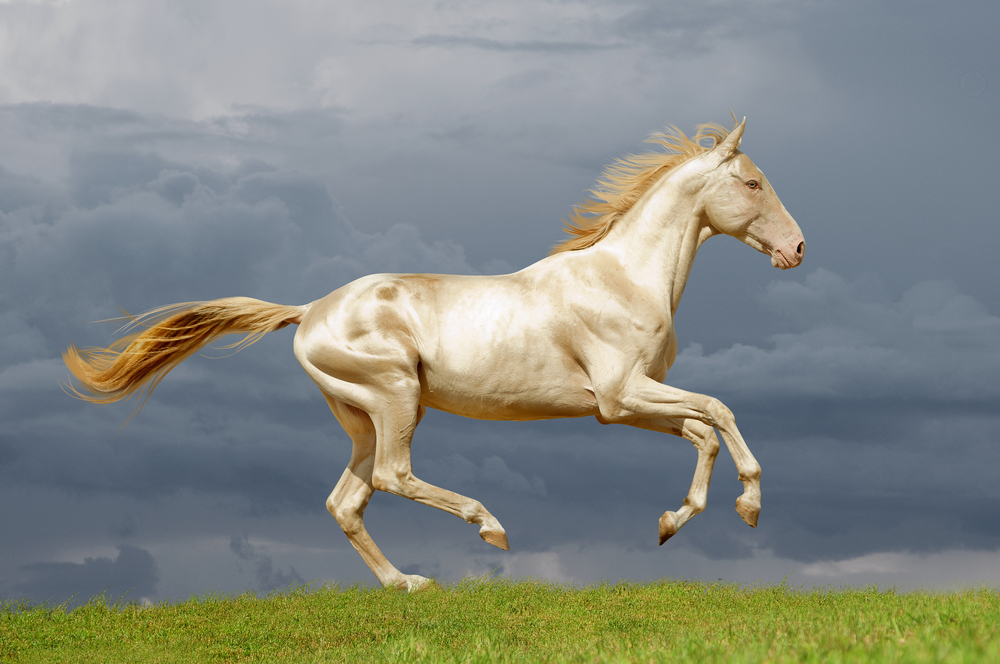
The Akhal-Teke is one of the oldest and most visually striking horse breeds in the world. Originating from Turkmenistan, it is known for its slender frame, smooth coat, and distinctive metallic sheen that can appear gold, silver, or bronze depending on the lighting. This reflective coat is the result of a unique hair structure that bends and scatters light. The breed was developed by nomadic tribes in the harsh deserts of Central Asia, where only the strongest and most resilient horses could survive.
With a body built for endurance, the Akhal-Teke is lean, muscular, and incredibly agile. It has long legs, a deep chest, and a fine, chiseled head with expressive eyes. The breed’s stamina was essential for long journeys across arid terrain, often with limited food and water. Because of this resilience, the Akhal-Teke is still used in endurance riding today and is prized for its long-distance capabilities.
In temperament, Akhal-Tekes are intelligent, alert, and sensitive. They form deep bonds with their handlers and can be fiercely loyal, though they are not always forgiving of poor treatment or inconsistent training. This makes them better suited to experienced riders who understand how to build trust with sensitive horses. When treated well, these horses display affection and eagerness to work.
Though not a common sight outside of Central Asia, the breed has gained global recognition for its beauty and athleticism. It has been introduced into sport disciplines such as dressage and show jumping, and its flashy appearance makes it popular in ceremonial events. The breed is still rare, with only a few thousand purebreds worldwide. Preservation efforts continue to protect its unique genetics and rich cultural history.
Akhal-Tekes are often called “the golden horses of the desert” for good reason. Their elegance, combined with their toughness, makes them one of the most beautiful and fascinating breeds to ever walk the Earth.
Appaloosa
The Appaloosa is an American horse breed most famous for its colorful spotted coat, but its appeal runs much deeper than appearance. Developed by the Nez Perce people in what is now the Pacific Northwest, the Appaloosa was bred for both utility and beauty. It is a symbol of native ingenuity and horsemanship, having evolved to be fast, intelligent, and durable across long distances.
The Appaloosa’s coat can come in several distinct patterns, including blanket, leopard, and snowflake. Their eyes often show a white sclera like a human eye, giving them an expressive appearance. They also have mottled skin, especially around the muzzle and eyes, and striped hooves. These physical traits are part of what makes them instantly recognizable.
Structurally, the breed is strong and compact, usually standing between 14 and 16 hands tall. They are athletic and agile, with muscular builds that allow them to succeed in both western and English disciplines. You can find Appaloosas excelling in rodeos, eventing, show jumping, and trail riding. Their sure-footedness also makes them ideal for navigating tough terrain.
Appaloosas are often described as loyal, willing, and level-headed. They tend to bond well with humans and are commonly used for family riding because of their easygoing nature. While some can be stubborn if not trained consistently, most are eager to please and intelligent enough to learn quickly. They are well-suited to riders of all skill levels when handled with care and respect.
What truly sets the Appaloosa apart is its blend of beauty, personality, and practical use. Few horses match its striking appearance, and even fewer can match its versatility. It remains a treasured breed across the United States and is often seen as a living link to Native American heritage.
Marwari Horse
The Marwari horse is a rare and exotic breed from India, best known for its inward-curving ears that form a unique arch. Native to the Marwar region of Rajasthan, this breed has centuries of royal and military history. It was originally bred by Rajput warriors for cavalry, combining elegance with battlefield endurance. The Marwari remains a cultural symbol of pride and tradition in Indian history.
This breed is elegant and refined, standing around 14 to 16 hands with a slim but athletic frame. It has a graceful arched neck, expressive eyes, and a strong, upright posture that reflects its noble roots. The most distinctive feature, however, is its curled ears that often touch at the tips, giving it a silhouette unlike any other horse. These ears are more than decorative – they are extremely mobile and allow the horse to pick up subtle sounds.
Marwaris are known for their courage and loyalty, traits that made them invaluable in times of war. Today, they are still admired for their fearless nature and graceful movement. They are often used in traditional Indian ceremonies and parades and have started to gain popularity abroad for dressage and performance riding. Though they are not common outside India, they are slowly becoming known for their versatility.
Their temperament is proud yet affectionate. While they can be spirited, they respond well to confident riders and form deep bonds when handled with calmness and trust. They are highly trainable and intelligent, often described as having an intuitive sense of their environment and handler. This makes them especially prized by those who appreciate a horse with personality and presence.
Because of strict export laws and limited breeding, the Marwari remains rare outside its homeland. Conservation programs are helping to protect this breed, which has faced threats of extinction in the past. For those lucky enough to see one in person, its beauty and spirit are unforgettable.
Gypsy Vanner
The Gypsy Vanner is one of the most visually dramatic horse breeds in the world. Originally bred by the Romani people in the United Kingdom, it was created to pull colorful wagons, known as vardos, in a calm and dependable manner. Also called the Gypsy Cob or Irish Cob, this breed combines strength, kindness, and unmistakable charm in a compact, powerful body.
What makes the Gypsy Vanner instantly recognizable is its thick, flowing feathering around the legs, as well as its long, often wavy mane and tail. These horses come in a wide variety of colors, though piebald (black and white) and skewbald (brown and white) are common. They usually stand between 14 and 15 hands tall, with a heavy, muscular build and a broad chest.
Despite their weighty appearance, Gypsy Vanners are incredibly gentle and easy to handle. They were bred to be safe around children and families, and that temperament persists today. Their calm demeanor makes them ideal for first-time horse owners, therapeutic riding programs, and leisure riding. They are known to be steady, willing, and cooperative.
The breed is surprisingly versatile, excelling in dressage, driving, trail riding, and even western disciplines. Their smooth gaits and balanced bodies make them suitable for riders of all ages. They also perform well in parades and shows due to their dramatic look and steady nature. Their intelligence and eagerness to learn add to their appeal as both working and companion animals.
Because they were not widely recognized until the 1990s, Gypsy Vanners are still gaining traction as a formal breed. Breed registries now exist in several countries to preserve their traits and promote ethical breeding. Their combination of fairy-tale beauty and practical reliability continues to earn them admirers around the world.
Arabian
The Arabian horse is one of the most iconic and recognizable breeds in the world. With its dished face, high tail carriage, and graceful movement, the Arabian has long symbolized elegance, endurance, and nobility. Its roots trace back thousands of years to the Arabian Peninsula, where Bedouin tribes selectively bred it for loyalty, stamina, and survival in extreme desert conditions. Today, its influence can be seen in many modern horse breeds across the globe.
Arabians are typically compact and refined, with a short back, strong legs, and a deep chest. They stand between 14.1 and 15.1 hands tall and are known for their arched necks and expressive eyes. Their coats come in a range of colors including bay, gray, chestnut, black, and roan. Despite their size, they are incredibly strong and are capable of carrying weight well beyond what many expect of a horse their height.
One of the Arabian’s most celebrated traits is its remarkable endurance. Historically, these horses could travel long distances across harsh terrain with little food or water. This natural toughness made them ideal for endurance competitions, where they continue to excel. Their stamina, combined with their alert intelligence and willingness to cooperate, makes them a favorite in both sport and leisure riding.
Temperamentally, Arabian horses are spirited but gentle. They are known for their close bonds with humans, a result of centuries of living closely with nomadic tribes. They are highly trainable and sensitive, responding best to riders who use clear communication and respectful handling. Although they can be energetic, they are not difficult when treated kindly and with consistency.
Beyond their practical traits, Arabians hold deep cultural and historical significance. Many equestrians are drawn to them not just for their beauty or ability, but for the stories they carry. They are often seen as living pieces of history, connecting the past with the present in every elegant stride.
Friesian
The Friesian horse is a striking breed known for its solid black coat, thick mane and tail, and majestic presence. Originating in the Friesland region of the Netherlands, the Friesian has a rich history as both a warhorse and a carriage horse. With its powerful build and graceful movement, the breed blends strength with elegance like few others can.
Typically standing between 15.2 and 17 hands tall, Friesians have a strong, compact body with a high-set neck and feathering on their lower legs. While black is the standard and preferred color, a small star on the forehead is occasionally allowed. Their flowing manes and tails are rarely cut, giving them a romantic and timeless appearance that has become synonymous with the breed.
Friesians have a natural high-stepping gait that makes them ideal for harness and dressage work. Their impressive movement and calm demeanor make them favorites for shows, ceremonies, and even film roles. They carry themselves with a regal air that is impossible to ignore, often stealing the spotlight wherever they go.
Despite their size and presence, Friesians are known for their gentle and people-oriented nature. They are calm, willing, and easy to train, making them suitable for both experienced riders and those new to larger horses. They tend to be affectionate and are often described as having a friendly, almost dog-like personality.
Friesians also have strong physical endurance and a surprising level of versatility. While traditionally associated with driving, they perform well under saddle and can be found in everything from dressage arenas to trail rides. Their combination of beauty, strength, and temperament makes them one of the most admired horse breeds in the world.
Knabstrupper
The Knabstrupper is a rare and eye-catching breed best known for its dramatic spotted coat, which resembles that of a Dalmatian. Originating in Denmark in the early 19th century, this breed was developed from a single foundation mare known for her leopard-like markings. The breed quickly gained popularity for its appearance and versatility, though it remains relatively uncommon today.
Knabstruppers come in both horse and pony sizes and can range from around 14.2 to 16 hands in height. Their coats may feature a wide range of patterns, from full-body leopard spots to blanket or snowflake markings. While the spots are their most defining trait, not all Knabstruppers display them, as some carry the coloring gene without expressing it visibly.
Structurally, Knabstruppers are well-built and athletic, with strong legs, deep chests, and balanced proportions. They are known for their agility, stamina, and smooth gaits. These traits make them excellent performers in dressage, eventing, and circus work. Their steady minds and reliable movement have also earned them a place in therapeutic riding programs.
Knabstruppers are calm, intelligent, and eager to learn. They are easy to train and generally enjoy working with people, making them suitable for riders of varying skill levels. Their friendly nature and curiosity often make them stand out not just for how they look, but for how they behave.
Although not as common as other breeds, the Knabstrupper has a dedicated following that values both its uniqueness and versatility. It is a breed that blends show-stopping appearance with real-world ability, offering a rare combination of charm, function, and individuality.
Andalusian
The Andalusian horse, also known as the Pure Spanish Horse, is admired for its powerful yet graceful appearance. Originating from the Iberian Peninsula, the breed has a history that dates back thousands of years. It was once the mount of choice for nobility, conquerors, and classical dressage masters, and its influence can still be seen in many other horse breeds today.
Andalusians typically stand between 15 and 16.2 hands tall and are built with a strong, compact frame. They have a high-set arched neck, expressive eyes, and a thick, often wavy mane and tail. While gray is the most common color, they can also be found in black, bay, and chestnut. Their natural presence and animation make them particularly suited to disciplines that value elegance and precision.
This breed is best known for its skill in classical dressage and traditional Spanish riding. Andalusians move with rhythm, elevation, and fluidity. They excel in movements that require balance and power, such as piaffe and passage, and have been a foundation breed in the art of high-school riding for centuries.
Temperamentally, Andalusians are noble, intelligent, and eager to please. They form close bonds with their riders and respond well to patient, respectful training. Their calm yet responsive nature makes them ideal for both beginners and advanced equestrians. They are spirited without being unpredictable, which adds to their wide appeal.
In addition to their beauty and performance abilities, Andalusians carry a cultural legacy. They are often used in parades, ceremonies, and historical reenactments, particularly in Spain and Latin America. With their combination of grace, strength, and tradition, Andalusians continue to captivate horse lovers around the world.
Lusitano
The Lusitano is a powerful and refined horse breed from Portugal, developed for classical dressage, mounted bullfighting, and working livestock. Its history dates back to the Iberian horses ridden by warriors, nobles, and cattlemen for centuries. It shares ancestry with the Andalusian, but over time it evolved into a distinct breed with unique strengths and temperament.
Lusitanos are admired for their compact, muscular bodies and graceful movement. They usually stand between 15 and 16 hands tall, with a convex profile, strong shoulders, and a rounded croup. Their thick manes and flowing tails often add to their dramatic appearance. Most Lusitanos are gray, bay, or chestnut, though other colors also occur. Their beauty is matched by their strength and precision in movement.
This breed is especially valued in classical dressage, where its ability to collect and execute advanced movements is exceptional. Lusitanos are also trained in working equitation, where agility and obedience are tested in challenging environments. Their bravery and athleticism also make them ideal for mounted bullfighting, a traditional sport in Portugal where the horse plays a central role.
Lusitanos are known for their calm intelligence and strong work ethic. They are easy to train and handle well under pressure, showing great courage and composure. Their loyalty to their rider is a hallmark of the breed, and they are typically friendly, focused, and highly responsive to human cues.
While they are not as widely known as some other breeds, Lusitanos have earned a reputation among serious equestrians for their versatility and elegance. Whether performing in front of crowds or working in the field, the Lusitano remains a living link to Portugal’s proud equestrian traditions.
Lipizzaner
The Lipizzaner is a regal horse breed closely associated with classical dressage and the world-renowned Spanish Riding School of Vienna. Originally developed by the Habsburg monarchy in the 16th century, the breed traces its roots to a mix of Iberian, Arabian, and Baroque horse bloodlines. Its noble appearance and precise movement have made it a symbol of harmony between horse and rider.
Lipizzaners are typically compact and strong, standing between 14.2 and 16 hands tall. They have well-developed hindquarters, a strong arched neck, and a broad chest. Most Lipizzaners are born dark and gradually turn white with age, although some remain gray or dark throughout their lives. Their elegance and balance in motion are part of what makes them so revered in dressage.
The breed is most famous for its performances in haute école, or high school classical dressage. In these shows, Lipizzaners demonstrate advanced movements such as the levade, courbette, and capriole. These athletic feats require years of training and showcase the horse’s natural strength and willingness to cooperate with its rider.
Lipizzaners have a calm, intelligent temperament and a strong desire to work. They respond well to consistent, patient training and often form deep connections with their handlers. Their steady disposition and ability to focus under pressure make them ideal for advanced dressage, ceremonial events, and even therapeutic riding programs.
Though their global population is relatively small, Lipizzaners are protected and celebrated for their historical and cultural value. They represent centuries of classical horsemanship and continue to inspire awe with every performance. With their strength, grace, and discipline, they remain one of the most beautiful and respected horse breeds in the world.
Read More: 12 Reasons To Own a Maine Coon & What Makes Them So Special
Disclaimer: This article was created with AI assistance and edited by a human for accuracy and clarity.