
McDonald’s stands as a global symbol of convenience, consistency, and quick service. Every day, it serves millions of people across the world, becoming part of daily routines and road trip traditions. Yet behind that golden glow lies a world few outsiders truly understand. From the sizzling grill lines to the tight timing of fry batches, there are countless small details that keep the operation running smoothly. These behind-the-scenes facts reveal how McDonald’s maintains its global reputation, ensures food safety, and delivers the same taste no matter the country or city.
Employees often say that working there is like being part of a high-speed performance, where every second counts and every rule matters. The result is a fascinating glimpse into a system designed for speed, precision, and customer satisfaction. These secrets, known mostly to staff, show that McDonald’s is far more than just burgers and fries, it is a complex operation built on discipline, training, and standards that never rest.
1. Fries Have a Strict Shelf Life
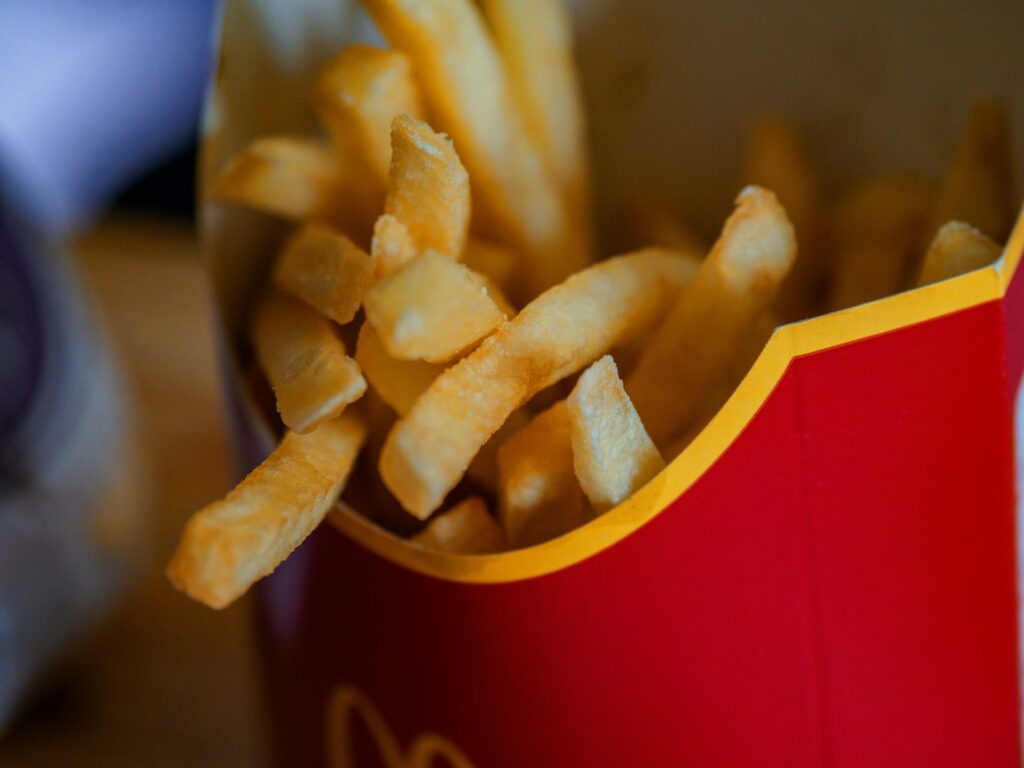
McDonald’s fries are one of the most beloved items on the menu, but few realize how carefully they are managed from fryer to tray. Each batch of fries is cooked for a specific time, shaken to remove excess oil, salted evenly, and placed under a heat lamp for no longer than seven minutes. Once that timer runs out, employees are required to throw the fries away, even if they still look golden and crisp. The rule exists to ensure every customer gets the same taste and texture every time. There is no room for compromise because consistency is one of McDonald’s strongest values.
Behind the scenes, managers check the oil temperature constantly to make sure it stays within the ideal range. If the oil becomes too old, it affects both flavor and crispness. Fryers are filtered multiple times a day and replaced entirely on a strict schedule. Even the way fries are packaged is deliberate. Employees are trained to fill each red carton so that the fries stand tall and uniform, creating that perfect first impression when customers open the bag. That level of control explains why McDonald’s fries taste exactly the same from Cape Town to California.
2. The Ice Cream Machines Are Not Always Broken
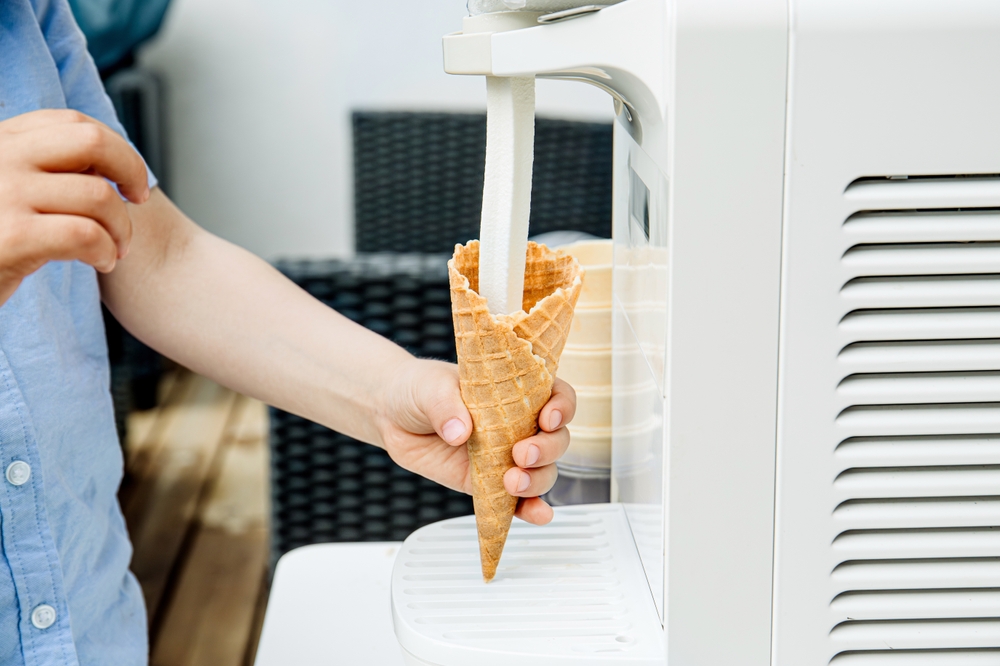
The myth that McDonald’s ice cream machines are constantly broken is only half true. The real reason they are so often “out of order” comes down to the complex cleaning process required to keep them safe for use. Each machine must be sanitized and run through a special cleaning cycle that can last up to four hours. This process cannot be interrupted, and the machine cannot serve ice cream until it is complete. If cleaning starts during a busy shift, the dessert section is temporarily off-limits. Employees also explain that the machines are sensitive to temperature and assembly errors.
If even one component is slightly misaligned, the system locks itself and displays an error code that only a technician can reset. Because of this, some restaurants can lose an entire day of service waiting for repairs. Despite the frustration it causes customers, staff know that this process is necessary. The machine’s design prevents bacterial growth and ensures that every cone and McFlurry meets safety standards. In other words, it is not laziness, just quality control taken to the extreme.
3. Secret Menu Items Are Real
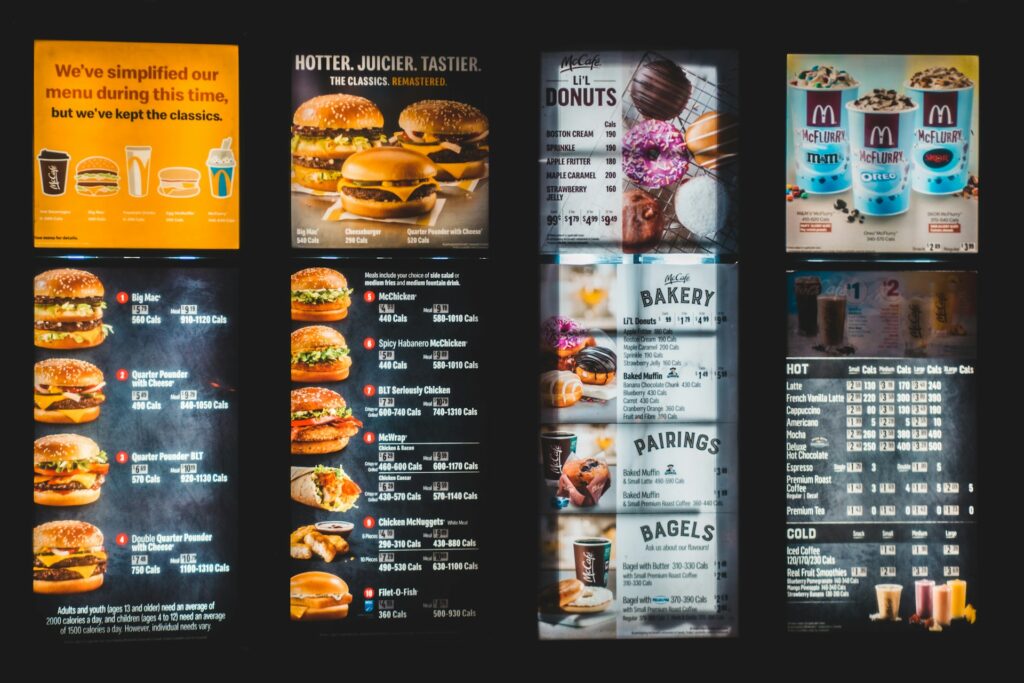
McDonald’s “secret menu” might sound like an urban legend, but employees confirm that it truly exists in practice. Staff can create combinations using ingredients already available, leading to creative favorites known among insiders. The “Land, Sea, and Air Burger,” for example, combines a beef patty, chicken patty, and fish fillet into one towering sandwich. Another popular choice is the “McGangBang,” which involves stacking a McChicken between a McDouble.
These items are not listed publicly, but most employees will make them if asked politely and during slower hours. Some team members even have personal favorites they make during breaks, mixing sauces or swapping buns to build something new. It’s an unspoken culture of creativity that brings a touch of fun to repetitive shifts. Customers who know the right combinations often get a nod of recognition from staff. It is a reminder that behind every order is a group of people who take pride in knowing how to turn the familiar menu into something surprisingly unique.
4. Breakfast Ends at a Precise Time
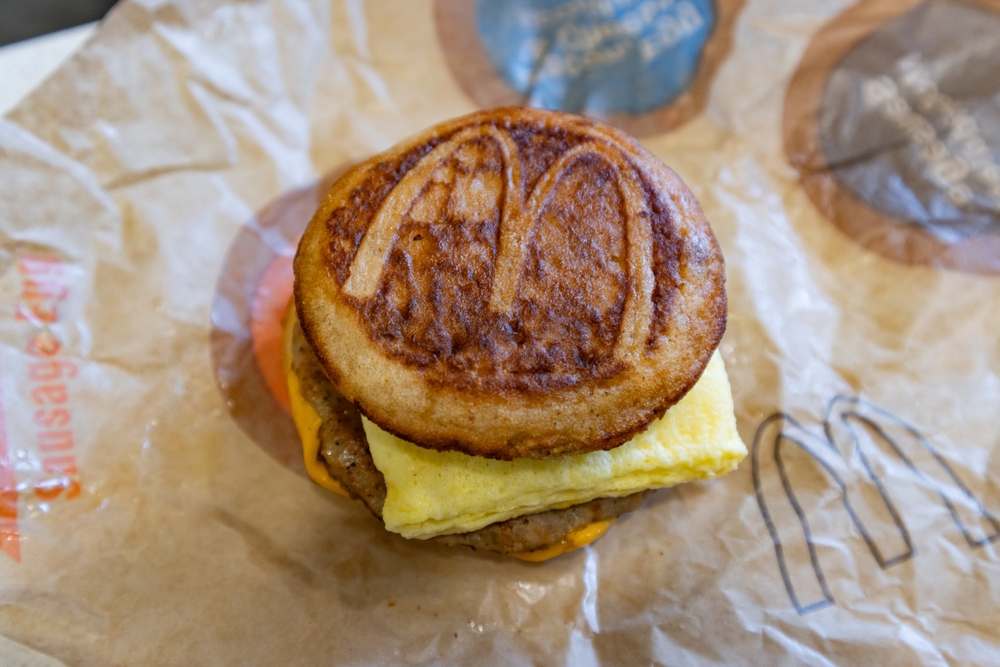
Missing McDonald’s breakfast by a few minutes can be frustrating, but there is a reason for that strict cutoff. Employees explain that once breakfast service ends, the entire kitchen has to be converted for lunch operations, and it happens with precision. The grills used for eggs and sausage must be wiped clean, and the fryers used for hash browns are reset for fries and chicken products. Each food item has a specific temperature setting, so switching too slowly can lead to cross-contamination or safety issues. This process leaves no room for exceptions.
Even if the clock is one minute past the cutoff, breakfast ingredients have already been moved or discarded. It is not about refusal, it is about keeping everything in perfect order. Some locations with high demand now offer limited all-day breakfast menus, but they rely on extra equipment to do so. For most restaurants, the exact timing is essential to keep speed, cleanliness, and accuracy intact.
5. Chicken Nuggets Have a Set Cook Time
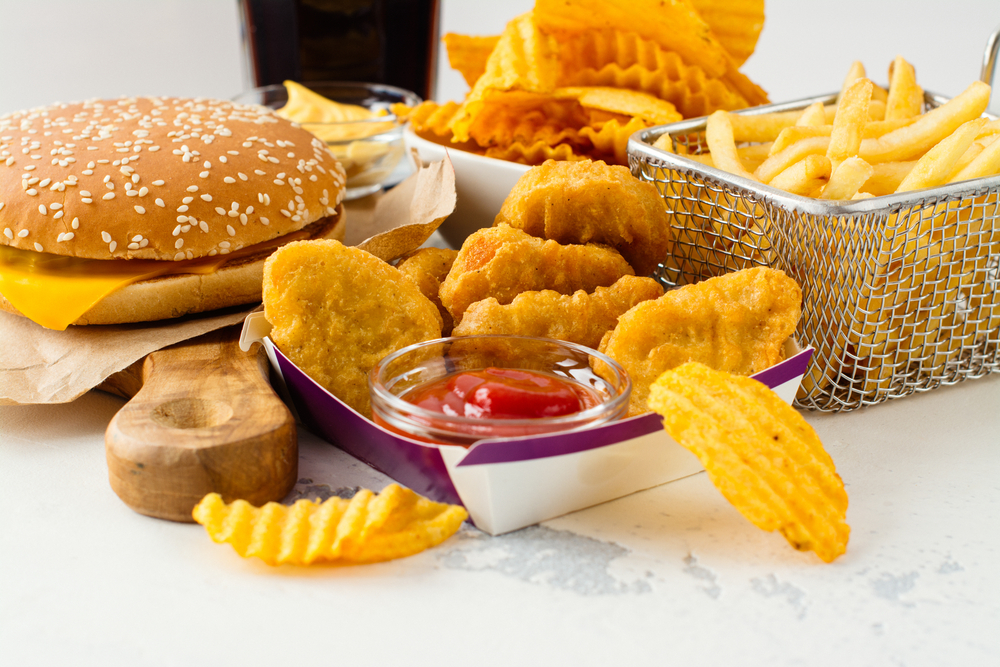
McDonald’s chicken nuggets are prepared with remarkable precision. Employees follow an exact process, cooking each batch for three and a half minutes in oil kept at a constant temperature. The nuggets are then drained, checked for color and crispness, and transferred to a warming tray where they may sit for no longer than 20 minutes. If that time expires, the entire batch is discarded. No exceptions are made, even during busy periods. This system ensures every customer gets the same crispy texture and tender interior that McNuggets are known for.
Oil used for frying is changed regularly to maintain freshness. Staff are trained to recognize signs that the oil needs replacing, such as darkening color or a change in smell. Some stores even use digital monitors to track oil usage in real time. What many people do not realize is that even the nugget shapes are standardized. There are four distinct shapes, the bell, boot, bone, and ball, and each one is designed to cook evenly. This uniformity is why the nuggets taste identical worldwide.
6. The Soda Fountain Formula Is Carefully Controlled
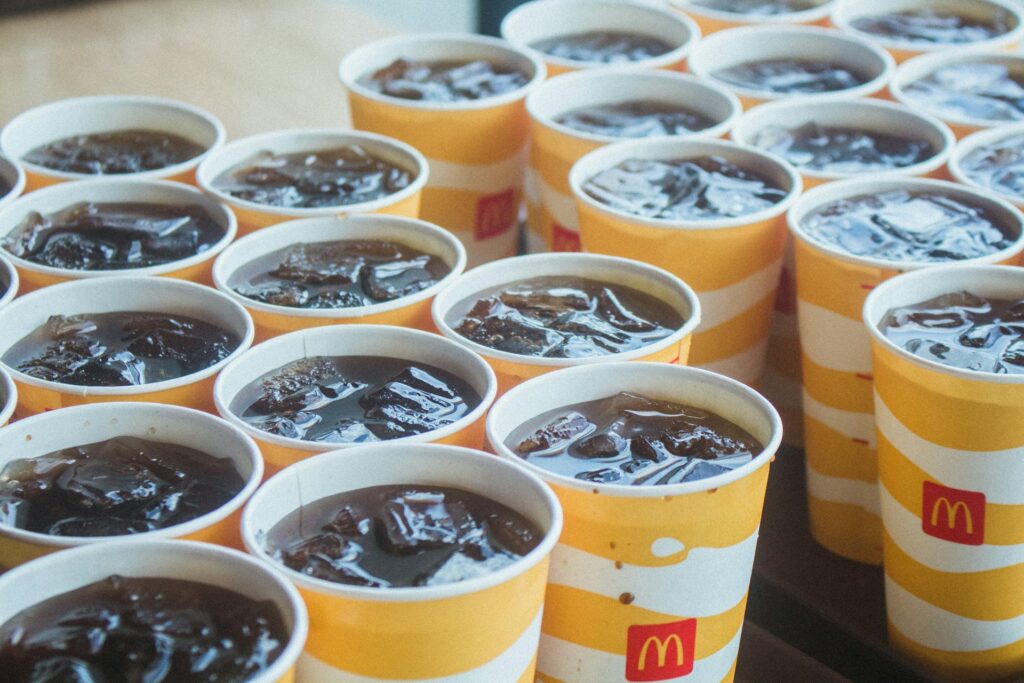
McDonald’s soda consistently tastes better than almost anywhere else, and that is not by coincidence. Employees reveal that every detail, from syrup storage to carbonation levels, is precisely engineered. The syrup is delivered in stainless steel containers rather than plastic bags, which helps preserve flavor integrity by preventing oxygen exposure. The water used for mixing is triple filtered to remove chlorine, minerals, and impurities that could alter the taste. It is also pre-chilled before combining with the syrup, maintaining a consistent temperature that enhances carbonation. Even the ratio between syrup and carbonated water is tightly controlled by calibrated machines to ensure the ideal sweetness balance. McDonald’s also keeps a close partnership with Coca-Cola.
The two companies work together to monitor syrup freshness, storage temperatures, and dispensing systems at every restaurant. Employees are trained to test soda flow rates and clean the nozzles daily, ensuring every sip stays crisp and fizzy. One lesser-known secret is that the wider straws used at McDonald’s are intentionally designed to deliver more carbonation with each sip. This design enhances the flavor profile and gives the soda that signature burst of bubbles customers love. Every small step adds up to the uniquely refreshing taste that makes people swear McDonald’s Coke is superior.
7. The McFlurry Spoon Is Not a Straw
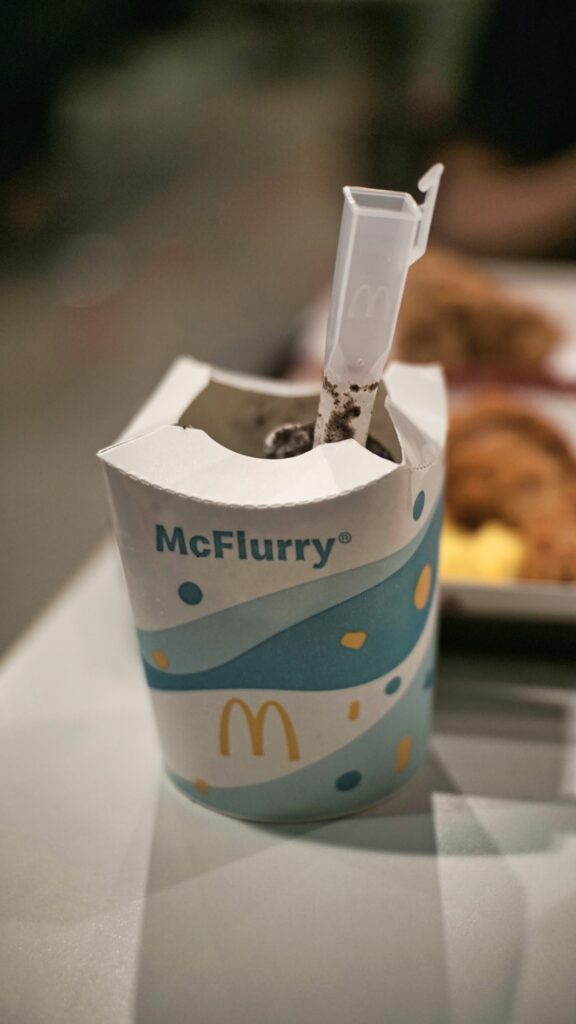
The McFlurry spoon confuses countless customers, but employees confirm it is one of the most practical designs in the restaurant. The spoon’s hollow square handle is not for sipping, it attaches to a metal spindle that blends the ice cream and toppings directly in the cup. This means each McFlurry is mixed evenly without requiring extra tools or wasted utensils. After blending, the spoon detaches from the mixer and doubles as the eating utensil. This dual-purpose design helps maintain hygiene, reduces cleaning time, and cuts down on plastic waste since employees never have to use a separate stirring rod.
The spoon’s engineering also prevents mess. Because the mixing happens inside the cup, toppings like Oreos or M&M’s stay distributed through the dessert rather than sinking to the bottom. Employees say it is one of the smartest tools in the kitchen, even if customers constantly mistake it for a straw. In many ways, the McFlurry spoon reflects McDonald’s larger philosophy, design everything to be fast, efficient, and clean. It is a small but perfect example of how even the tiniest piece of plastic plays a role in streamlining global operations.
8. Employees Have a Secret Code for Difficult Customers
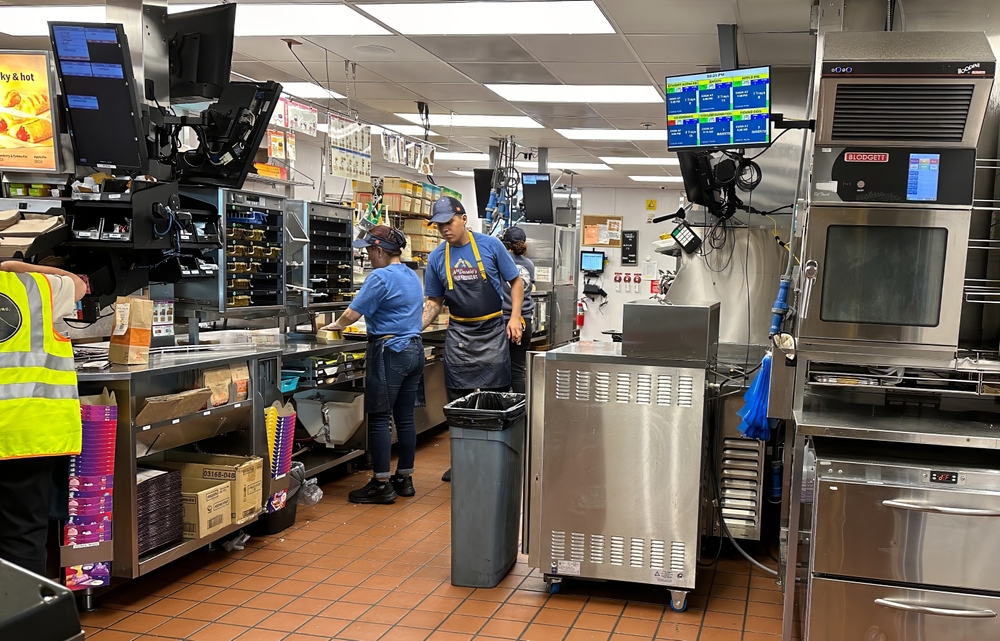
McDonald’s employees handle hundreds of customers each day, and not all of them are friendly. To maintain calm and professionalism, workers use discreet internal codes that allow them to communicate quickly without drawing attention. These codes vary by location, but some common ones include “Code 10” to signal a customer who may need a manager’s assistance, or “Smile Check” to remind coworkers to stay calm under stress. These subtle signals prevent escalation and allow employees to support one another during tense moments.
Managers also use hand signals or short phrases to redirect energy when lines are long or tempers are short. Some teams even develop their own versions of these cues, strengthening trust among staff and ensuring service remains friendly and smooth. Employees say these quiet strategies are part of what makes McDonald’s such an efficient operation. While customers might not notice the coordinated communication happening behind the counter, it helps keep the atmosphere positive even during the busiest shifts.
9. The Pickles Have a Purpose
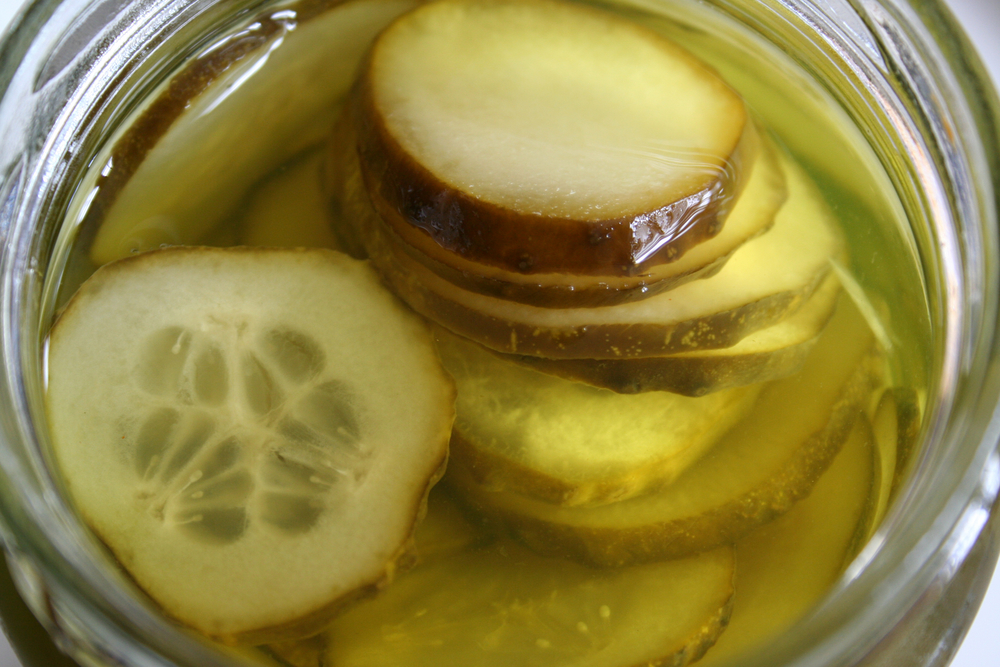
Every ingredient on a McDonald’s burger serves a purpose, and the pickles are no exception. The company’s culinary scientists designed the flavor profile to create balance, the vinegar in the pickles cuts through the richness of the beef and cheese, enhancing both taste and aroma. Each burger is assembled with two to three pickles, carefully placed near the center to ensure the tangy crunch appears in nearly every bite.
Employees are taught during training that even the placement of these pickles affects how the burger tastes overall. If they slide to one side or get left out entirely, the result can taste noticeably different. The brine recipe for McDonald’s pickles is standardized across suppliers around the world, ensuring consistency in acidity and salt levels. That is why a Big Mac in Tokyo tastes exactly like a Big Mac in New York. The consistency is no accident, it is part of McDonald’s quality promise. For those who skip the pickles, employees say they are missing out on one of the most important layers of flavor chemistry that gives McDonald’s burgers their signature balance between savory, salty, and sour.
10. The Golden Arches Design Was Originally Architectural
The famous McDonald’s Golden Arches are among the most recognized symbols in the world, but few know they began as a physical part of the restaurant’s architecture. In the 1950s, architect Stanley Meston designed the first franchise buildings with two massive yellow arches that stretched high above the roof. The goal was visibility. During America’s postwar car boom, highways filled with travelers, and the tall arches helped drivers spot McDonald’s from a distance.
The glowing yellow against the night sky became a beacon for hungry motorists looking for fast, reliable food. As McDonald’s grew, the design became less practical to include in every building, so the company transformed the arches into a flat, stylized M that appeared on signs instead. The modern logo still carries that same spirit of movement, accessibility, and familiarity. Employees often describe the arches as a symbol of both heritage and ambition. What started as a simple architectural flourish evolved into a global icon recognized in more than 100 countries, representing one of the most successful brands in history.
11. McDonald’s Has a Secret Training University
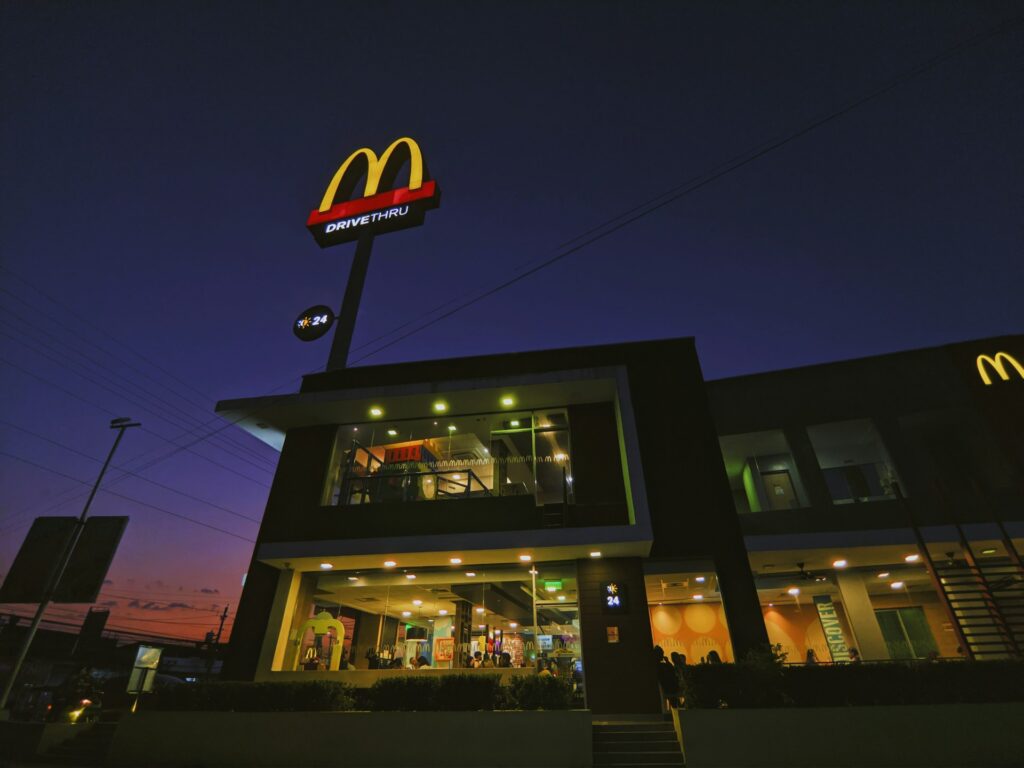
Few people know that McDonald’s operates one of the most comprehensive corporate education systems in the world. Known as Hamburger University, this training institution has been teaching managers and franchise owners since 1961. The program offers courses in leadership, operations, marketing, food safety, and customer service. Students are trained in real McDonald’s kitchens and classrooms using advanced simulations that mirror day-to-day restaurant challenges.
Graduates earn a globally recognized diploma in restaurant management. There are campuses in several countries, including the United States, China, Japan, and the United Kingdom. Over 275,000 people have graduated, with many going on to manage or own multiple franchises. Employees who attend describe it as both demanding and rewarding, a blend of business school intensity and hands-on restaurant work. McDonald’s sees Hamburger University as an investment in its people. The company believes that a well-trained workforce leads to higher-quality food, faster service, and stronger teamwork. It is a cornerstone of how McDonald’s has remained consistent for decades, proving that even in fast food, education drives success.
12. The Filet-O-Fish Was Created for Religious Customers
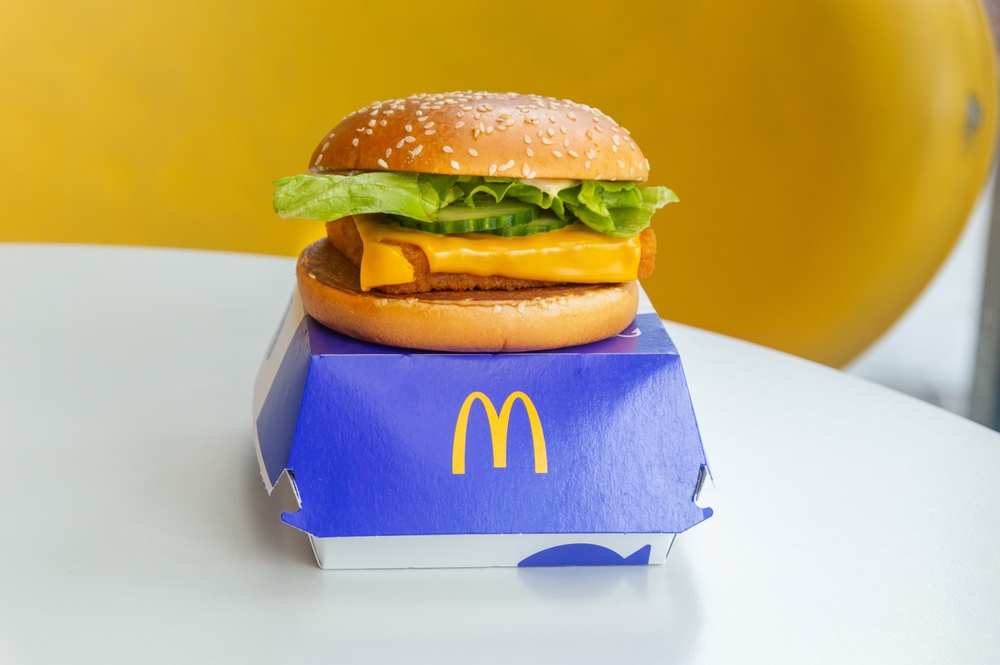
The Filet-O-Fish has one of the most interesting origin stories on the McDonald’s menu. In the early 1960s, Lou Groen, a franchise owner in Cincinnati, noticed that sales dropped dramatically every Friday. His restaurant was located in a heavily Catholic neighborhood where many customers abstained from eating meat on Fridays. To solve this, Groen developed a fish sandwich made with white fish, cheese, and tartar sauce. He pitched the idea to McDonald’s founder Ray Kroc, who was skeptical at first but agreed to test it. The Filet-O-Fish was launched alongside another new idea, the “Hula Burger,” made with grilled pineapple instead of meat.
When sales data came in, the results were overwhelming, the Filet-O-Fish far outsold its fruity rival. It became a permanent menu item shortly after and remains one of McDonald’s global staples today. Employees still learn about this story in training as a lesson in understanding and adapting to customer needs. The Filet-O-Fish now uses sustainable Alaskan pollock and has its own cult following. Many employees say it is one of the cleanest sandwiches to prepare, and it continues to prove that innovation often starts with paying attention to local communities.
13. McDonald’s Fries Contain a Hidden Flavoring Ingredient
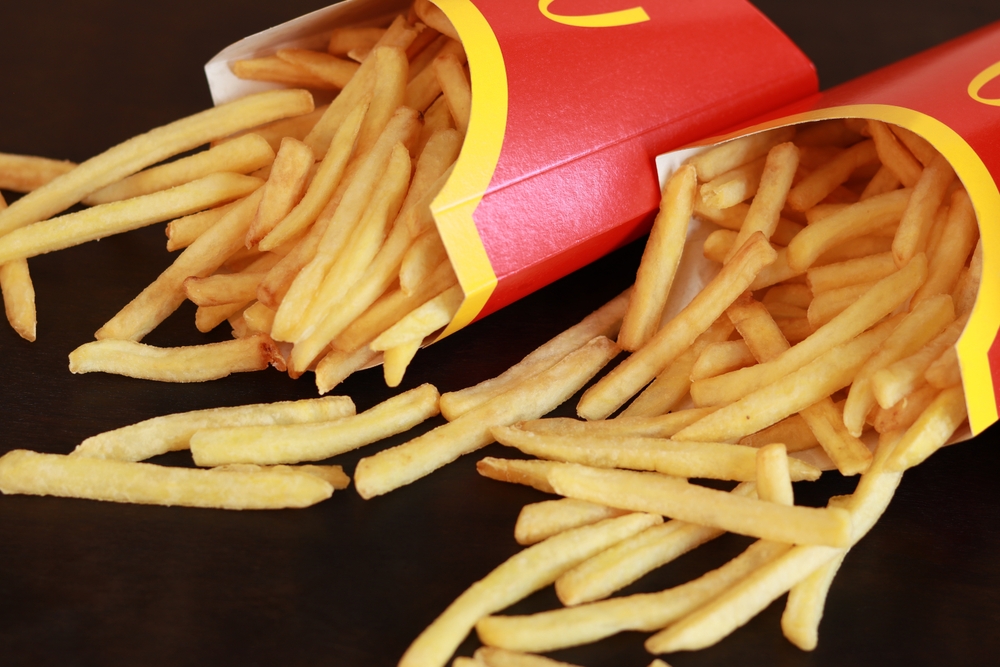
McDonald’s fries are instantly recognizable for their taste, and the reason is not just salt and oil. Employees confirm that before the potatoes even arrive at the restaurant, they are lightly infused with natural beef flavoring. This flavoring mimics the original recipe from the 1950s, when fries were cooked in beef tallow. When McDonald’s transitioned to vegetable oil in the 1990s, customers noticed the flavor had changed. To restore the signature taste, the company began adding a beef-derived seasoning to the par-frying process at production plants.
This tiny step brought back the savory richness that customers loved. Each fry is made from a specific variety of potato, typically Russet Burbank or Shepody, and goes through a detailed process. The potatoes are peeled, cut, blanched, dried, coated with flavoring, and frozen before being shipped. Employees cook them on-site in controlled oil to achieve the exact color, texture, and crispness McDonald’s is famous for. This secret ingredient often surprises people who assume McDonald’s fries are vegetarian, but it is also what makes them so addictive. The combination of science, precision, and nostalgia explains why McDonald’s fries are considered the gold standard of fast food.
14. The Ice in Drinks Is Carefully Measured
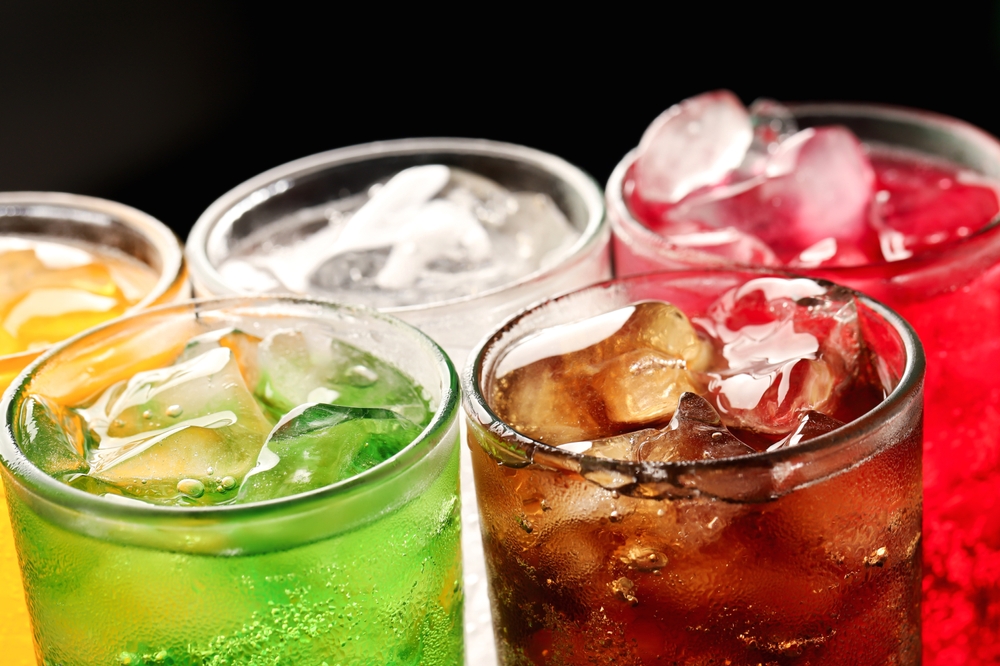
McDonald’s might seem casual about beverages, but behind the counter, the process is methodical. Employees are trained to fill cups with a precise amount of ice to balance temperature, carbonation, and flavor. Each cup size has its own guideline, marked on the ice bin, to ensure consistency. Too much ice would dilute the drink before it is finished, while too little would make it warm and flat. McDonald’s standardizes ice-to-liquid ratios so that every soda tastes identical whether you order in Paris, Pretoria, or Portland. The machines that produce the ice are also subject to strict cleaning schedules.
Employees sanitize them several times a week to prevent buildup or contamination. This commitment to hygiene is part of McDonald’s broader focus on quality control in every step of food and drink preparation. Interestingly, many employees say they can gauge the rhythm of a busy day by the sound of ice hitting the cup, a sound that never stops during peak lunch hours. It might seem like a small detail, but those little touches of consistency keep the brand’s reputation spotless.
15. The Drive-Thru Timers Are Always Running
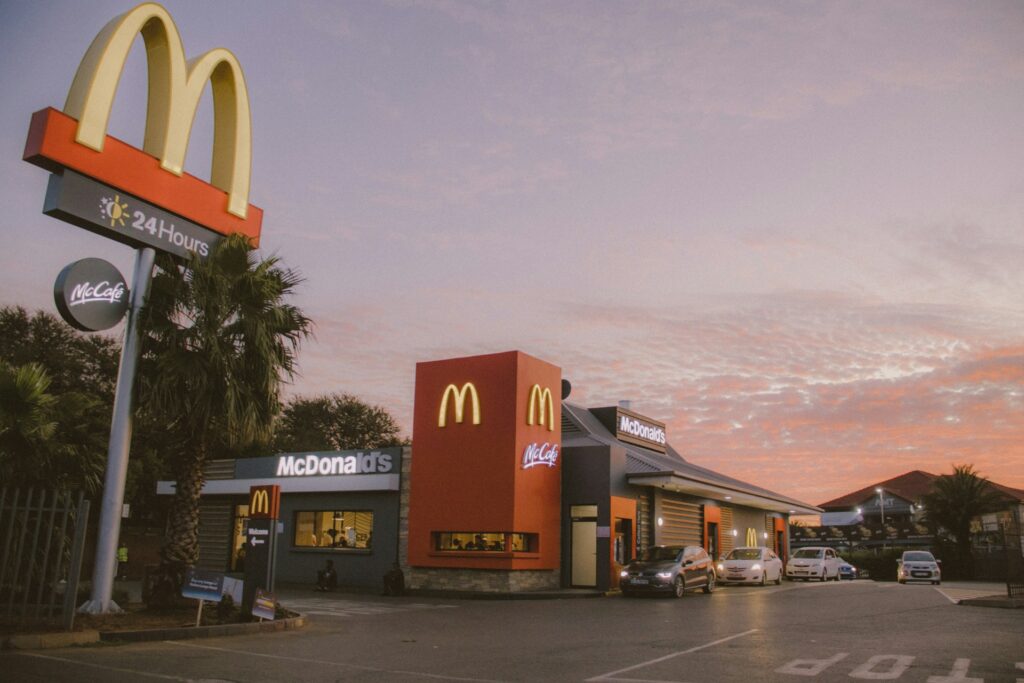
For McDonald’s, speed is everything, and nowhere is that more apparent than in the drive-thru. Each restaurant uses digital timers that track how long every vehicle spends from order to pickup. Employees and managers monitor these timers constantly to ensure customers get their food quickly. If a car takes too long, the data is recorded and reviewed later. Many locations even have leaderboards comparing shift performance, motivating staff to beat their previous times. This system has turned drive-thru service into both a science and a friendly competition.
The timers are linked to sensors that track when a car pulls up to the menu board, moves forward, and exits. Managers analyze this data daily to improve staffing schedules and order accuracy. It also helps identify bottlenecks in real time, allowing employees to make fast adjustments during rush hours. This constant measurement ensures that McDonald’s can maintain its promise of speed without sacrificing quality. Employees say it keeps them sharp and engaged, transforming a routine job into a perfectly timed operation that feels more like a race against the clock than a simple food service.
The Reality Behind the Golden Arches
What happens behind the counter at McDonald’s is a masterclass in precision, training, and teamwork. Every employee, from cashier to manager, operates within a carefully built system that has been perfected over decades. The process is fast, but it is not chaotic, it is controlled, measured, and refined to near perfection. Employees often describe working at McDonald’s as learning the rhythm of a machine that never stops. Every product, from fries to drinks, follows a timeline and a temperature chart. Every tool, from fryers to soda fountains, is standardized to deliver the same experience globally. The brand’s longevity is not just due to its food but to the systems behind it.
Consistency, cleanliness, and efficiency are the unseen pillars that make McDonald’s successful. It is why customers trust that their meal will taste the same whether they are in London, Lagos, or Los Angeles. Behind those glowing arches lies a world of coordination few ever witness. The secrets employees share are not about hidden recipes or scandals, but about the discipline that keeps an empire running with precision every single day. It is not just fast food, it is a finely tuned operation that reflects decades of human effort, training, and global excellence.
Read More: 7 Fake Health Foods You Need to Stop Eating & 7 Real Options To Try Instead
Disclaimer: This article was created with AI assistance and edited by a human for accuracy and clarity.