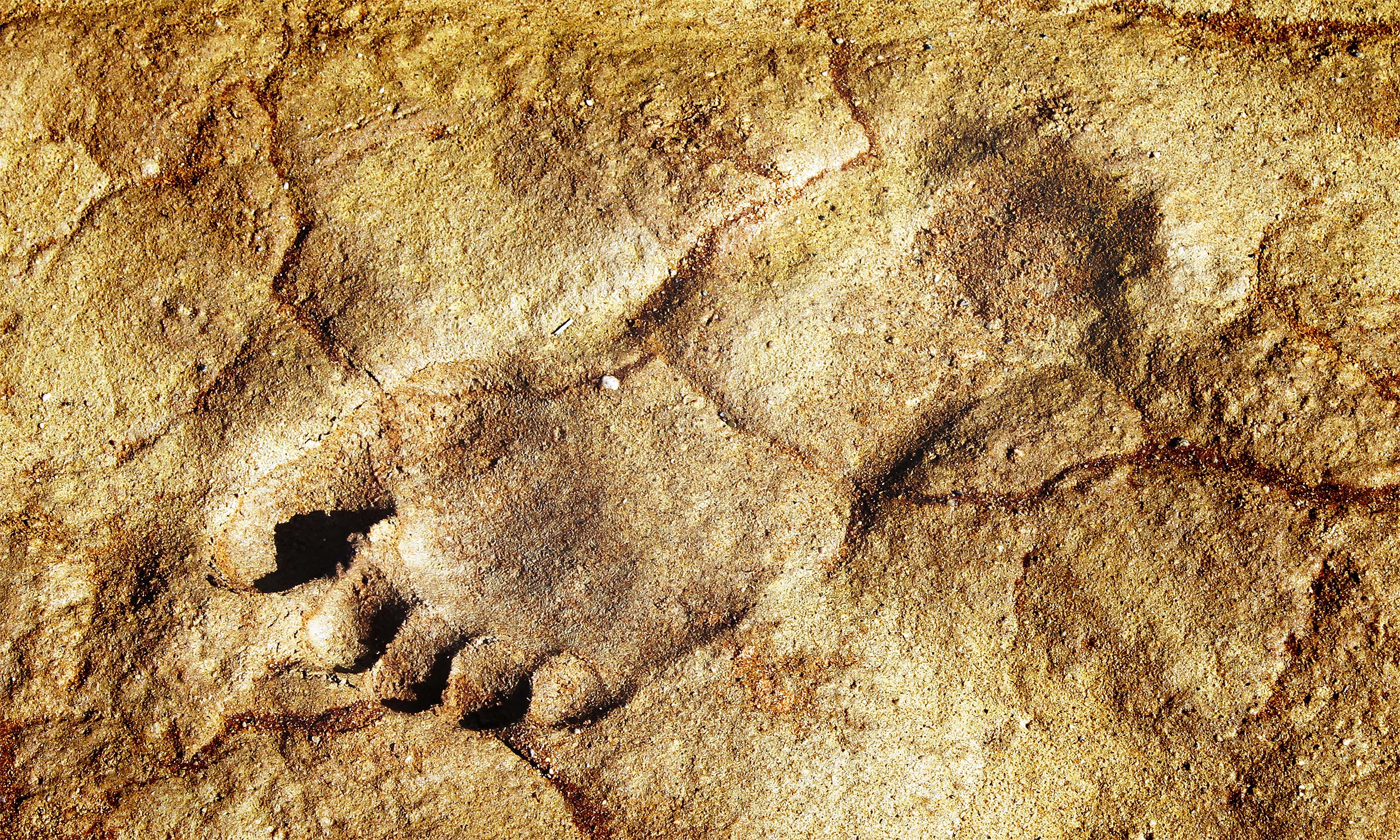

Deep in Saudi Arabia’s Nefud Desert, archaeologists uncovered an astonishing find: seven fossilized human footprints preserved in an ancient lakebed. Estimated to be about 120,000 years old, these prints are the oldest known human footprints on the Arabian Peninsula. They were discovered at a site called Alathar, which means “the trace” in Arabic, and are surrounded by hundreds of animal tracks, including elephants, camels, and horses.
A Lake That Time Forgot
The discovery site lies within what was once a lush grassland dotted with freshwater lakes, long before it became part of the vast Arabian Desert. In 2017, shifting winds exposed the lake sediments, revealing this prehistoric time capsule. Scientists believe that during the last interglacial period, roughly 130,000 to 80,000 years ago, this region provided a migration corridor for humans and animals moving between Africa and Eurasia. The Alathar lake was likely one of many watering holes that supported both wildlife and early humans.
How Scientists Dated the Footprints
To determine the age of the prints, researchers used optically stimulated luminescence (OSL), not carbon dating. This method measures the last time quartz grains in the sediment were exposed to sunlight, helping establish that the tracks are approximately 112,000 to 121,000 years old. OSL provides one of the most reliable ways to date sediment layers older than the range of carbon dating. Combined with the geological context, the team concluded the footprints formed during a brief humid phase between two glacial periods.
Why These Prints Survived So Long
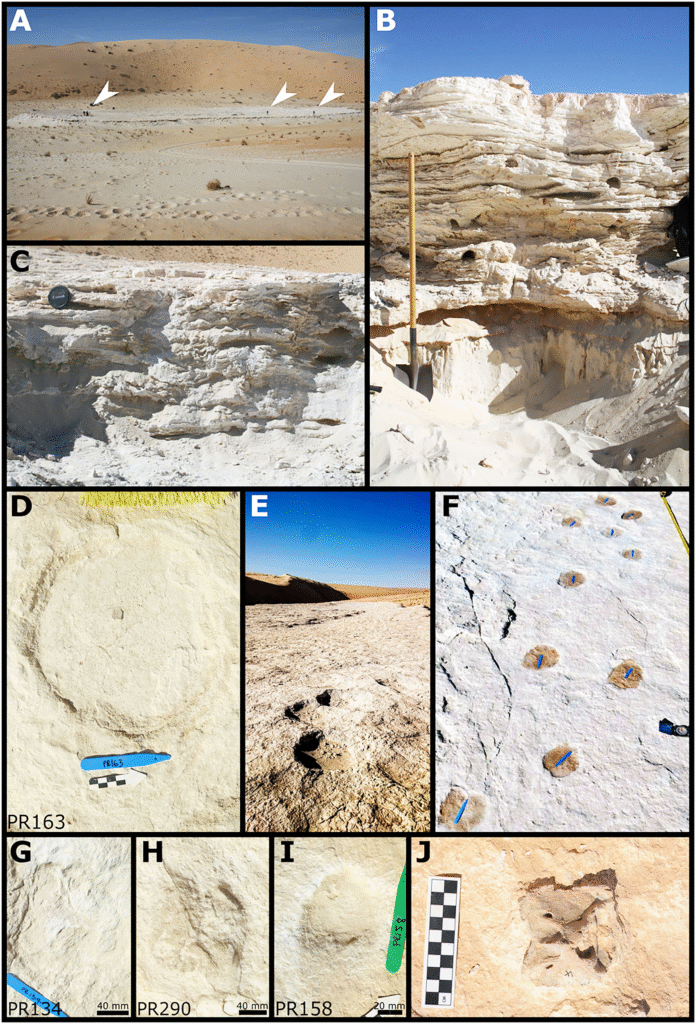
Footprints rarely last more than a few days in wet sand or mud before eroding. Experimental studies show that modern human prints lose fine details within two days and vanish entirely within four. The survival of the Alathar prints for over 100,000 years is extraordinary. Rapid drying followed by sediment coverage sealed the impressions almost immediately after they were made. The lake’s mineral-rich mud hardened into stone-like layers, preserving even subtle contours of the ancient feet that walked there.
Who Made These Tracks
The footprints’ size and shape are consistent with early Homo sapiens, not Neanderthals. At the time these tracks were made, Neanderthals were present in Europe and western Asia but not yet in Arabia. The researchers compared the measurements to fossil foot sizes and concluded that they most likely belonged to anatomically modern humans. These early travelers were likely small groups moving through the area briefly during favorable conditions, possibly as part of a larger migration wave out of Africa.
While the site contains numerous animal prints, there is no evidence of human hunting activity. Scientists found no stone tools, butchered bones, or fire traces associated with the footprints. This suggests the humans came simply to drink water, not to hunt or settle. The animals around them, including elephants and camels, were also likely drawn to the same freshwater source. The research team concluded that “the Alathar lake was only briefly visited by people,” emphasizing that survival in such climates was closely tied to the search for drinkable water.
Mud, Nature’s Time Capsule
Mud has long played an unsung role in archaeology. It can preserve delicate traces of life far better than sand or rock. Other remarkable discoveries, like fossilized dinosaur tracks and even entire armored dinosaurs, have also been preserved in similar sediment-rich environments. At Alathar, the unique mineral balance, moisture level, and timing created ideal conditions for fossilization. The result is a vivid, almost photographic record of life in a region that has since turned to desert.
A Glimpse Into Ancient Migration
The Alathar discovery supports a growing body of evidence showing that the Arabian Peninsula was once a key migration route for early humans leaving Africa. During wetter climate phases, the peninsula was covered in grasslands, lakes, and rivers, allowing humans and animals to move freely. The footprints confirm that early Homo sapiens reached Arabia far earlier than previously thought, long before permanent desert conditions developed. These findings reshape how scientists view human dispersal and adaptation to changing environments.
Life Before the Ice Age
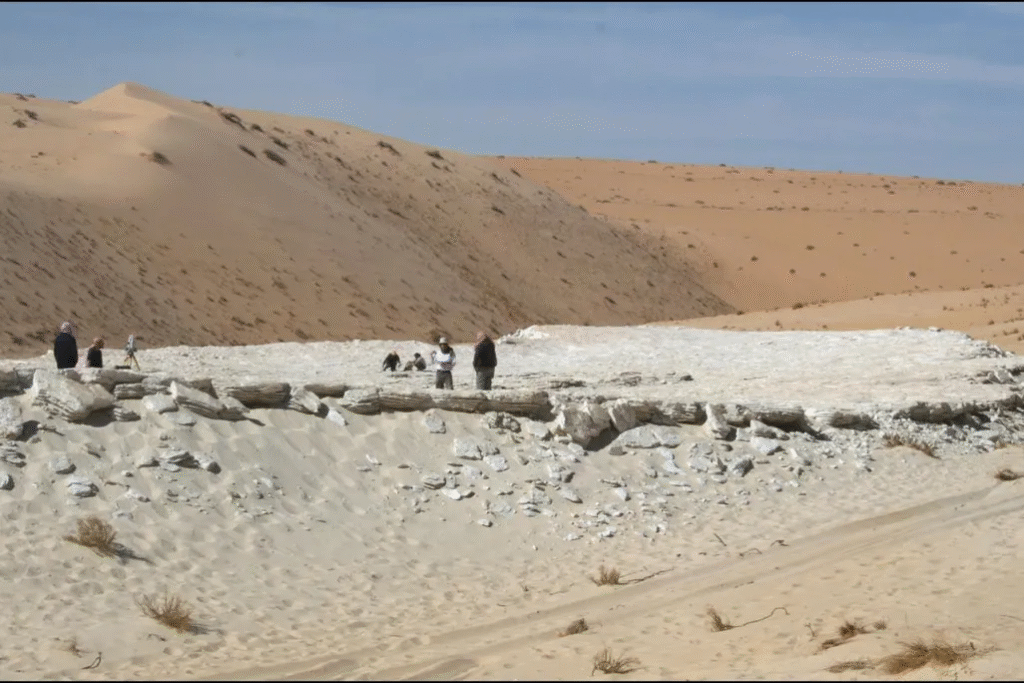
These travelers walked across a landscape that was about to change dramatically. Shortly after their visit, global temperatures dropped, leading to the return of ice age conditions. As the climate dried and the lakes disappeared, both humans and animals were forced to retreat to more habitable regions. The fact that the Alathar prints were never overlaid by newer ones suggests that the lake dried soon after, preserving this fleeting moment in time.
A Message From the Distant Past
The footprints at Alathar are more than just marks in stone. They are silent evidence of humanity’s resilience and movement through shifting climates. Each step tells a story of survival, adaptation, and the search for water in a transforming world. Scientists continue to study the site, hoping to uncover more clues about how early humans interacted with their environment and how those same instincts persist in us today.
Left Behind In The Mud
The 120,000-year-old footprints in Saudi Arabia are a testament to human endurance and curiosity. Preserved by chance in an ancient lakebed, they reveal that early Homo sapiens explored far beyond Africa much earlier than once believed. Their journey through a once-green Arabia offers a powerful reminder that human history is not only written in bones and tools but also in the fragile traces of footsteps left behind in the mud.
Credit: Youtube.com Archaeology breakthrough in Saudi Arabia as 115,000-year-old human footprints are uncovered, reshaping our understanding of early human migration and survival strategies.
Read More: Astonishing Discovery of 1,900-Year-Old Ancient Roman Slab in an English Garden
Disclaimer: This article was created with AI assistance and edited by a human for accuracy and clarity