

Many people hear the word stims and picture obvious movements, yet a wide range of everyday actions fall into the same category. These behaviors help the nervous system regulate attention, soften sensory overload, or keep the mind steady during concentration. They appear in classrooms, offices, grocery stores, and living rooms, often without anyone realizing the body is making a self-directed adjustment. Researchers who study sensory processing describe stimming as a way to manage input from the world, not a sign of dysfunction. Plenty of adults who go through the day tapping, rubbing, pacing, or humming think they are dealing with habits when their bodies are actually using a tool. The more you understand how these actions work, the easier it becomes to see them in yourself and others. What looks like absentminded motion is often a sign that the brain is trying to stay balanced. With that in mind, the list below focuses on behaviors people rarely identify as stims, even though they match the definition used in sensory and neurodiversity research.
1. Repetitive Finger Rubbing
Many people rub their fingers together while thinking, waiting, or trying to stay engaged in a conversation. The motion delivers a tactile cue that steadies attention and gives the brain a predictable signal to follow. Neurologists have noted that small repetitive movements can help people hold focus during tasks that require mental effort. The friction between fingertips creates sensory input that does not disrupt the environment, yet offers enough consistency to help the nervous system stay anchored. Children and adults do this during meetings, phone calls, and problem solving, usually unaware of its regulatory effect. Sensory specialists often point out that this behavior is a stim when it is used for grounding, comfort, or maintaining attention. People who rely on this motion sometimes believe they are dealing with a fidget or habit, but the action fits the same pattern seen in recognized stimming behaviors. Since it is discreet, it rarely draws attention, which is why many do not associate it with sensory regulation.
2. Leg Bouncing While Sitting
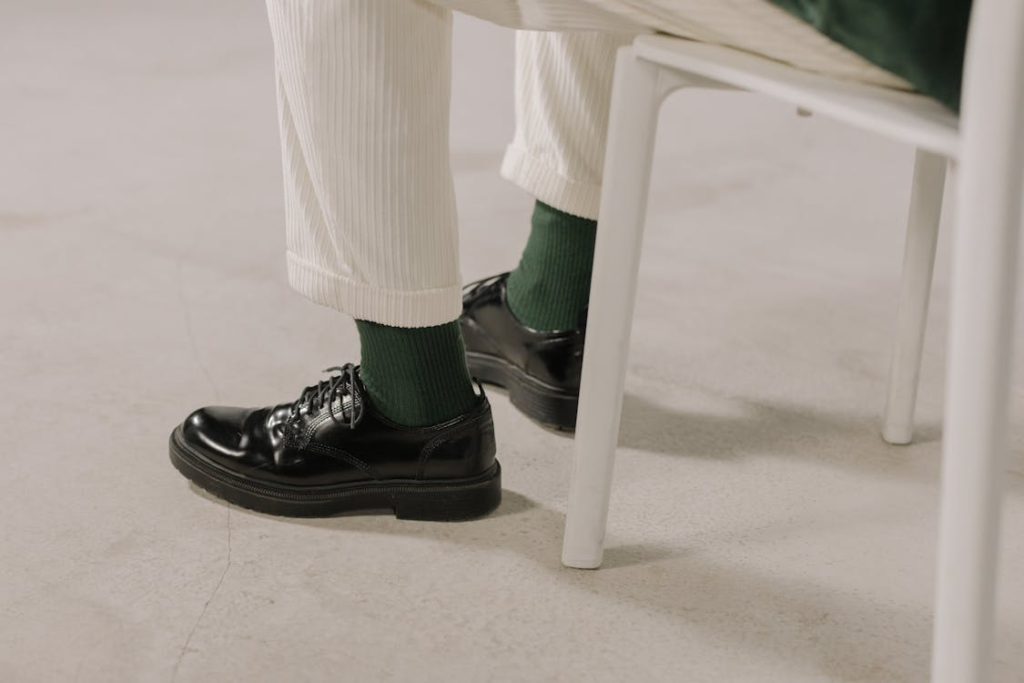
Leg bouncing is one of the most common forms of self regulation, particularly among people who need extra movement to stay alert. Teachers and clinicians often observe that rhythmic motion helps maintain engagement during long periods of sitting. The bounce offers consistent sensory feedback, allowing the nervous system to release tension without disrupting thought. In workplace settings, this movement is widely misinterpreted as impatience or distraction. In practice, it is a stim because it provides an outlet for physical energy that would otherwise interfere with concentration. Many adults rely on this motion during reading, typing, or planning, and the pattern aligns with research on motor activity as a focus aid. The body uses the bounce to keep attention stable when tasks require extended mental effort. People who notice themselves doing this often try to suppress it, unaware that the motion is serving a purpose. Recognizing it as a stim can reduce self judgment and help individuals choose environments or seating that support natural regulation.
3. Hair Twisting or Stroking
Hair twisting shows up in classrooms, offices, and social settings, usually treated as a personality quirk rather than part of a sensory pattern. The strands offer a consistent texture that helps the brain settle into a rhythm while thinking or listening. Psychologists who study repetitive behaviors note that predictable tactile feedback can steady attention in the same way fidget tools do. People often twist only a few strands because that amount gives the right balance of sensation without pulling focus away from the task at hand. The motion also acts as a release valve when someone feels overloaded, giving the hands something repetitive and soothing to do. Many adults assume it is a habit left over from childhood, but the action fits the criteria for a stim when it provides comfort, helps concentration, or eases sensory strain. Even when done without awareness, the behavior supports mental engagement more than people realize.
4. Humming Under the Breath
Soft humming is widely overlooked because it blends into the background of daily life, yet it appears frequently among people who rely on rhythmic sound to stay centered. The vibration inside the chest gives steady sensory input that helps the mind hold a thought or move through stress. Speech and auditory researchers point out that repetitive vocalization can help organize internal sensations, especially when someone is processing too much external noise. This type of humming is rarely melodic, since the purpose is consistent vibration rather than musical expression. People often do it during reading, working, or waiting, unaware of how it helps them feel more anchored. Children who hum are often asked to stop, but the action carries into adulthood in quieter forms. When the sound helps someone stay engaged or settle racing thoughts, it falls within the category of stimming, even though most people never label it that way.
5. Object Tapping or Clicking
Many people tap pens, click markers, or lightly drum their fingers on a desk without noticing how often they return to the motion. The rhythm creates a predictable pattern that helps the brain stay aligned with a task, especially when attention begins to drift. Cognitive researchers have linked steady, repetitive sound to improved task persistence during long periods of concentration. The action is rarely about boredom, even though others may interpret it that way. For the person doing it, the tapping provides a sensory anchor that keeps the mind from scattering. Since the behavior is usually subtle and easy to hide, people often think of it as a habit instead of a stim, yet the purpose is the same. When someone taps to think, to stay alert, or to ease internal tension, the pattern matches what specialists describe in self-directed sensory behaviors. It is one of the easiest stims to overlook because the sound blends into everyday activity.
6. Pacing in Short Bursts
Short bouts of pacing often appear during phone calls, planning, or transitions between tasks. The forward motion helps people think through information by giving the body a physical pathway to follow. Movement studies show that walking can assist mental organization by engaging both motor and cognitive circuits at once. This does not require long walks, since even a few steps back and forth can settle restlessness and sharpen focus. Many adults describe pacing as something they do when their thoughts feel tangled, yet they rarely view it as a stim, even though the pattern mirrors known sensory behaviors. The repetition of steps gives the brain a steady cue that supports processing during moments that demand clarity. Because pacing is socially acceptable, most people never question why they do it, but its role becomes clear when it consistently helps someone manage tough conversations or complex tasks.
7. Reorganizing Items on a Desk
Shifting objects into rows, aligning edges, or repeatedly adjusting placements often looks like tidying, but the action carries a deeper sensory purpose. The hands gain a steady pattern to follow, which helps the mind settle into a smoother rhythm during thinking or decision making. Occupational therapists note that repetitive arranging behaviors can help people channel restlessness into something predictable and contained. This is why the action often appears during phone calls, problem solving, or moments when attention needs a boost. The focus is not on achieving a perfect layout, but on engaging with texture, movement, and position in a way that feels steady. Many adults chalk it up to fussiness, though the behavior matches the broader category of stims when it eases tension or supports concentration. The motion becomes a familiar anchor during moments when the brain wants a consistent task for the hands.
8. Lip Chewing or Light Biting

Lip chewing is common during thinking, waiting, or navigating social situations, yet most people never consider it part of a sensory pattern. The gentle pressure offers a familiar cue that helps the mind stay connected to the moment when thoughts start to scatter. Researchers who study repetitive oral behaviors note that mild biting can help people manage heightened internal activity as long as it stays safe and non-injurious. The motion has a rhythm to it, even when the person does not notice, and that steady sensation helps maintain focus without external tools. Many adults assume it reflects nerves, but the behavior also appears when someone is concentrating deeply or transitioning between tasks. When lip chewing supports attention or creates comfort during heightened mental effort, it aligns with the definition of stimming seen in sensory psychology. People often try to break the habit without realizing it may be helping them navigate the moment more effectively.
9. Repeating Words or Phrases Under the Breath
Many people quietly echo a word, phrase, or sound to themselves, especially when concentrating or shifting between tasks. Linguistic researchers note that this kind of repetition gives the brain a steady internal cue that supports working memory. The spoken pattern creates a loop that helps someone stay connected to what they are doing, even when distractions pull at their attention. It often happens during writing, studying, driving, or organizing thoughts before speaking. While others might interpret it as distraction or nerves, the person doing it is usually creating a rhythm that helps thoughts move more smoothly. Because the sound is faint and the action is socially acceptable, most people never label it as a stim. Yet the purpose matches other recognized sensory behaviors when repetition makes thinking easier, steadies focus, or helps someone navigate a mentally demanding moment.
10. Repetitive Phone Scrolling Without Reading

Scrolling through a phone without absorbing the content is far more common than people admit. Many adults swipe through screens simply to feel the mechanical motion and the visual flow, not to gather information. Human factors researchers have observed that rhythmic, predictable gestures can give the mind a break during overstimulation or stress. The finger motion and smooth scrolling create a loop that feels manageable during moments when the world feels loud or fast. People often assume they are procrastinating, yet the action sometimes functions as a sensory pattern that helps the brain reset. When someone scrolls in this repetitive, non-focused way, the behavior aligns with other stims that offer a familiar cue during heightened mental activity. It is one of the most modern examples of a sensory-driven habit, overlooked because nearly everyone carries a device that makes the motion easy and automatic.
Closing Thoughts on Everyday Stims
Many of the motions people describe as quirks, habits, or distractions follow the same patterns documented in sensory research on stims. These actions give the mind something steady to hold onto during moments that demand focus, patience, or emotional effort. Once you learn to spot them, it becomes easier to understand why certain behaviors feel soothing or automatic. Instead of criticizing the movements, you can start noticing how they support thinking or ease strain throughout the day. Recognizing these patterns also helps create room for others who rely on them, since many of the motions are harmless and purposeful. Understanding how stims function in daily life shifts the focus away from judgment and toward awareness that benefits everyone.
Read More: 12 Subtle Ways People With Deep Anxiety Reveal Themselves Without Saying a Word